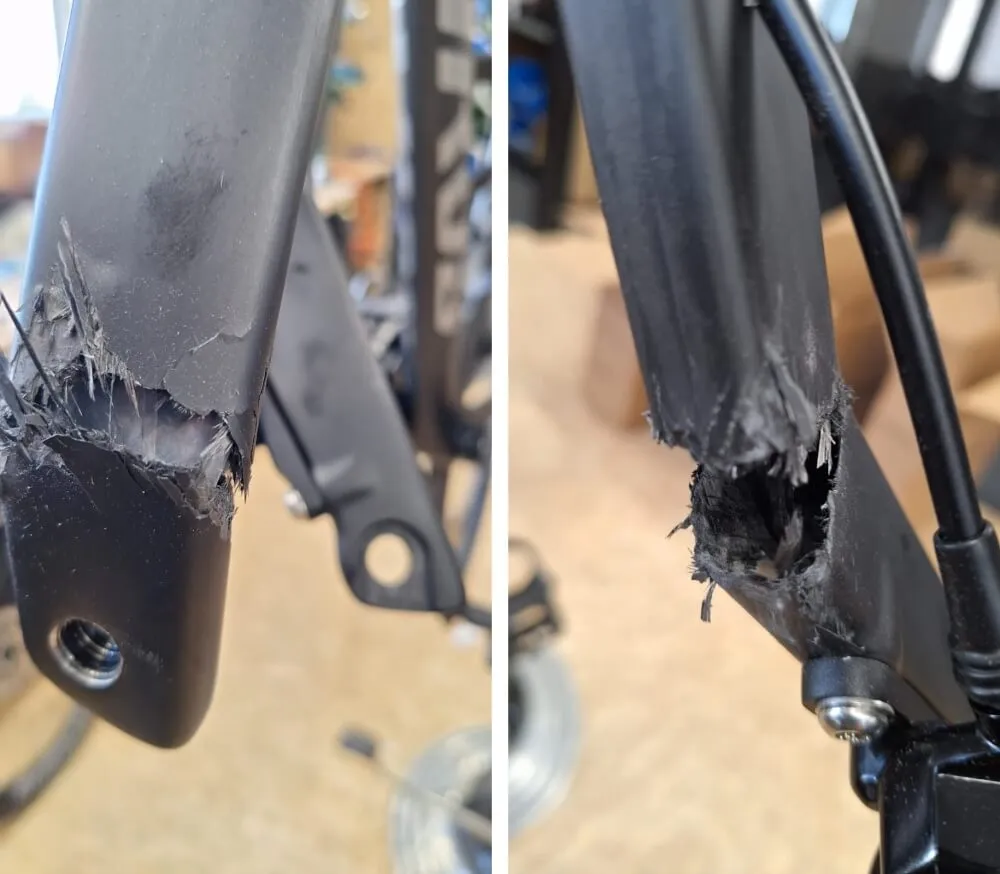
Hey folks, let’s have a real talk about carbon road bike frames. You can’t scroll through Instagram without seeing marketing hype about the newest, lightest “superbike,” usually plastered with numbers like “700g,” “680g,” or even less. And I get it—weight matters when you’re powering up a 15% gradient. Climbing on a featherweight machine feels amazing.
As a carbon fiber bike parts manufacturer with over ten years of engineering and production under our belt, we often get asked, “When are you guys going to launch a 650g frame for our wholesale clients?”
Our answer? Never. Not for mass production.
Now, we’re not being stubborn. We’re a technology-driven OEM carbon bike parts manufacturer; we love pushing boundaries. But when it comes to mass production for our B2B and wholesale partners, we draw a very clear line in the sand regarding weight.
This isn’t about lack of capability; it’s about engineering ethics and rider safety. Today, I’m going to pull back the curtain on carbon laminate schedules, safety factors, and the manufacturing reality of superlight frames to explain exactly why that under-700g frame is often a compromised machine, not a high-performance one.
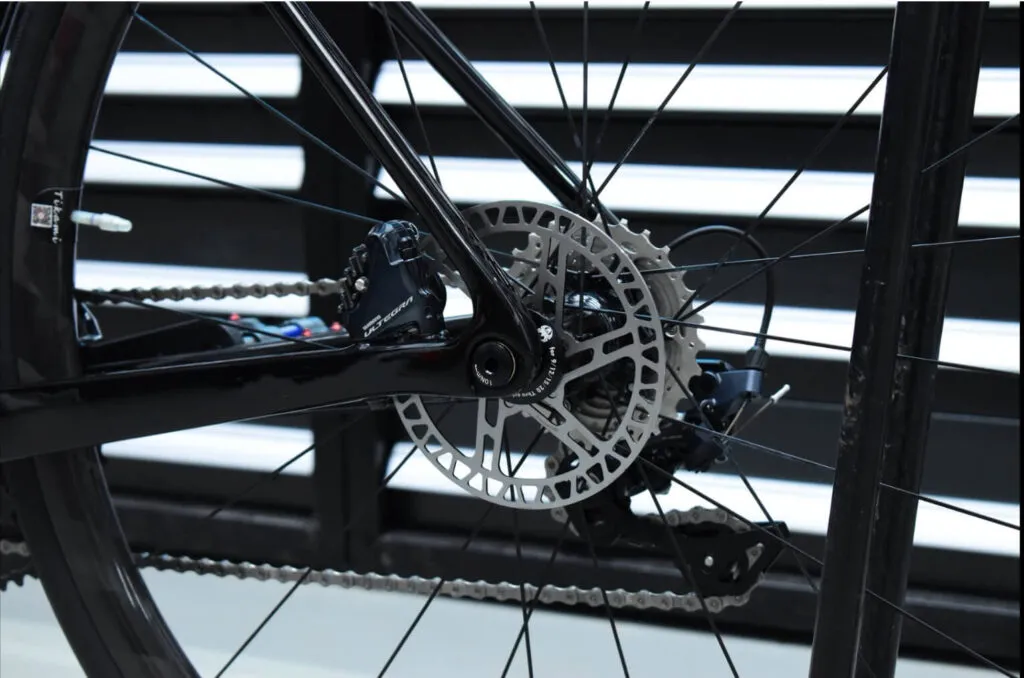
The Seduction of the Scale: Why Weight Dominates the Marketing
Why is everyone obsessed with weight? Because it’s the easiest performance metric to sell.
If I tell you Frame A is 700g and Frame B is 850g, your brain immediately concludes Frame A is “better.” It doesn’t require technical knowledge to understand. Marketing departments love weight because it provides an unarguable, quantifiable differentiator.
In the bike frame market, keywords like “lightest carbon road frame” have insane search volume. Riders want to “improve cockpit aerodynamics,” sure, but they really want to shed grams.
But here is the engineering truth: weight is just one point on a very complex performance triangle. The other two points? Durability (Impact Strength) and Stiffness (Power Transfer).
The Trade-Off Triangle: Engineering Stiffness, Weight, and Durability
You cannot optimize one corner of that triangle without inherently affecting the others. This is non-negotiable composite science.
1: Stiffness vs. Weight (The Easy Part)
Achieving a stiff, light frame isn’t actually the hardest part. By using High Modulus (HM) and Ultra-High Modulus (UHM) carbon fibers, we can achieve high structural stiffness with very little material. These fibers are incredibly stiff but very brittle. If you build a frame only out of UHM fiber to save weight, it might feel rigid on the road, but a slight knock can cause it to fail.
2: Weight vs. Durability (The Dealbreaker)
This is where the superlight frame compromises everything. While stiffness can be maintained with exotic fibers, durability (impact resistance) is directly tied to material volume and layup design.
A typical, reliable, 800g–950g carbon road frame will utilize a robust blend of fibers and have a substantial material wall thickness in high-stress areas (head tube, bottom bracket, chainstays).
An under-700g frame cannot have that volume of material. Engineering is about compromises, and for a frame to mass-produce under 700g, durability and safety factors must be sacrificed.
What Happens Under 700g: Breaking Down the Sacrifices
When we design a carbon road frame meant for reliable, everyday use, we implement a Safety Factor. This is the multiplier we apply to expected loads to ensure the frame doesn’t fail under slightly-more-than-average stress. A standard frame might have a safety factor of 2.0.
For a mass-produced, sub-700g frame, that safety factor might drop to 1.1 or 1.2. The frame is engineered to survive normal riding and maybe a slight mishap, but it has zero margin for error.
Here is what that looks like in terms of production compromises:
1. Paper-Thin Tube Walls (The “Coke Can” Effect)
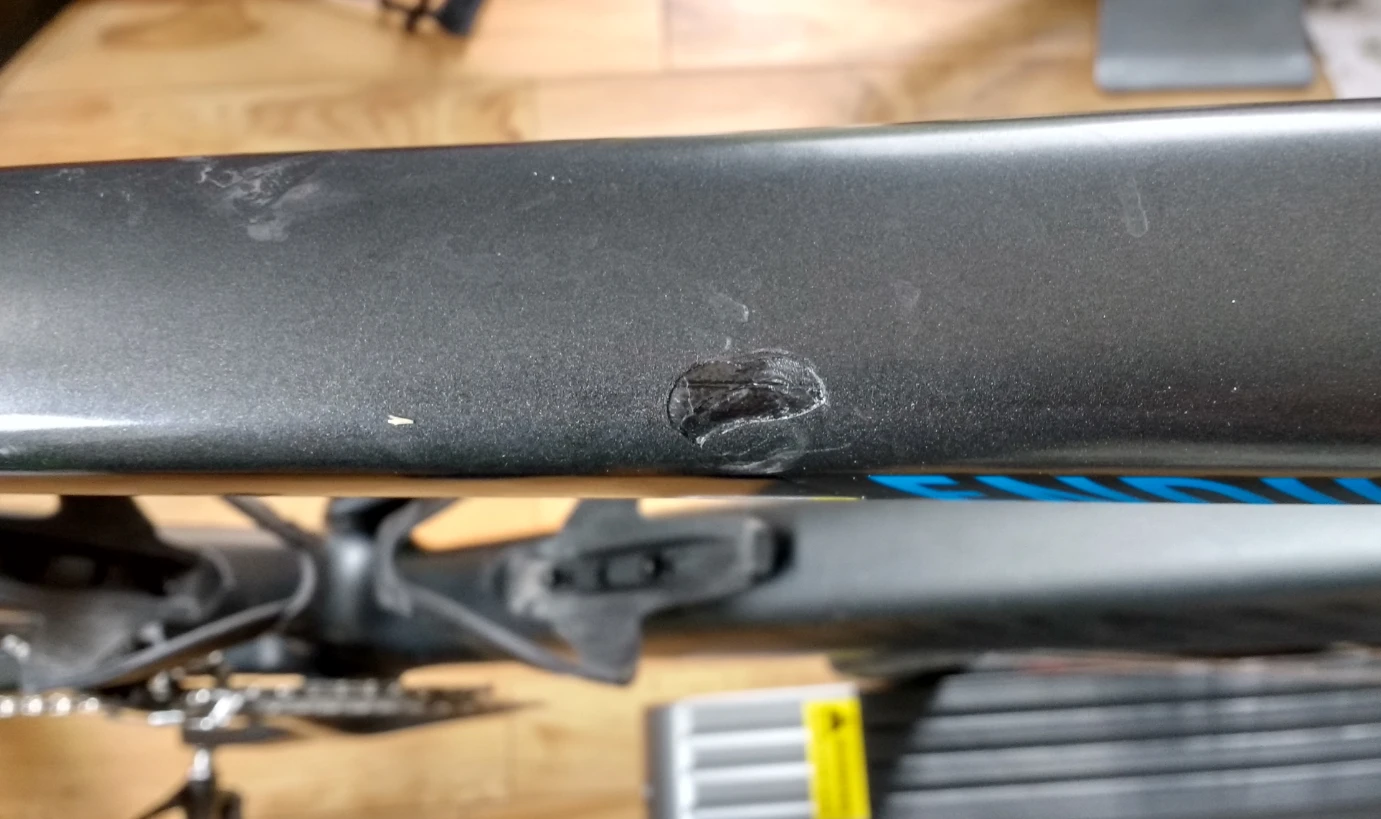
The most direct way to lose weight is to remove material. The main tubes (down tube, top tube) on a superlight frame have walls that are shockingly thin. We’re talking less than 1.0mm thick in places. Some riders call this the “Coke can” effect. A sharp pebble kicked up by a wheel, or an overly-enthusiastic lean against a metal post, can actually crack the carbon laminate in these thin zones.
2. Minimal Resin Content (The “Dry Layup” Risk)
A carbon part is only as strong as its matrix—the resin that holds the fibers together. In high-volume OEM carbon bike parts manufacturer environments, managing resin content is crucial. For superlight frames, manufacturers use very specialized, low-resin-content prepreg.
The risk? “Dry spots,” or zones where the carbon fibers aren’t fully wetted by the resin. A dry spot is an air pocket, and under load, that air pocket acts as a nucleation point for delamination, leading to catastrophic failure.
3. Aggressive Complex Molds & High Voids
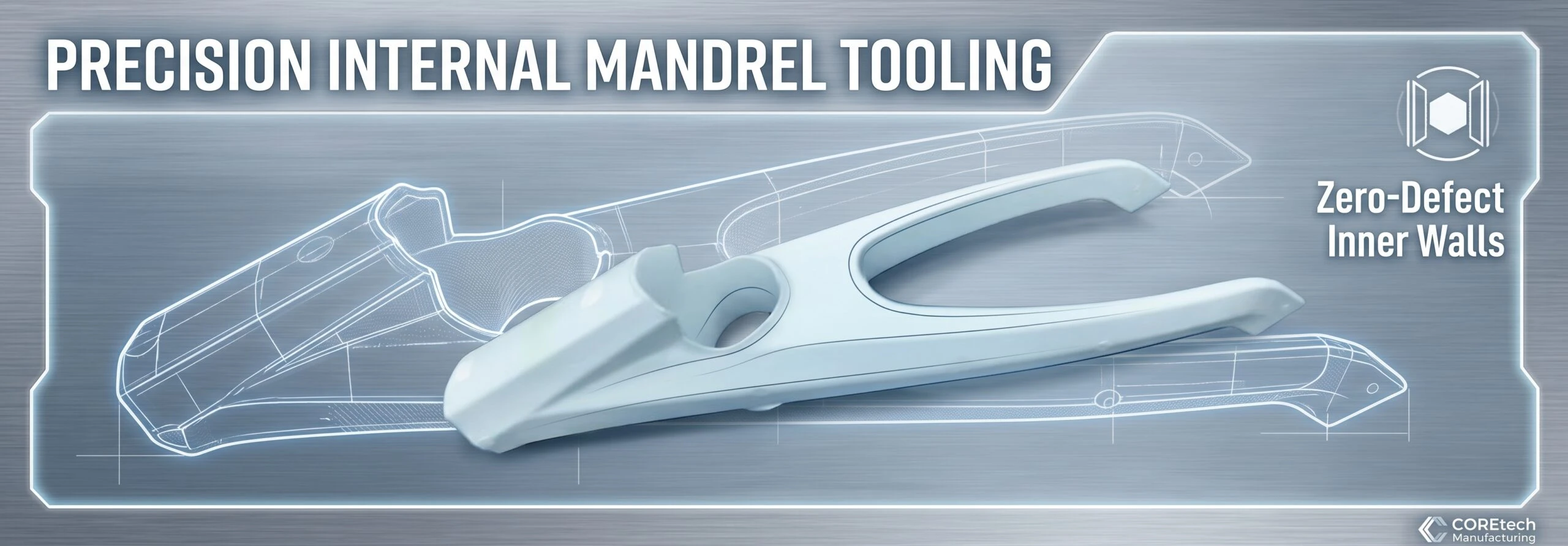
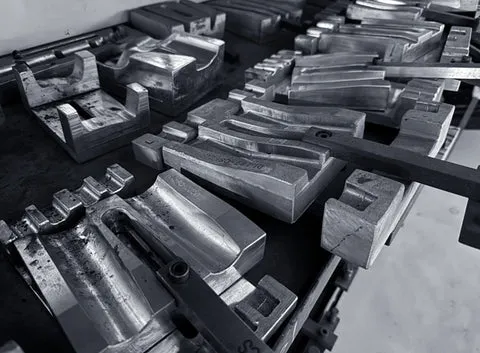
To keep tolerances incredibly tight and remove every last gram of excess resin during curing, superlight frames require complex mold feasible review processes and massive internal bladder pressures.
In mass production, complex, thin-walled molds are notoriously difficult to control consistently. High bladder pressure increases the risk of bladder rupture or, ironically, pinching a layer of carbon, creating a wrinkle. A wrinkle in a thin-walled frame is a defect you cannot repair.
B2B Perspective: The Hidden Liability for Wholesalers
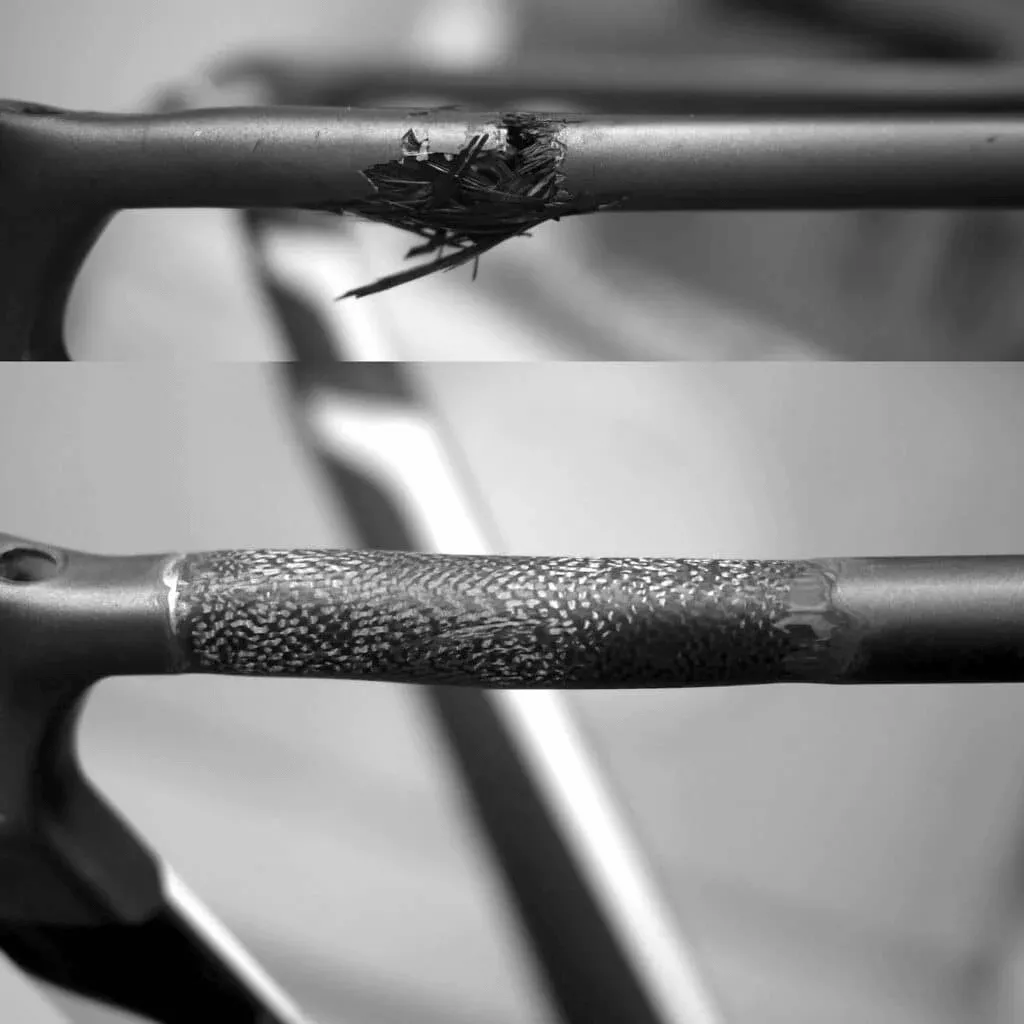
If you are a wholesale carbon bike frames client, or a brand managing an OEM project, the allure of marketing the “world’s lightest frame” is strong. But from a business perspective, theliability of mass-producing sub-700g frames is immense.
Think about After-Sales Service for Wholesalers. If Frame A is 900g and Frame B is 680g, which one do you think is going to have a higher warranty claim rate?
1: Shipping & Handling Realities
A superlight frame isn’t just fragile on the road; it’s fragile in transit. B2B shipments travel thousands of miles by sea and air, often in dense packing configurations. The paper-thin tubes of a sub-700g frame can be crushed by simple side-impact loads that a reliable 850g frame wouldn’t even register.
For our wholesale partners, we aim to maximize profit, not maximize returns due to shipping damage or minor customer mishaps.
Our Philosophy: The “Sweet Spot” Carbon Road Frame
At our factory, we refuse the sub-700g chase for mass production because we refuse to treat safety as an afterthought.
Instead, we target the Engineering Sweet Spot for mass production: 800g to 950g for a carbon road frame (size 54/M, without hardware).
Why this weight range?
-
Safety Margin: This allows us to use a proven blend of fibers (T700/T800 mix with targeted UHM reinforcement) and maintain robust wall thicknesses where it counts. We achieve safety factors that we trust, not just “survivable” ones.
-
Impact Strength: The “Sweet Spot” frame can survive normal riding—road debris, transportation, minor crashes—without turning into expensive carbon shards. This is vital for customer trust and B2B profitability.
-
Real-World Stiffness: We focus our carbon laminate schedules on stiffness through geometry and fiber orientation (using our FMEA process) rather than just fiber modulus. The result is a frame that sprints like a dream but has a livable ride quality.
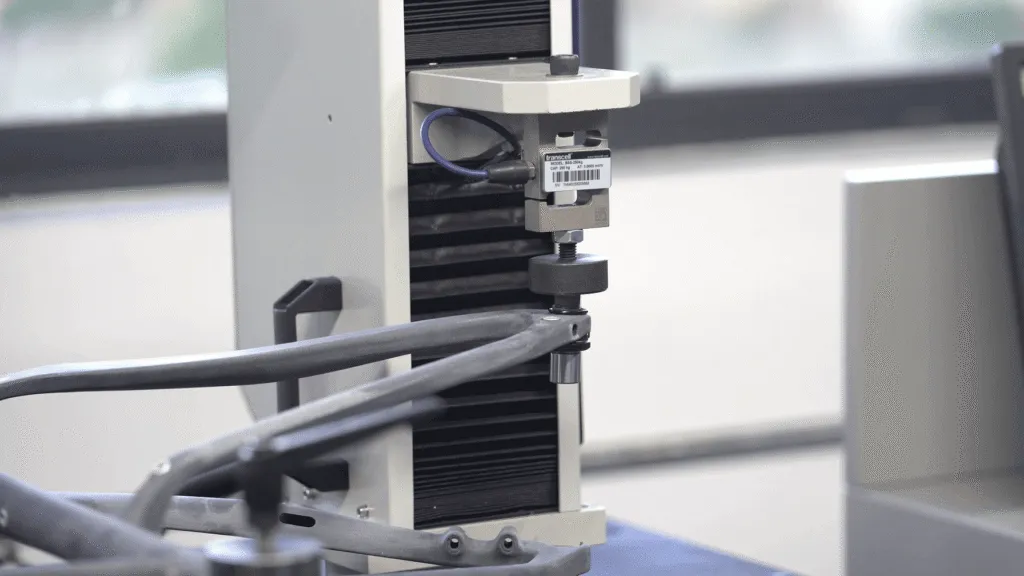
Improving cockpit aerodynamics, not shedding safety
Modern road bike performance isn’t just about weight anymore. The convergence of speed is happening around integration. We tell our OEM clients, “Focus your innovation budget on integration. Improve cockpit aerodynamics, integrate cables, optimize disc brake mounts—those are performance gains the rider will actually notice and use everyday.”
Chasing a purely numerical weight goal in mass production is a dead-end street. Integration adds weight, but it also adds real speed. A robust 900g frame with an integrated aero road bike cockpit upgrade is often faster and safer in real-world conditions than a compromised 680g frame with messy external cables.
Conclusion: Reliability is the Ultimate Performance Benefit
We get it. The scale is seductive. Marketing a 699g frame sounds awesome. But as a carbon fiber bike parts manufacturer with ten years of skin in the game, we are not willing to bet your customer’s safety on a marketing number.
Reliability is the ultimate performance benefit. A frame that is light, stiff, and always ready to ride is vastly superior to one that is ultra-light but lives in constant fear of failure.
We’ve optimized our production around building high-performance, dependable carbon road frames that hit the real engineering sweet spot. They are light, but more importantly, they are robust enough to deliver that performance season after season.
If you are a wholesaler or a brand that values structural integrity over marketing hype, let’s talk. We have the technical expertise (from FEA analysis to Carbon Assembly Paste compatibility) to help you build a reliable product that strengthens your brand reputation, not risks it.
FAQ – Carbon Road Bike Frame Weight & Durability
1: Is it possible to make a sub-700g frame?
Yes, absolutely. High-end brands do it by using exotic fibers, incredibly expensive molding techniques, and highly specialized, low-volume labor. But “possible to make” does not mean “safe for mass production” at a scalable price point without major compromises in durability.
2: If a frame passes ISO standards, isn’t it safe?
ISO 4210 standards are a minimum baseline. A frame that “passes” may just barely pass, leaving minimal margin for error. We build to a factor of safety well above the ISO minimum because real-world riding is unpredictable, and our factory-direct model means we directly manage that liability.
3: What is “Coke-Can Effect” in carbon frames?
This refers to the incredibly thin tube walls found in superlight frames (like Coke can aluminum). While strong enough to withstand the expected tensile and compressive forces of riding, they are extremely weak against localized side-impact loads, such as a pebble or leaning against a sharp edge.
4: Can ultra-light frames be repaired?
It is often extremely difficult. Superlight frames rely on the integrity of the entire ultrathin structure. Patching or reinforcing one area can fundamentally change the load profile, leading to failure elsewhere, and a repair often offsets the initial weight gain.
5: Why do integrated cockpits add weight?
Integration (like on an aero road bike cockpit upgrade) requires internal cable routing tunnels, beefier headset bearings, and reinforced areas on the steerer and headtube to manage internal pressure. This adds weight, but the ergonomic and aerodynamic benefits far outweigh the minor gram penalty.
Tired of Fragile Frames and Sky-High Return Rates?
Switch to carbon manufacturing engineered for the real world. Get factory-direct consistency, ISO-exceeding safety margins, and dedicated B2B warranty support from haidelibikes.