Skip to content


Many Reddit users discussing secondhand carbon fiber road bike framesets raise a crucial question: can cracks be detected with the naked eye? While carbon fiber composites are lightweight and high-strength, they are highly susceptible to delamination and internal cracks due to low-energy impacts or fatigue buildup. Professional research indicates that non-destructive testing (NDT) using active infrared thermography can effectively identify minute defects hidden beneath downtubes or BB shells.
Furthermore, the fatigue strength of carbon resin is far lower than that of metallic materials (such as aluminum alloys), and resin microcracks will slowly propagate with use, leading to a decrease in rigidity. Even though industry observations suggest that road bike frame failure rates are relatively low (most brands report below 1%), secondhand road bike framesets still pose potential risks without a thorough inspection report. Based on real-life experiences shared by riders on Reddit, such as “The crack on my newly purchased used carbon road bike frame wasn’t a paint crack, but a fiber tear,” the anxiety about whether buying a used carbon frame is worth the risk is becoming increasingly common. Therefore, this article will delve into the physical mechanisms behind cracks in carbon road bike framesets, testing methods, and practical advice.

Common Crack Types in Used Carbon Fiber Road Bike Frames
Used carbon fiber road bike framesets are prone to developing various types of cracks after prolonged use or minor impacts. Riding loads, road vibrations, and material fatigue accelerate crack formation and propagation. Understanding these crack types helps riders and buyers make safer decisions when purchasing or using used frames. This section focuses on surface and latent cracks, as well as key stress concentration areas such as the BB shell and head tube area, to help identify high-risk points and avoid riding accidents.
1: Surface Cracks vs. Latent Cracks
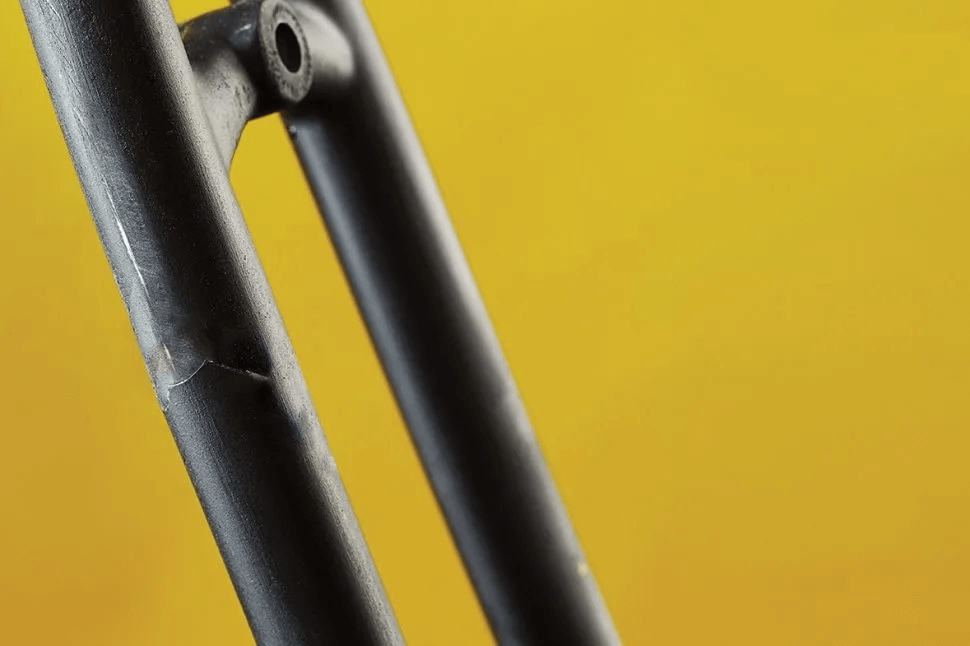
Surface cracks typically appear as visible fine lines or coating peeling, making them easy to spot. Latent cracks (internal delamination or fiber separation), however, are hidden inside the tubing and can propagate rapidly under accumulated fatigue, leading to decreased frame rigidity or breakage. Latent cracks are particularly prone to occur in the downtube, seat-stay, or chainstay of carbon road bike frames, where bending stress concentration makes them more susceptible to development. Professional engineers recommend using infrared thermal imaging or non-thermal testing (NDT) to identify internal defects and reduce the risk of damage to used bike frames.
2: Stress Concentration in the Bottom Bracket Shell and Head Tube Area
The bottom bracket shell and head tube are high-stress areas in road bike framesets and are also prone to cracking. Pedaling forces, braking impacts, and fork stress are concentrated in these areas, making the carbon fiber layers susceptible to microcracks or resin delamination under long-term cyclic stress. Lightweight or race-oriented carbon road bike framesets are more prone to fatigue damage due to their thin-walled tubing design. Understanding stress concentration principles, combined with daily riding loads and material properties, can help used bike buyers assess the safety of a road bike frame and facilitate targeted reinforcement of critical areas by engineers.

Real-world Cases and Discussions from Reddit Riders
Riders on Reddit have shared numerous firsthand experiences with cracks in used road bike framesets, ranging from minor paint cracks to internal fiber separation. These cases highlight an important concern: what happens to the stiffness of a bike carbon frame after years of use. Even seemingly intact frames can harbor hidden cracks or minor delamination, especially in older carbon road bike framesets or heavily used race-oriented framesets. This section summarizes typical experiences to help novice buyers understand potential risks and provides actionable safety assessment advice.
1: Experiences Sharing Cracks in Used Carbon Frames
Many Reddit users have reported finding cracks concentrated in the down-tube, seat-stay, BB shell, and head tube, involving brands ranging from mid-to-high-end road bikes to lightweight racing bikes. One rider shared: “I just bought a used carbon road bike frame; it looked fine, but after doing an NDT (Non-Delay Testing) check, I discovered the inner layer of the down-tube was delamination.” This kind of feedback reminds buyers that even with used high-end road bike framesets, safety cannot be judged solely by visual inspection. Reddit discussions reveal that older frames, thin-walled tubing, or frames that have been in impacts pose a higher risk.
2: Repair, Returns, and Safety Advice
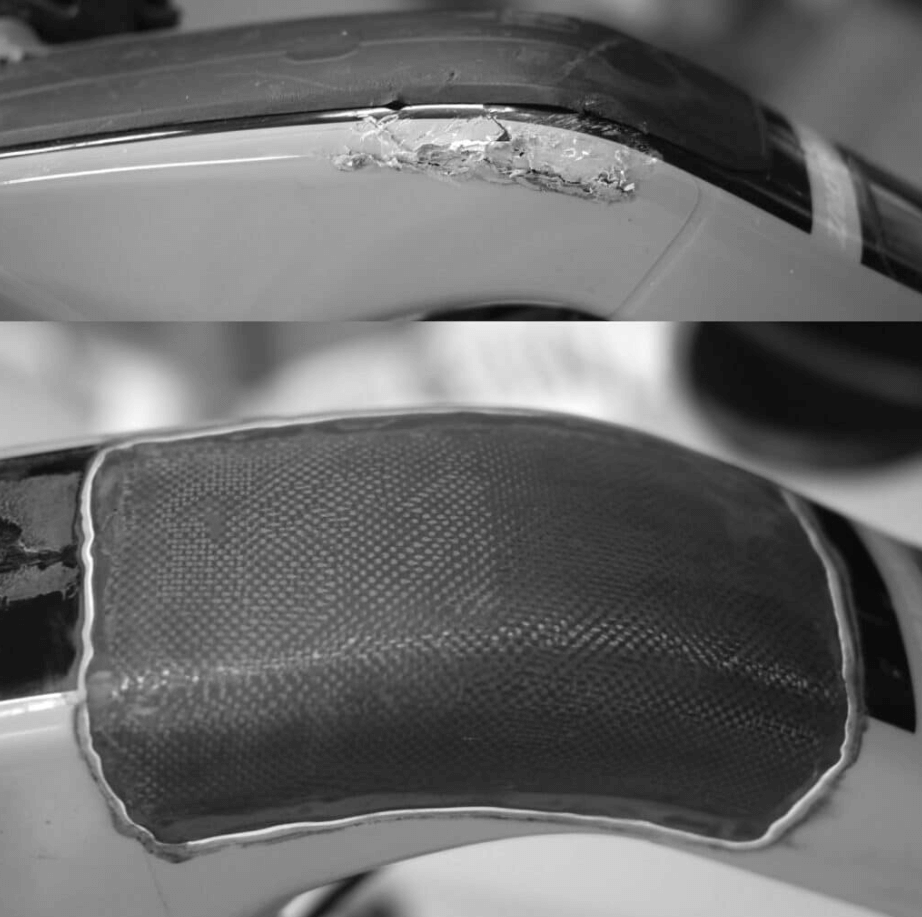
When cracks are discovered, riders typically have three options: return, repair, or continue using with caution. New buyers are advised to request a full NDT inspection or commission an infrared/ultrasonic inspection before purchasing a used carbon road bike frameset. Routine checks can include a tap test, visual inspection for paint cracks, or a flex test to check for minor bends in the plates. Furthermore, for high-load areas such as the BB shell, head tube, and downtube, any microcracks should prompt an immediate halt to high-intensity riding and professional repair. Combining Reddit rider experience with engineer advice can minimize the risks associated with using a used road bike frame.
How to Detect Cracks in Used Carbon Fiber Road Bike Frames
Even if a used carbon road bike frameset looks intact, it may hide internal cracks or delamination. Scientific testing can detect micro-cracks invisible to the naked eye and help riders assess the frame’s remaining lifespan, reducing accident risk. The following outlines practical testing methods, combining engineer experience and industry-standard techniques, to help novice buyers make informed decisions when purchasing used road bike framesets.
1: Infrared and Non-Destructive Testing (NDT)
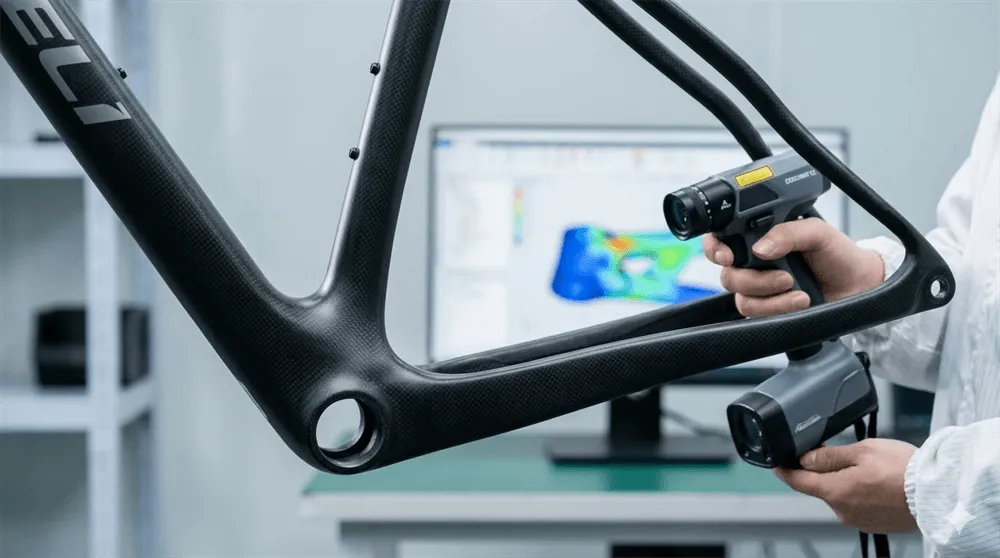
Can Infrared Scans Reveal Weaknesses in Your Carbon Bike Frameset? Active infrared thermography and ultrasonic NDT are widely used in carbon road bike framesets to detect internal delamination, fiber separation, or resin cracks. These non-destructive methods are especially valuable for identifying weaknesses that may not be visible externally, making them perfect tools for high-stress areas such as downtubes, seatstays, and chainstays. In practice, a portable infrared scanner can be moved along the tubing to spot abnormal heat patterns, while ultrasonic waves detect multi-layer delamination. By applying these NDT techniques, potential hazards can be revealed even in older or lightweight race-oriented framesets, helping riders ensure safety and frame integrity.
2: Bottom Bracket (BB) Stiffness Testing
The bottom bracket shell (BB) is the high-load core of road bike framesets, where pedaling force is transmitted. Engineers use tap tests, manual pressure, or stiffness measuring equipment to check BB flex and detect internal cracks or resin delamination. For used frames, abnormal BB stiffness or unusual noises may indicate fatigue cracks. Observing the downtube and headtube together allows for a full safety assessment.
3: Fatigue Testing and Lifespan Assessment
Fatigue testing simulates real riding conditions through repeated cyclic loading to predict a frame’s remaining lifespan. Combining riding load data (rider weight, pedaling force, frequency, road vibration) helps model stress and assess microcrack propagation. For used frames with low fatigue life, high-intensity riding should be avoided or the frame reinforced. Engineers also use these results to optimize carbon fiber layup in critical parts like the BB shell and downtube, extending safe service life.

Advice on Buying a Used Carbon Fiber Road Bike Frame
When buying a used carbon fiber road bike frameset, safety is the top priority. Even if the frame looks intact, hidden cracks or fatigue damage may exist. Referencing rider experiences and engineer advice from Reddit can help avoid high-risk areas and reduce accident risk. This section outlines methods for selecting safe frames and performing initial inspections to help buyers make informed decisions.
1: How to Choose a Safe and Reliable “Second-Hand Carbon Fiber Road Bike Frameset”
Prioritize frames without damage in high-stress areas such as the downtube, seat-stay, chainstay, and BB shell. Purchase through reputable channels or request a full NDT (Non-Destructive Testing) report from the seller, such as infrared thermal imaging or ultrasonic results. Combining this with real-world examples from Reddit can help determine if the frame has internal delamination or fiber separation, allowing you to choose safe and reliable road bike framesets.
2: Self-Inspection Techniques and Common Tools
New buyers can perform a preliminary screening using simple methods:
| Inspection Method | Purpose / Target Area | How to Perform |
|---|---|---|
| Visual Inspection | Detect paint cracks, scratches, discoloration on down-tube, seat-stay, head tube | Carefully examine frame surfaces under good lighting for visible damage |
| Tap Test | Identify potential internal delamination | Gently tap tubing with a small object; listen for hollow or dull sounds |
| Flex Test | Assess stiffness and micro-cracks in BB shell or chain tube | Apply gentle pressure to the tubing and observe minor bends or abnormal flex |
These everyday techniques allow initial identification of potential cracks or fatigue risks in second-hand carbon road bike framesets, even without professional equipment, providing a reference for further professional inspection.
Summary and Professional Advice
When buying or riding used carbon fiber road bike framesets, cracks and fatigue damage are potential safety hazards. Combining rider community experience with professional engineering testing methods can significantly reduce these risks. This article summarizes key points of infrared/NDT testing, BB shell rigidity testing, and fatigue life assessment, providing buyers with a comprehensive reference.
Community Experience Combined with Engineer’s Perspective
- Rider Experience Reference: Real-world examples from Reddit, cycling forums, and used bike trading platforms provide intuitive information on common damage locations and lifespan of used carbon frames.
- Engineer’s Perspective: Accurately assess frame structural safety and remaining lifespan through BB shell rigidity testing, infrared/NDT testing, and fatigue testing.
- Pain Point Reminder: Delamination or fatigue micro-cracks that are difficult to detect with the naked eye can lead to abnormal pedaling noises, power loss, and even safety accidents.
Used Carbon Fiber Frame Buying Recommendations
- Prioritize Inspection: Before purchasing, combine infrared/NDT testing and BB rigidity testing to ensure the frame is free of hidden cracks.
- Comprehensive Assessment: Referencing practical experience from cycling communities and combining it with professional testing results, determine the remaining lifespan of the frame.
- Choose a Reliable Source: Prioritize reputable sellers or used frames that provide testing reports.
- Customization or Professional Services: For brand-new performance, contact professional manufacturers for custom carbon road bike framesets or testing services to ensure riding safety and performance optimization.
Early detection of cracks and fatigue damage is crucial for riding safety. When buying a used carbon fiber frame, don’t just look at the appearance; combine professional testing with community experience to achieve a balance between performance and safety.