Skip to content


H1 Is a Thicker Carbon Frame Always Stronger? How Engineers View the Structural Strength of Carbon Bike Frames
Brief Introduction: Many riders and buyers intuitively believe that thicker materials equate to a stronger structure when choosing a frame. However, in actual carbon bicycle frame production, there is a complex engineering balance between strength, stiffness, and weight. As a carbon frame manufacturer with over a decade of experience, we explain from a materials engineering and structural design perspective why thickness is not the sole factor determining carbon bike frame quality.
H2 Why Do Many People Believe Thicker Carbon Frames Are Stronger?
H3 Consumers’ Intuitive Perception of Material Strength
Traditional metal frames (aluminum, steel, titanium) typically rely on material thickness to enhance durability, so riders easily apply this logic to carbon bike frames.
H3 Marketing Misleading About “Thicker Structures”
Some brands emphasize “thicker carbon layers” to convey durability, but this does not fully represent structural performance.
H3 Ignoring the Engineering Characteristics of Carbon Fiber Composites
Carbon fiber is not a homogeneous material; its performance depends on fiber orientation, lamination method, and resin system. H2 In carbon bike frame design, thickness is just one of many variables.
H3 Fiber layup design is more important than thickness.
Engineers control stress paths through different fiber orientations, rather than simply adding material.
H3 Reinforcement Zones
For example, the bottom bracket, head tube, and chainstay areas are typically reinforced to achieve higher carbon bike frame stiffness.
H3 Balancing weight, stiffness, and durability
Good design requires a balance between lightweight and structural strength, not simply stacking more material.
H2 How carbon bike frame thickness truly affects riding performance
H3 Potential problems with overly thin structures
Inappropriate layup design can lead to reduced impact resistance and fatigue life.
H3 Potential negative effects of overly thick structures
Excessive material increases weight and affects the frame’s dynamic response and riding experience.
H3 Ideal thickness comes from engineering calculations and testing. Finite element analysis (FEA) and experimental testing are commonly used to optimize structural layout.
H2 How to Achieve the Optimal Balance of Strength and Weight in Carbon Bike Frame Production
H3 Material Selection and Resin Systems
High-modulus fibers, prepreg quality, and resin ratios all affect the final structural performance.
H3 Precise Carbon Fiber Layup Process
Professional carbon bicycle frame production controls structural strength through precise layup design.
H3 The Importance of Molds and Molding Processes
From internal airbag molding to high-pressure curing, every step affects structural integrity.
H2 How to Judge Carbon Bike Frame Quality: More Than Just Thickness
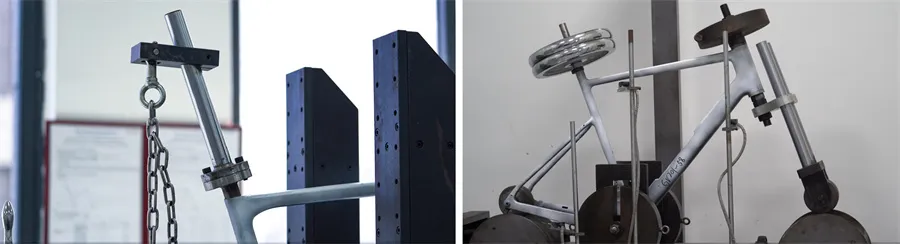
H3 Structural Testing and Fatigue Testing
Including impact testing, stiffness testing, and durability testing.
H3 Consistency of Internal Structure
Bubble, resin buildup, or fiber misalignment can all affect long-term reliability.
H3 Quality Control Processes in Professional Factories
Experienced carbon frame manufacturers typically have a complete quality verification system.
H2 Advice for Brands and Buyers: Choose a Reliable Carbon Frame Manufacturer
H3 Focus on Engineering Capabilities, Not Just a Single Parameter
For example, R&D capabilities, structural design experience, and testing equipment.
H3 Understanding the Complete Carbon Bike Frame Production Process
From design and mold development to mass production, every step impacts the final product quality.
H3 The Importance of Long-Term Partnerships and Technical Support
A mature supplier not only provides products but also offers support in design optimization and production efficiency.
H2 Conclusion: Truly powerful carbon bike frames come from engineering design, not simply thickness.
Key takeaways:
Thickness does not equal structural strength.
Layering design and materials engineering are key.
High-quality carbon bike frame production relies on experienced manufacturing teams and rigorous testing.
For brand and wholesale customers, partnering with a carbon frame manufacturer with engineering capabilities is essential to obtaining truly high-performance frames that balance lightweight design, rigidity, and durability.