Skip to content


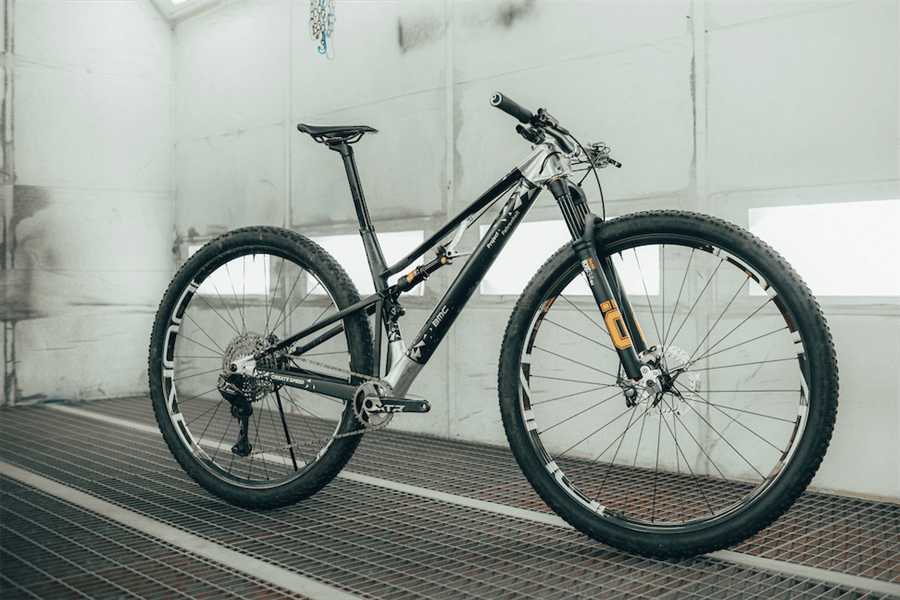
Over the past decade, mountain bike wheel diameters have evolved from 26 inches to 29 inches (29er), significantly improving off-road capability and rolling efficiency. According to research data from Pinkbike and MTBR, 29ers offer an average improvement of approximately 8–10% in rolling efficiency on challenging terrain, but their performance limitations are becoming apparent. Increasingly, engineers and high-end riders are turning their attention to 32-inch mountain bike frames.
Combined with OEM demands for longer wheelbases and greater stability, 32-inch bicycle wheels are being considered the next direction for exploration. For those seeking extreme off-road capability and high-speed stability with 32er MTB bike frames, especially carbon 32er hardtail MTB frame, their design logic, manufacturing challenges, and market value warrant in-depth analysis, rather than remaining merely a conceptual idea.
1 | Why is the cycling community starting to pay attention to 32-inch mountain bike frames?
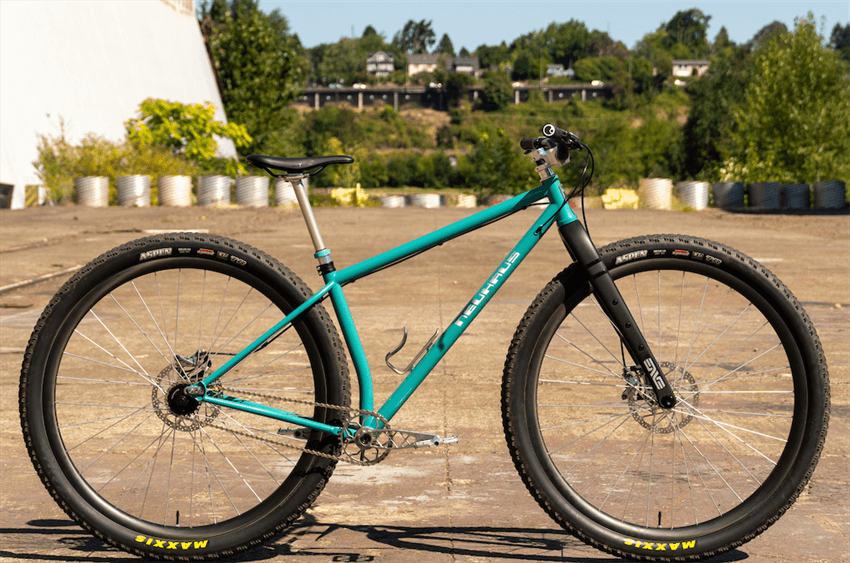
As mountain biking enters a new phase, 29er bikes are gradually approaching their performance limits in XC, Enduro, and Downcountry conditions. OEMs and brand clients are beginning to focus on stability, rolling efficiency, and handling with larger wheel diameters. The 32-inch mountain bike frame and 32-inch bicycle wheel offer new design possibilities and market opportunities, providing professional reference for high-end MTB product lines and the development of carbon 32er frame MTBs.
1.1 | From 26 to 29: The inevitable logic of mountain bike wheel diameter evolution
Mountain bikes have evolved from 26 inches to 27.5 inches, and then to 29er. Each increase in wheel diameter has brought better rolling efficiency and shock absorption performance, while also changing frame geometry and riding posture. The 32-inch bike follows this trend, posing new requirements for long-travel forks and large tire compatibility, and providing engineering challenges and market value references for OEMs manufacturing 32er hardtail MTB frames.
1.2 | The limitations of the 29er: Pain points for riders in real-world conditions
Although the 29er improves rolling efficiency, its high-speed stability and handling are still limited on gravel, root-covered, and steep slopes. Brand clients are concerned about the impact of wheel diameter on steering, climbing torque, and overall bike weight. The 32-inch bicycle offers new possibilities for high-end MTBs requiring a longer wheelbase and high stability, and is also a key reference for product differentiation and market positioning.

2 | What are the essential differences between a 32-inch mountain bike and a 29er?
The emergence of the 32-inch mountain bike frame not only surpasses the 29er in wheel diameter but also brings new design and performance considerations. Compared to the 29er, the 32er bike frame has advantages in off-road passability and high-speed stability, but it has a certain impact on acceleration and climbing. The following analyzes the performance differences between the 32er hardtail MTB frame and the 29er MTB frame from two major dimensions.
2.1 | Rolling Passability and Stability: Where are the advantages of the 32-inch MTB?
The larger wheel diameter of the 32-inch MTB improves off-road rolling ability and obstacle crossing efficiency, making the entire bike more stable on rough terrain and at high speeds. Riders can optimize the balance of the carbon fiber 32er bike frame by adjusting the fork length, head tube angle, and wheelbase to meet the practical needs of high-end riders.
2.2 | Handling, Acceleration, and Climbing: The trade-offs of the carbon 32er frame MTB
A larger wheel diameter improves stability, but the increased inertia may affect acceleration and climbing performance. When evaluating a carbon 32er frame MTB, riders should balance wheelset weight, frame rigidity, and geometric design to achieve a balance between high-speed off-road riding and technical climbing, while also meeting standards for durability and handling.
| Performance Aspect | 29er MTB | 32er MTB Frame | Notes / Trade-offs |
|---|---|---|---|
| Rolling Over Obstacles | Good | Excellent | Larger wheels smooth rough terrain better |
| High-Speed Stability | Moderate | High | 32-inch wheel increases momentum and stability |
| Acceleration | High | Slightly Lower | More inertia, slower response |
| Climbing Efficiency | High | Moderate | Extra wheel weight affects steep climbs |
| Maneuverability / Handling | Agile | Slightly Less Agile | Larger frame radius affects tight turns |
| Frame Options | Hardtail/Full | Hardtail/Carbon 32er MTB | Carbon frames reduce weight impact |
3 | Who is truly suited for a 32-inch Mountain Bike Frame?
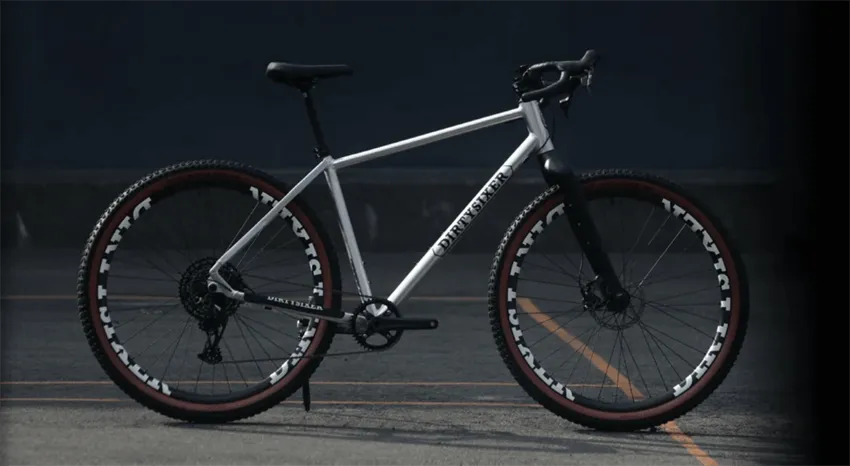
Choosing the right 32 inch mountain bike frame requires considering height, riding style, and terrain. Larger wheel diameters improve rolling efficiency and high-speed stability, but also increase inertia, demanding more from handling and climbing. Understanding which riders and scenarios can fully utilize the advantages of a 32-inch bicycle helps in making more precise judgments when designing and purchasing a 32er MTB bike frame. The following will analyze this from two dimensions: body type matching and practical riding applications.
3.1 | Matching Advantages for Tall Riders and Large Frames
Tall riders using a 32inch mountain bike can achieve a more suitable Reach and Stack, improving handling comfort and endurance during long rides, while also utilizing the larger wheel diameter to enhance obstacle crossing and stability at high speeds.
3.2 | Which Riding Scenarios Best Utilize the Value of a 32-inch Bicycle?
32-inch MTBs excel in high-speed off-road riding, rough mountain terrain, long descents, and technical trails. By optimizing fork length, wheelbase, and frame rigidity, a carbon 32er hardtail MTB frame can maximize rolling efficiency and stability, providing riders with a smoother and safer handling experience in extreme off-road scenarios.

4 | The 32er Bike Frame from an Engineering and Manufacturing Perspective
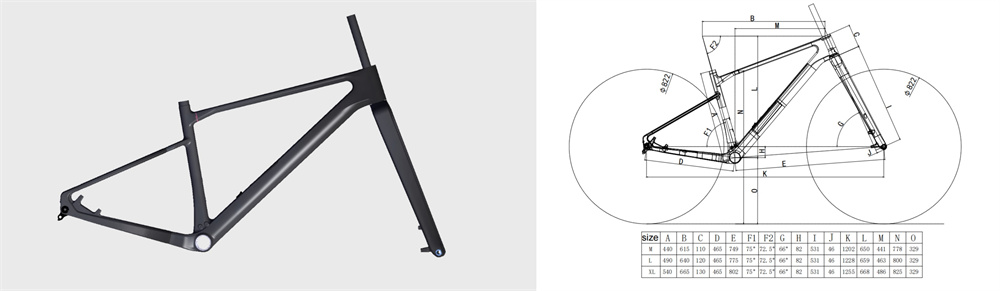
The manufacturing of a 32er mountain bike frame not only tests materials and processes but also involves a precise balance of geometric design and structural strength. The larger wheel diameter places higher demands on fork length, head tube angle, chainstay layout, and wheelbase; improper design can affect handling and durability. Understanding these engineering challenges helps optimize the riding performance of a 32er MTB and guides the feasibility and performance expectations of mass-producing 32er bike frames. The following analysis will cover three aspects: geometric design, hardtail implementation, and the advantages of carbon fiber.
4.1 | The Core Challenges of Geometric Design and Structural Strength
When designing a 32 inch bicycle frame, it’s necessary to balance the rolling efficiency of the large wheels with frame rigidity, maintaining overall stability while reducing weight by optimizing tube shapes, angles, and welding/carbon fiber layup.
4.2 | Why 32er Hardtail MTB Frames are Easier to Implement First
The simple structure of a hardtail 32er bike frame, with its minimal suspension system burden and lower manufacturing difficulty, makes it the preferred solution for mass production of large-diameter wheels, while maintaining good riding handling and durability.
4.3 | The Advantages of Carbon Fiber 32er MTB Frames in Weight and Rigidity
Using carbon fiber materials, a carbon 32er frame MTB can maintain high rigidity and strength without increasing overall weight, providing stable support for extreme off-road riding and long-distance cycling.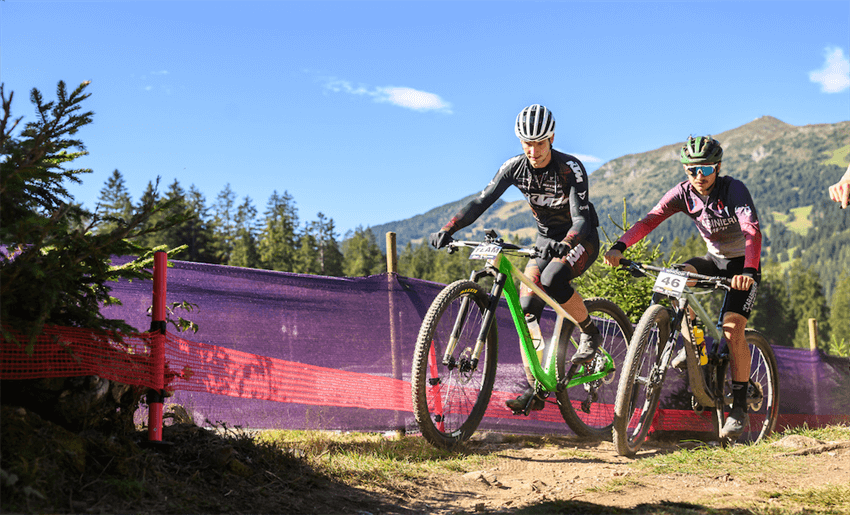
5 | Real-World Limitations of 32-Inch MTBs
Although 32-inch mountain bike frames offer improved off-road stability and rolling efficiency, their mass production and widespread adoption face several challenges. The larger wheel diameter places higher demands on overall frame geometry design, wheelset standards, and fork compatibility, while the supply chain for 32-inch bicycle wheels is still relatively immature. For 32er bike frames, increased wheel weight, higher material costs, and the market’s unproven demand may all impact overall mass production strategies and cost-effectiveness. Understanding these real-world limitations is crucial for evaluating the feasibility of developing and promoting carbon 32er frame MTBs.
5.1 | Supply and Compatibility Issues of 32er Bicycle Wheels
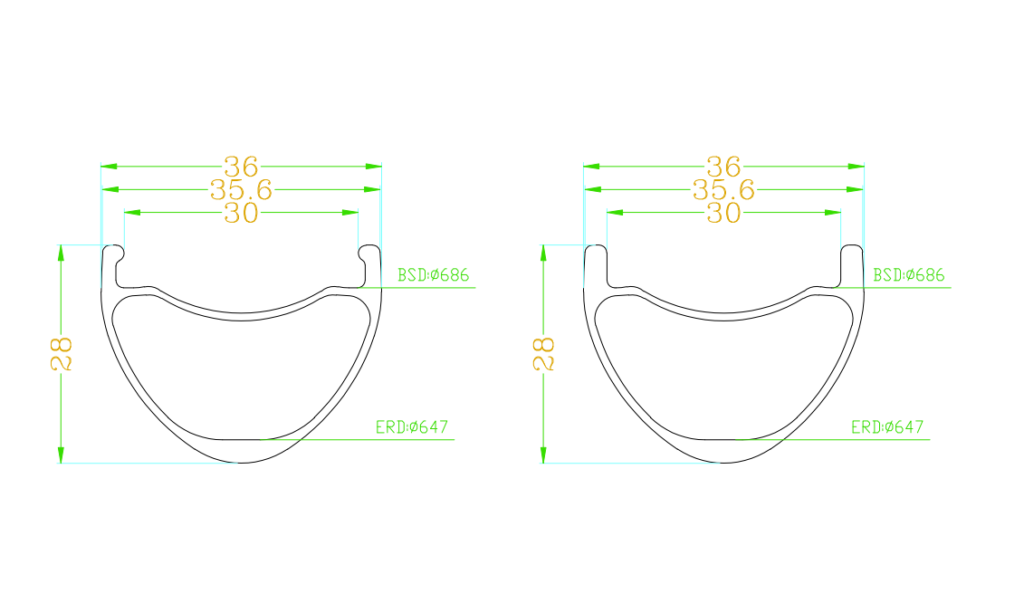
The larger wheel diameter design requires higher precision in rim width, fork standards, and wheelbase. Brands and suppliers need to consider the compatibility of 32-inch bicycles with existing components, including wheelsets, braking systems, and drivetrain interfaces, to ensure overall performance and reliability.
5.2 | Weight, Cost, and Market Maturity
Due to the larger wheel diameter, the overall weight of a 32-inch MTB may increase, especially for full carbon 32er bike frames. Simultaneously, the cost of high-performance materials and manufacturing processes is higher, and coupled with the fact that market demand is still developing, the overall pricing and mass production strategy need to be carefully considered to achieve product cost-effectiveness and long-term competitiveness.
6 | Is the 32-Inch Mountain Bike Frame a Trend or a Niche Market?
As the potential of the 32-inch mountain bike frame in performance and design becomes increasingly apparent, its market positioning is attracting attention. 32-inch bicycle wheels offer higher rolling efficiency and high-speed stability, but the larger wheel diameter also presents design and handling challenges due to increased weight and inertia. Evaluating the future prospects of 32-inch MTBs requires considering performance advantages, supply chain feasibility, and potential market demand to provide guidance for mass production or brand promotion.
6.1 | Potential Development Directions for 32-inch Mountain Bikes
In the future, 32-inch bikes may be adopted first in long-distance cross-country, technical downhill, and high-speed XC routes, especially the lightweight design of 32er hardtail MTB frames, which will further improve overall passability and handling experience.
6.2 | Should Regular Riders Pay Attention to 32-inch Bikes Now?
For average cyclists, the 32-inch mountain bike is still an emerging option, but in extreme terrain or scenarios requiring high-speed stability, understanding the characteristics of the 32er bike frame in advance can help plan upgrade routes and take advantage of the off-road benefits and improved riding experience offered by larger wheels.
7 | Conclusion: Will the 32-inch mountain bike frame become the next 29er?
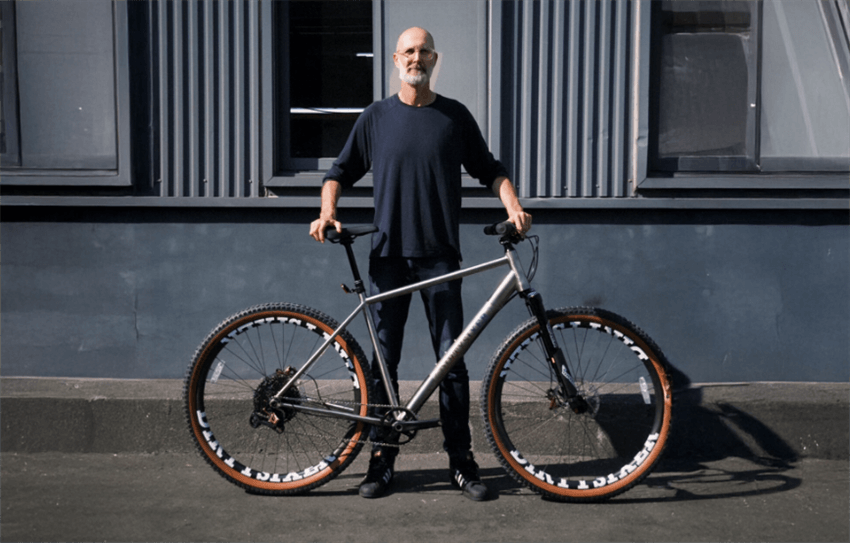
The 32-inch MTB/32er bike frame shows potential in off-road capability, high-speed stability, and technical downhill performance, but the overall inertia and acceleration performance still need to be considered. The lightweight design of 32-inch bicycle wheels and carbon 32er frame MTBs may drive early market development, but whether it becomes the next mainstream 29er depends on riding demands, supply chain maturity, and brand marketing strategies.
For those evaluating next-generation carbon MTB frame solutions, more technical insights and product details are available on the haidelibikes website or by contacting our team directly.