Skip to content


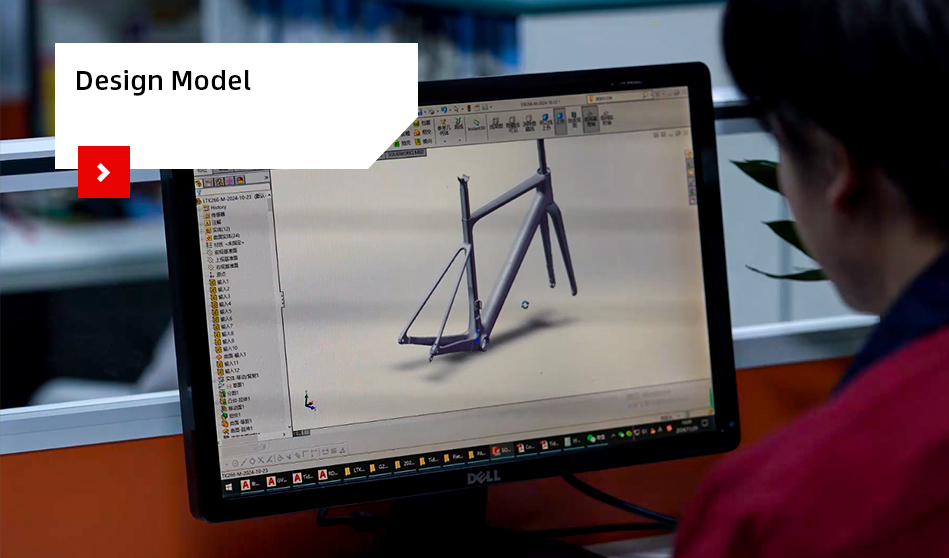
When a brand sets out to develop a new carbon fiber frame, the real performance gap isn’t created by the material itself, but by the engineering logic behind the carbon bike frame model design. From the initial bike frame CAD design to the intricate carbon frame structure design, every decision dictates the final balance of stiffness, weight, and durability. Industry data confirms that high-end frames rely on finite element analysis (FEA) to optimize stress distribution and maximize structural efficiency. For any serious carbon frame manufacturer, a proven carbon bike frame development workflow, paired with consistent layup execution, is what truly defines long-term performance.
What is Carbon Bike Frame Model Design?
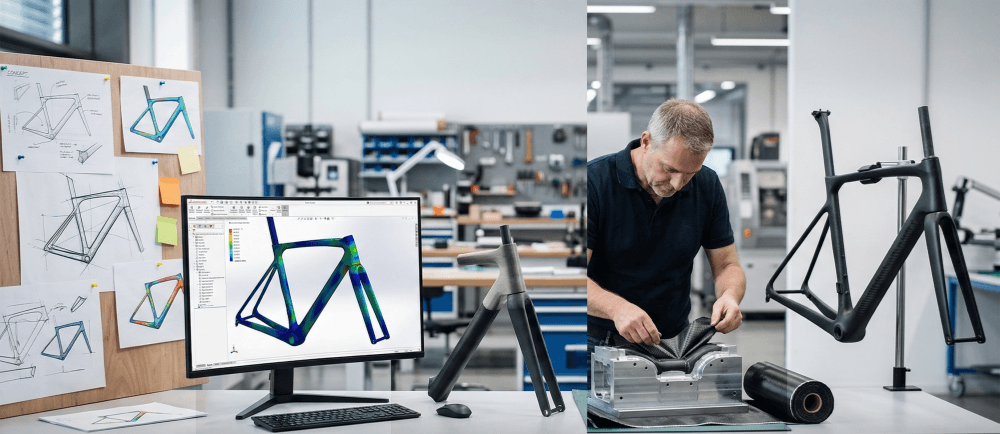
In high-performance development, carbon bike frame model design is far more than aesthetic modeling; it’s a systematic framework integrating geometry, load path analysis, and engineering validation. By pairing bike frame CAD design with finite element analysis (FEA), engineers can predict stiffness, weight balance, and structural integrity early on. This foresight is critical, directly dictating mass production stability and the product’s ultimate market edge.
1.1: Defining Carbon Bike Frame Model Design and Its Value
carbon bike frame model design represents the entire trajectory from sketch to execution, including 3D modeling, layup strategy, and prototype validation. Its primary value lies in using precise carbon frame engineering to optimize stress distribution. This achieves the ideal synergy of lightweight construction and rigidity while cutting trial-and-error costs and accelerating time-to-market.
1.2: How Carbon Bike Frame Design Differs from Traditional Methods
Unlike metal frames that rely on tube strength, carbon bike frame design is driven by material logic. Through strategic control of fiber orientation within the carbon bicycle frame design, performance can be tuned across specific zones. This design freedom allows the frame architecture to reach a sophisticated balance between strength, compliance, and power transfer.
Carbon Frame Engineering: The Logic Behind the Design
In carbon bike frame model design, engineering defines the performance ceiling. From material selection to layout, carbon frame engineering must bridge the gap between fiber orientation and stress distribution. A mature carbon bike frame development workflow goes beyond CAD; it prioritizes real-world load path management and long-term reliability—the ultimate benchmarks for brands evaluating a manufacturer’s capability.
2.1: How Material Properties Shape Carbon Fiber Frame Design
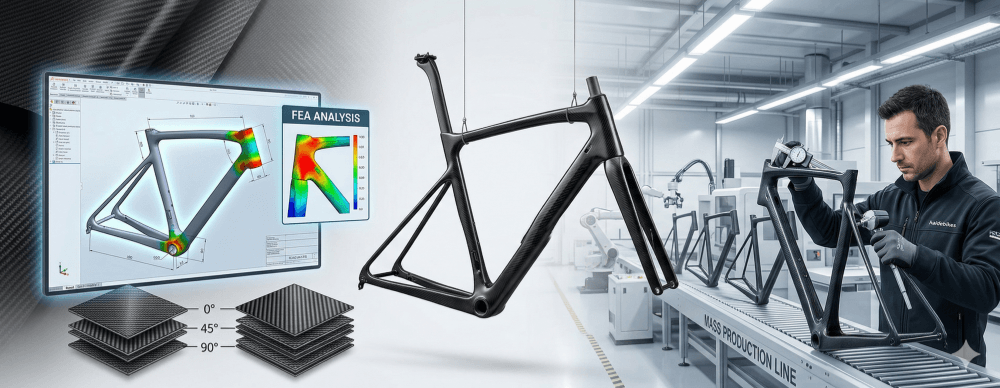
Carbon fiber is inherently anisotropic, meaning fiber orientation dictates how a frame handles stress. By fine-tuning layup angles and ply counts, engineers can precisely manipulate stress distribution to reinforce high-load zones while stripping redundant weight. This mastery of material behavior is the true competitive edge in carbon fiber frame design.
2.2: The Balancing Act: Stiffness vs. Weight Optimization
In the field, the stiffness-to-weight ratio remains the gold standard of design efficiency. By maximizing BB stiffness and headtube strength through strategic load path planning, we deliver carbon bike frame design solutions that offer explosive power transfer and stable handling without an ounce of unnecessary mass.
The Carbon Bike Frame Development Workflow: Concept to Mass Production
The transition from carbon bike frame model design to stable mass production relies on a workflow that guarantees consistency and market edge. A proven carbon bike frame development cycle integrates everything from initial geometry layout to prototype validation, using rapid design iteration to refine both structural integrity and ride quality.
3.1: Conceptual Design and Geometry Definition
Whether for XC, Gravel, or Road, we define critical metrics like stack, reach, and wheel-size compatibility at the outset. By incorporating MTB geometry trends 2026 and the latest gravel frame design trend, we optimize handling and stability to ensure the final ride feel resonates with target riders.
3.2: Bike Frame CAD Design and 3D Modeling
Using professional bike frame CAD design software (such as SolidWorks or CATIA), we build high-fidelity models for FEA (stress simulation). This allows us to visualize rigidity distribution and load paths early on, neutralizing structural risks before any physical tooling begins.
3.3: Prototyping and Validation
Once in the prototyping phase, we execute rigorous prototype validation, including stress, fatigue, and assembly clearance checks. Every piece of feedback triggers a design iteration, ensuring that the frame’s reliability and performance are fully optimized before moving to the production line.
Carbon Frame Structure Design: Key Engineering Elements
In practice, carbon frame structure design dictates both the rigidity profile and the long-term durability of the chassis. By mastering load path management and stress distribution, engineers strike the critical balance between minimalist weight and maximum strength. This remains the core technical benchmark for brands auditing a manufacturer’s carbon bike frame design capabilities.
4.1: Strategic Analysis of High-Load Zones
The Bottom Bracket (BB), Head Tube, and Chainstays are the primary stress hubs of any frame. Using finite element analysis (FEA) for load simulation allows us to pinpoint stress concentrations, directly enhancing structural stability and power transfer efficiency.
4.2: Layup Architecture and Reinforcement Strategy
Each frame zone requires a bespoke layup strategy. By integrating high-modulus fibers into high-stress junctions while optimizing material removal in low-load areas, this carbon fiber frame design approach drastically improves fatigue life and impact resistance without unnecessary bulk.
4.3: Monocoque vs. Modular Design Dynamics
Monocoque construction prioritizes structural continuity and weight savings, whereas modular design offers greater development flexibility and cost management. For any carbon bike frame development project, the choice between these two methods hinges entirely on the brand’s positioning and scaling strategy.
Carbon Frame Architecture: Integrated Design Logic
In carbon bike frame model design, the architecture defines the ceiling for ride performance and production stability. A mature carbon frame architecture goes beyond static geometry; it is a dynamic deconstruction of load path management and stiffness profiles. By optimizing the underlying carbon frame structure design and layup schedule, engineers strike a balance between weight reduction and fatigue life, providing a reliable blueprint for high-volume manufacturing.
5.1: Platform-Specific Architecture (Road / MTB / Gravel)
Architectural requirements shift across platforms: Road focuses on raw stiffness and aerodynamic gains; MTB prioritizes impact absorption and toughness; Gravel seeks the sweet spot between compliance and multi-terrain versatility. These demands directly dictate the geometry and reinforcement zones within the carbon bike frame design.
5.2: Aerodynamics and the Integration Trend
Current innovation is driven by aero bike frame integration, featuring fully internal cable routing and integrated cockpits. These advancements push the limits of bike frame CAD design and mold precision, placing immense pressure on production consistency and assembly efficiency.
5.3: Future Outlook: Large Wheel Sizes and New Platforms
Emerging platforms are reshaping R&D—for instance, 32-inch mountain bike architectures demand a total rethink of rear triangle clearance and rigidity distribution. A forward-thinking carbon bike frame development strategy must factor in structural redundancy and tooling compatibility to stay ahead of evolving standards.
Advanced Toolchains: From CAD to CFD Analysis
In modern carbon bike frame model design, simulation has shifted from an option to a core necessity. Integrating bike frame CAD design with finite element analysis (FEA) and aerodynamic modeling allows for full stress simulation and validation before the first mold is even cut. This drastically slashes trial-and-error costs and delivers a faster development cycle—a foundational requirement for brands prioritizing performance consistency.
6.1: CFD-Driven Aerodynamic Optimization
By running drag test simulations via CFD, engineers can refine tube profiles and airflow paths down to the millimeter. Reducing high-speed drag is no longer just a trend; it is the definitive method for elevating efficiency in high-end carbon frame design.
6.2: The Role of FEA in Strength Prediction
FEA allows us to visualize stress simulation under real-world loading scenarios. It enables engineers to fine-tune the carbon frame structure design, stripping away unnecessary mass while ensuring rigidity and structural safety factors remain uncompromised.
6.3: Cutting R&D Costs Through Virtual Prototyping
Virtual testing acts as a pre-emptive strike against design flaws, significantly reducing the need for physical prototypes and costly mold revisions. This streamlines the carbon bike frame development pipeline, ensuring both project predictability and superior speed-to-market.
The Carbon Frame Manufacturer’s Perspective: Scaling to Production
Translating carbon bike frame engineering into a mass-producible reality is a relentless balancing act between tooling, process, and QC. Every step dictates the final consistency and strength ceiling of the chassis. For a professional manufacturer, mastering the CAD-to-mold transition and high-precision pre-preg layup is the only way to hit every design spec without compromise.
7.1: Tooling Development and Precision Engineering
Mold accuracy is the bedrock of structural stability. We mandate dimensional tolerances within ±0.1mm for critical zones, ensuring that every carbon frame structure design perfectly replicates the original CAD model once it leaves the mold—effectively eliminating unintended stress concentrations.
7.2: How Production Processes Dictate Design Success
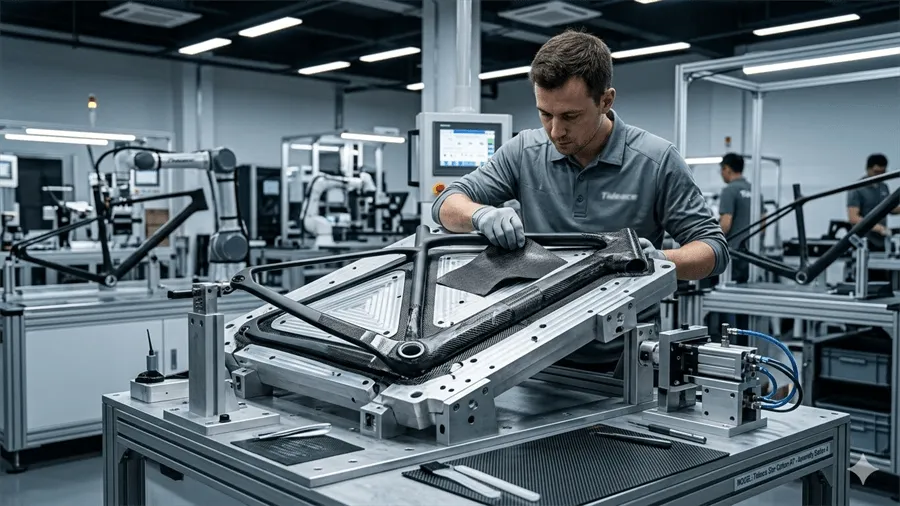
From pre-preg placement to vacuum bagging and autoclave curing, every variable shapes the frame’s final stiffness-to-weight profile. Rigorous process control maximizes layup efficiency and, more importantly, prevents internal defects like fiber wrinkling or voids that could compromise the structure.
7.3: Quality Control and Performance Consistency
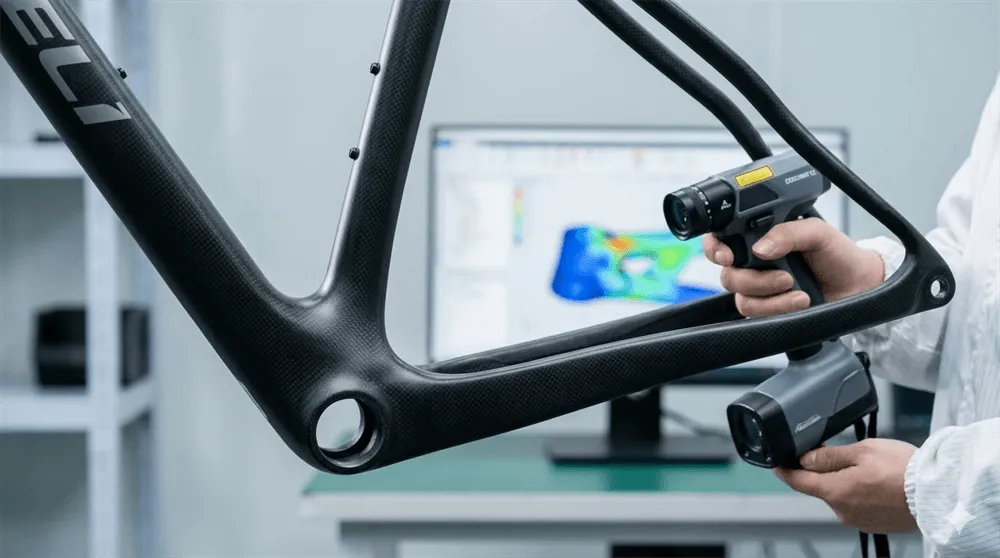
A robust QC framework must integrate in-line inspections, precision metrology, and rigorous bench testing. Our objective is to ensure that every production frame maintains identical stiffness, fatigue life, and finish, upholding the strict standards set during carbon bike frame development.
Benchmarking Superior Carbon Bike Frame Design
Evaluating a carbon frame goes far beyond aesthetics and weight; it’s about structural integrity and long-term fatigue life. Elite carbon bike frame development integrates finite element analysis (FEA) with real-world load testing to ensure every layup is optimized for peak performance. For brands and wholesalers, this rigor provides the ultimate assurance for stable mass production.
8.1: Scenario-Specific Engineering
Mature designs are engineered for the specific demands of XC, Trail, or Gravel. By fine-tuning geometry and stiffness profiles, engineers ensure the frame maintains handling precision and compliance under stress, effectively minimizing fatigue-induced structural failure over time.
8.2: A Proven Validation and Testing Framework
A robust testing ecosystem—comprising strength test, fatigue test, and impact test protocols—is non-negotiable. This data-driven approach bridges the gap between lab simulations and field performance, neutralizing production risks and providing solid technical backing for B2B partners.
8.3: Capacity for OEM and Custom Development
The ability to offer agile OEM and bespoke development is a decisive factor for brand partners. From geometry adjustments to advanced material selection, a manufacturer’s capacity to tailor carbon bike frame design to specific market needs is what defines its long-term collaborative value.
Common Pitfalls in Carbon Bike Frame Design
In carbon bike frame model design, even seasoned teams can falter by miscalculating critical design trade-offs. Common failures often stem from aggressive weight-shaving at the expense of structural integrity or forcing over-integration that compromises serviceability. Neglecting long-term durability and fatigue performance creates ticking time bombs that jeopardize carbon frame engineering reliability and long-term brand equity.
-
Chasing Weight at the Expense of Strength: Stripping material without considering safety buffers leads to structural instability under peak impact.
-
Over-integration Leading to Maintenance Nightmares: Designs like internal routing must prioritize mechanics over aesthetics to avoid excessive service complexity.
-
Ignoring Long-term Fatigue Performance: Meeting static load standards is not a proxy for high-cycle fatigue life—the most overlooked blind spot in carbon design.
FAQ: Carbon Bike Frame Model Design
This guide addresses critical inquiries from brands regarding carbon bike frame model design. We break down engineering optimization, CAD strategies, and development timelines—leveraging carbon frame structure design, FEA, and validation to ensure a seamless transition from concept to high-performance mass production.
Q: What is the core of carbon bike frame design?
A: It is the strategic synergy between geometry and layup architecture. Precise fiber orientation dictates the ceiling for stiffness and weight reduction while fine-tuning compliance for rider comfort.
Q: How are carbon frames engineered for performance?
A: The process is a rigorous path from material selection to structural deconstruction. It focuses on optimizing stress distribution, fatigue testing, and strength validation to eliminate dead weight while maintaining absolute safety margins.
Q: What software is industry-standard for bike frame CAD design?
A: Workflows rely on SolidWorks or CATIA for 3D modeling, paired with ANSYS FEA for simulation. This allows engineers to resolve 90% of structural risks through stress and aerodynamic analysis before tooling begins.
Q: What is the typical timeline for carbon frame development?
A: A comprehensive carbon bike frame development cycle—from sketch to final validation—typically spans 6 to 10 months. This accounts for the design iterations and rigorous testing protocols required to hit high-performance benchmarks.
Conclusion: Design as the Definitive Edge for Performance and Brand Equity
The trajectory from conceptual sketch to carbon bike frame model design and mass production is a continuous refinement of stiffness, weight, and durability. Sophisticated carbon frame engineering paired with precision carbon frame structure design does more than ensure stability—it builds the technical moat that defines a brand’s competitive advantage in the OEM and wholesale landscape.
11.1: Translating Design Excellence into Market Value
A top-tier carbon bike frame development workflow—integrating CAD modeling, FEA stress analysis, and layup optimization—guarantees that every frame delivers the structural integrity and ride feel demanded by the premium Euro-American markets.
CTA: Partner with a Professional Carbon Frame Manufacturer
Leveraging a proven carbon bike frame development workflow, we deliver end-to-end solutions from concept to mass production. Our mission: ensure every carbon frame structure design aligns perfectly with world-class performance benchmarks.
12.1: Bespoke Custom Development
We drive custom carbon bike frame design tailored to specific riding categories. From geometry refinement to advanced layup and weight optimization, we provide the technical backbone for your unique market positioning.
12.2: Precision Tooling and Mold Support
Our high-precision carbon frame mold development guarantees structural integrity and consistency. We offer extensive customization for multi-platform wheel sizes and tube profiles, ensuring your vision is replicated with zero deviation.
12.3: Full-Scale OEM / ODM Services
With robust carbon bike frame engineering at our core, we support high-volume manufacturing and private labeling. From CAD modeling and FEA to rigorous QC, we provide the reliability your brand needs to dominate the premium Euro-American markets.