Skip to content


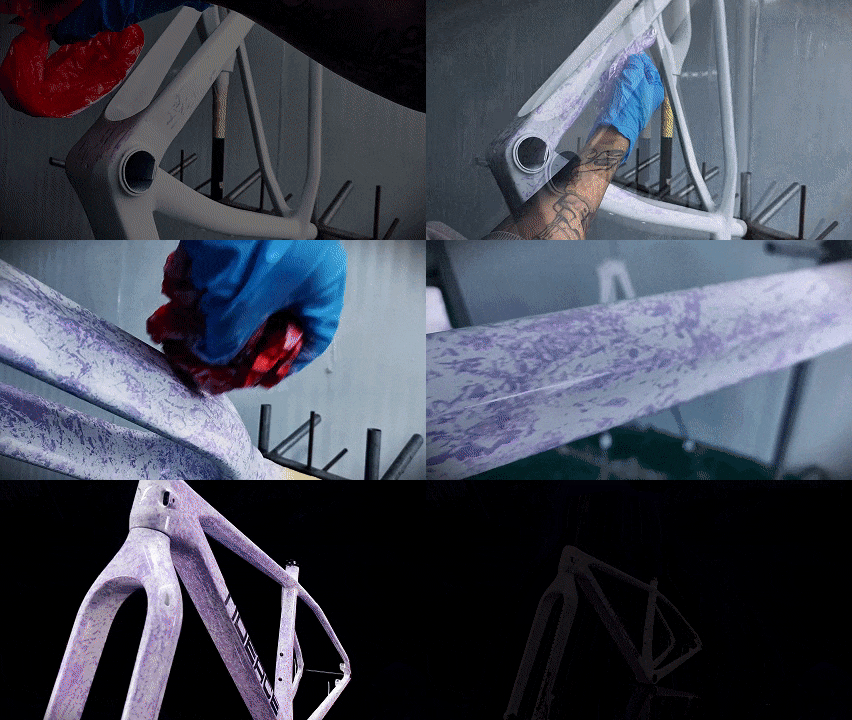
Carbon fiber has revolutionized modern bicycle design. From professional race bikes to high-performance gravel and mountain bikes, carbon frames are now considered the gold standard for riders seeking lightweight performance, stiffness, and advanced aerodynamics.
Yet despite their popularity, many cyclists still have questions about how carbon frames work. Riders often ask whether carbon frames are stronger than aluminum, how long they last, and why some frames can crack.
This guide explains the most common questions cyclists ask about carbon bike frame technology. Understanding how carbon frames are engineered, manufactured, and tested can help riders make better decisions when choosing the right frame.
If you’re interested in exploring modern frame designs and construction methods, you can also learn more about our carbon bike frame guide.
1. Are Carbon Bike Frames Really Stronger Than Aluminum?
This is one of the most common debates in cycling communities.
Carbon fiber frames can actually be stronger than aluminum frames, depending on how the fibers are arranged. Unlike metal frames, carbon frames are made by layering sheets of carbon fiber in specific orientations. This process, known as carbon layup design, allows engineers to reinforce areas where the frame experiences the most stress.
For example, the bottom bracket and head tube areas typically receive additional layers of carbon fiber to improve stiffness and strength. Meanwhile, other areas can be designed with fewer layers to reduce weight.
Because carbon fiber is a composite material, its strength can be tuned for different riding styles, whether it’s cross-country racing, road cycling, or endurance gravel riding.
2. Why Do Some Carbon Bike Frames Crack?
One of the biggest concerns riders have is the possibility of carbon frames cracking.
In reality, most carbon frame failures are not caused by normal riding conditions. Instead, cracks typically result from high-impact damage, such as crashes or sharp impacts against rocks or curbs.
Unlike metal frames, carbon fiber does not bend before failure. When carbon structures experience excessive force, the fibers can fracture internally.
Common causes of carbon frame damage include:
-
Severe crashes
-
Over-tightened components
-
Improper clamping on repair stands
-
Shipping damage
However, modern carbon frames are designed with impact resistance and fatigue durability in mind. Advanced carbon manufacturing techniques and strict quality control have significantly improved frame reliability over the past decade.
3. How Long Do Carbon Bike Frames Actually Last?
Many cyclists assume carbon frames have a limited lifespan, but this is often a misconception.
Under normal riding conditions, a high-quality carbon bike frame can last many years or even decades. Carbon fiber does not fatigue in the same way metals do, meaning it does not gradually weaken through repeated stress cycles.
Instead, carbon frames maintain their structural properties as long as the fibers and resin remain intact.
Most frame manufacturers perform fatigue testing, which simulates thousands of riding hours to ensure long-term durability. As a result, many carbon frames remain structurally sound even after years of use.
4. Are Expensive Carbon Frames Really Better?
Price differences between carbon frames can sometimes be dramatic. Some frames cost several hundred dollars, while others can exceed several thousand.
The main factors that influence carbon frame cost include:
-
Carbon fiber grade (such as T700 or T800)
-
Layup complexity
-
Mold precision
-
Manufacturing quality control
Higher-end frames often use more advanced layup patterns and optimized fiber placement to achieve better stiffness-to-weight ratios. They may also involve more labor-intensive manufacturing processes.
However, this does not necessarily mean lower-cost carbon frames are unsafe. Many manufacturers are able to produce reliable frames using efficient production techniques and proven carbon materials.
5. How Are Carbon Bike Frames Tested for Strength and Safety?
Before reaching the market, carbon bike frames must pass several types of testing to ensure safety and performance.
These tests often include:
Fatigue Testing
Simulates repeated riding forces over thousands of cycles.
Impact Testing
Evaluates how the frame handles sudden impacts.
Stiffness Testing
Measures how much the frame flexes under pedaling forces.
Many manufacturers follow international standards such as ISO or EN testing protocols. These tests help verify that frames can withstand real-world riding conditions.
Quality control during manufacturing is also essential, as even small defects in carbon layup can affect structural integrity.
6. What Makes a High-Quality Carbon Bike Frame?
Not all carbon frames are created equal.
A high-quality carbon frame usually involves careful attention to several engineering factors:
Precision Layup Design
Engineers strategically place carbon layers to optimize strength and stiffness.
Consistent Resin Distribution
Proper resin saturation ensures the fibers bond correctly.
Accurate Mold Manufacturing
High-precision molds ensure frame geometry and alignment remain consistent.
Quality Control Inspection
Frames are typically inspected during and after production to detect defects.
When these factors are carefully controlled, the result is a frame that delivers excellent strength, low weight, and responsive ride characteristics.
7. What Happens Inside a Carbon Bike Frame Factory?
The manufacturing process for carbon frames is both technical and labor-intensive.
It typically involves several key stages:
-
Carbon fiber sheets are cut according to specific patterns.
-
Workers place the sheets into molds in a precise sequence.
-
Internal molds or bladders are inserted to shape the frame.
-
The frame is cured under heat and pressure.
-
After curing, the frame is removed, trimmed, and finished.
This process allows manufacturers to create complex tube shapes that would be difficult or impossible with metal frames.
Modern carbon frame factories also use advanced techniques such as internal molding systems and improved resin formulations to enhance frame consistency and performance.
8. Why Are Carbon Bike Frames So Light Yet So Strong?
The strength-to-weight ratio of carbon fiber is one of its greatest advantages.
Because carbon fibers are extremely strong relative to their weight, engineers can build frames that are both lightweight and structurally rigid.
Additionally, carbon allows designers to shape frame tubes in aerodynamic and structurally efficient ways. For example, flattened or tapered tubes can improve stiffness while minimizing unnecessary material.
This combination of material efficiency and structural optimization is why carbon frames dominate high-performance cycling disciplines today.
9. Is Carbon Fiber Still the Best Material for Bike Frames in 2026?
Carbon fiber continues to dominate performance cycling, but other materials still have their place.
Aluminum remains popular for affordable performance bikes, while titanium offers durability and ride comfort.
However, carbon fiber remains the most versatile material for high-performance frames because engineers can precisely control its structural characteristics.
For racing disciplines such as road cycling, triathlon, and cross-country mountain biking, carbon frames still provide the best balance of:
-
weight
-
stiffness
-
aerodynamics
-
vibration damping
As manufacturing technology improves, carbon frames are expected to remain the industry standard for performance bikes.
10. Will Carbon Bike Frames Get Even Lighter in the Future?
Future developments in carbon frame technology are already underway.
Engineers are exploring new innovations such as:
-
advanced resin systems
-
automated layup processes
-
AI-assisted frame design
-
improved fiber orientation techniques
These technologies could allow future carbon frames to become even lighter while maintaining strength and durability.
At the same time, manufacturers are also focusing on improving frame durability and impact resistance, ensuring riders can enjoy high performance without sacrificing reliability.
Conclusion
Carbon bike frame technology has evolved dramatically over the past two decades. What was once considered an exotic material is now the foundation of modern high-performance bicycle design.
From advanced carbon layup engineering to rigorous testing standards, today’s carbon frames are stronger, lighter, and more refined than ever before.
If you’re interested in exploring modern carbon frame designs and construction features, visit our full guide to carbon bike frames in another article.
Understanding the technology behind these frames can help riders choose equipment that matches their riding style, performance goals, and long-term durability expectations.