Skip to content


In carbon fiber bicycle manufacturing, professional carbon bikeframe quality inspection has become crucial in determining safety and performance. The global bicycle frame market is projected to continue growing until 2030 (source: grandviewresearch.com).
Lightweighting and safety are challenges that every manufacturer must balance, and visual inspection alone is far from sufficient. A complete carbon fiber bikeframe QC process encompasses raw material inspection, lamination control, mold precision, and fatigue testing. Research by Bicycle Network Australia shows that even brand-new carbon fiber frames may have invisible structural damage (source: bicyclenetwork.com.au).
Therefore, professional carbon frame inspection is not just a factory safety measure, but also a reflection of brand commitment and customer trust.

What is Carbon Bike Frame Quality Inspection?
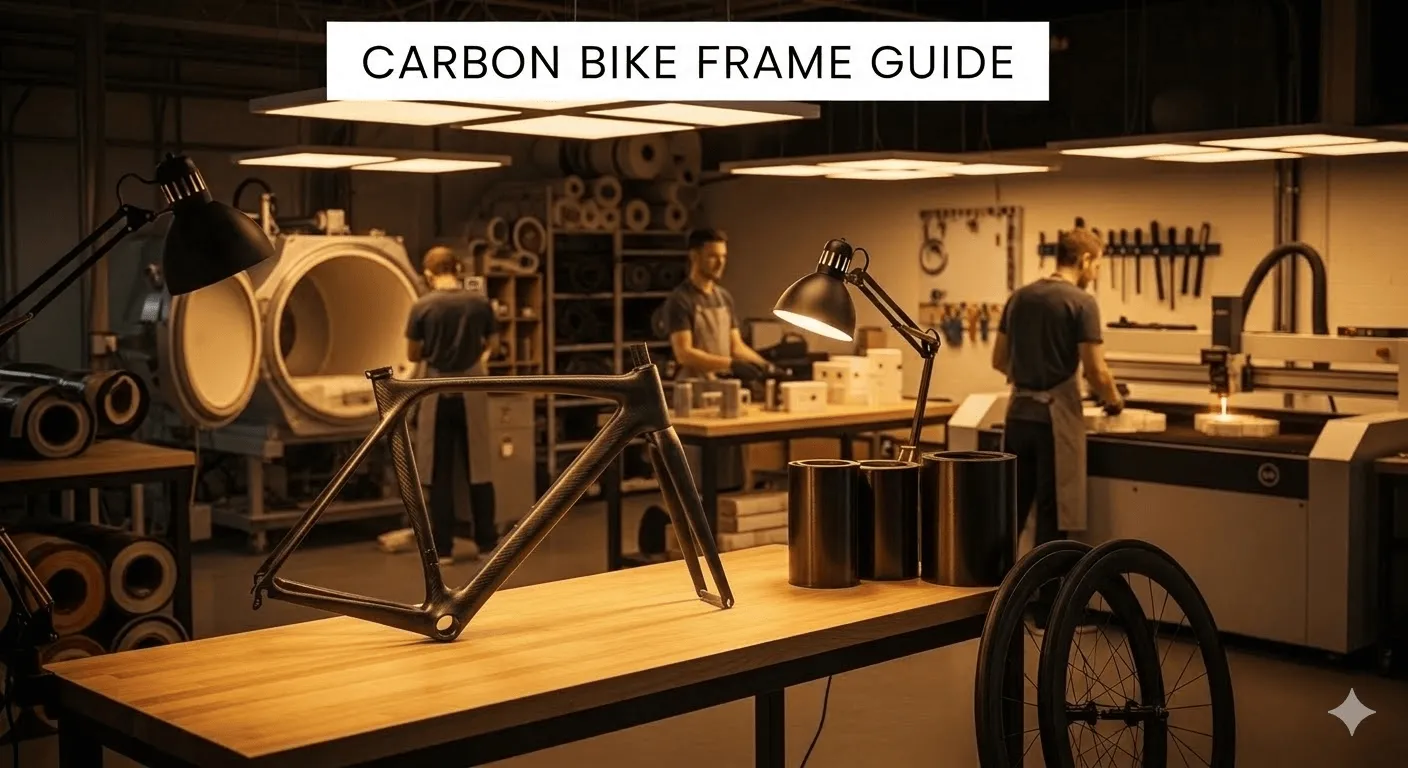
Carbon bike frame quality inspection is a core process ensuring that every frame leaving the factory is safe, durable, and meets performance standards. Through systematic inspection, manufacturers can minimize defect rates, ensuring the frame does not crack, delaminate, or exhibit other structural problems during riding, while also meeting the stringent requirements of high-end riders for lightweight design and rigidity. This process is not only part of production standards but also a reflection of brand commitment and customer trust.
1.1: Definition and Purpose
Definition: Carbon bike frame quality inspection is a comprehensive inspection system for carbon fiber frames, from raw materials to finished product, including structural integrity, lamination quality, mold precision, and appearance defect detection.
Purpose:
- Safety: Ensures the frame does not break or fail under high-load riding, climbing, or sudden braking conditions.
- Durability: Extends frame lifespan, reduces repair rates, and minimizes customer complaints.
- Performance Optimization: Precise inspection optimizes weight distribution and stiffness, resulting in a smoother riding experience and meeting the “stiff-but-light” frame requirements of professional riders.
Long-tail keywords/LSI can be incorporated: carbon fiber bike frame QC, bike frame quality control, structural integrity check, layup inspection.
1.2: Overview of Inspection Processes
Quality inspection of carbon fiber bike frames typically involves three key stages:
Raw Material Inspection
Thickness, fiber orientation, and air content are tested for carbon fiber cloth, resin, and composite materials.
Ensuring raw materials meet mainstream European and American standards (such as ISO 9001 / EN 14781).
Mold and Lamination Process Inspection
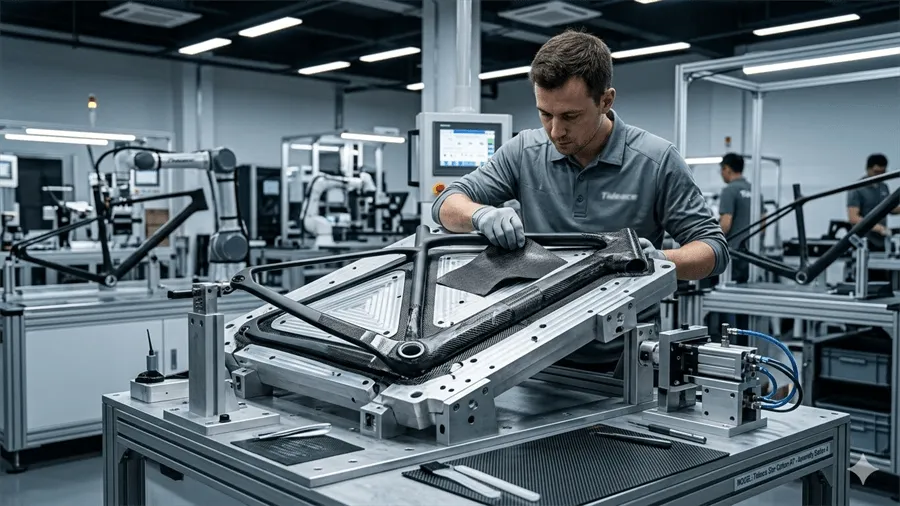
Inspecting mold dimensional accuracy, lamination sequence, and pressure-temperature profiles.
Using professional methods such as laser scanning and vacuum bag monitoring to avoid layer misalignment or air bubbles (commonly known in the industry as “blow-out” or “delam”).
Post-Molding Appearance and Structural Inspection
Appearance inspection: Scratches, color differences, cracks, and other surface defects.
Structural inspection: Non-destructive testing (NDT), such as ultrasonic or X-ray, is used to confirm the absence of microcracks in critical load-bearing components.
This stage is also a core step in bicycle frame quality check and carbon frame inspection, determining whether the frame is ready for shipment.

Common Carbon Fiber Bike Frame QC Issues
Even carbon fiber frames produced in top-tier factories may have potential material or manufacturing defects. Systematic carbon fiber bike frame QC and bicycle frame quality checks can identify these potential problems early, preventing safety risks or performance degradation in the final product. These issues can be mainly categorized into three aspects: material defects, manufacturing defects, and riding safety hazards.
| Defect Type | Issue | Impact | Industry Term |
|---|---|---|---|
| Material Defect | Layer Misalignment | Reduces frame stiffness, may cause cracks | Layer misalign |
| Material Defect | Void | Lowers structural strength, may lead to localized failure | Blowout |
| Material Defect | Contamination | Creates weak spots, reduces durability | Contam |
| Process Defect | Poor Bonding | Joint strength insufficient, may delaminate or break | Weak bond |
| Process Defect | Resin Distribution Issue | Affects weight and stiffness | Dry spot / Resin starve |
| Process Defect | Incomplete Molding | Local softness or deformation, reduces structural performance | Incomplete cure |
2.1: Material Defects
Material defects are one of the root causes of carbon fiber frame quality problems, including fiber layer misalignment, air bubble inclusions, and residual impurities.
Layer Misalignment: Affects frame rigidity and strength, easily leading to cracks in high-stress areas.
Void/Blowout: Uneven resin distribution or excessive air content reduces structural integrity.
Contamination: Dust or oil contamination entering the lamination process can cause localized weak points.
These defects are usually discovered during the raw material inspection stage of carbon frame inspection and are a key focus of bike frame quality control.
2.2: Manufacturing Defects
Manufacturing defects refer to operational or process problems during production, commonly including:
Poor Bonding: Insufficient strength at the joints, potentially leading to breakage or delamination.
Uneven Resin Starvation/Excess: Affects weight and rigidity, commonly known in the industry as “dry spots.”
Incomplete Curing/Pressing: May cause localized softening or deformation of the frame.
Strict carbon fiber bike frame QC processes can correct these issues promptly through pressure curve monitoring and vacuum bag inspection.
2.3: Riding Safety Hazards
Material or manufacturing defects can ultimately lead to direct riding safety problems, including:
Frame Cracks/Fractures: Especially in high-stress areas such as the bottom bracket (BB), head tube, and rear fork.
Stress Concentration Points: May cause localized damage during sudden braking or jumping.
Professional bicycle frame quality checks and carbon frame inspections can identify these hazards before the bike leaves the factory, ensuring the frame performs safely and reliably during riding.
Key Steps in Bicycle Frame Quality Check
The production of high-quality carbon fiber bicycle frames relies heavily on a systematic bicycle frame quality check. From appearance to structural performance, every step is rigorously controlled to ensure that the final frame is not only lightweight but also withstands the rigors of high-intensity riding. Below are four key inspection steps, the core of carbon frame inspection and bike frame quality control.
3.1: Visual Inspection
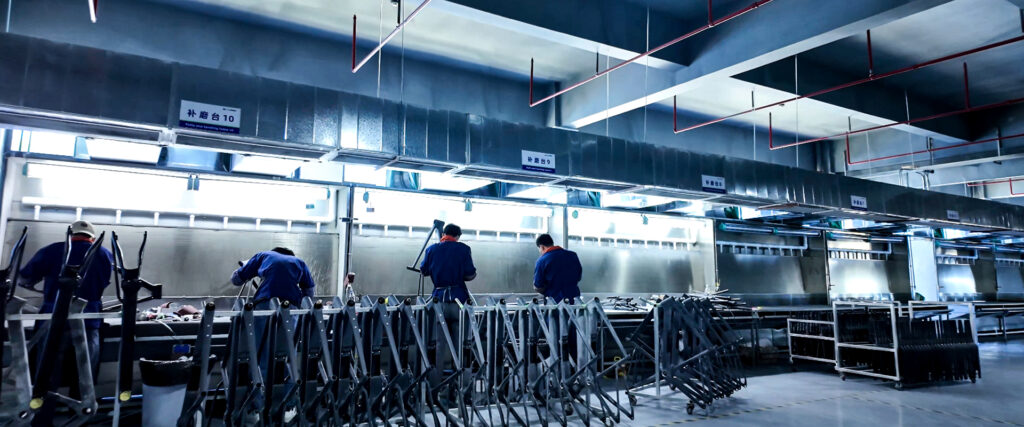
Visual inspection is the most direct quality control step, used to detect defects such as scratches, cracks, bubbles, and color differences.
- Scratches: Surface damage that may occur during transportation or processing.
- Voids: Localized insufficient resin or air content affecting structural strength, commonly known as “blowouts.”
- Color Inconsistency: While not affecting the structure, it can impact the brand image of high-end frames.
3.2: Dimensional Inspection
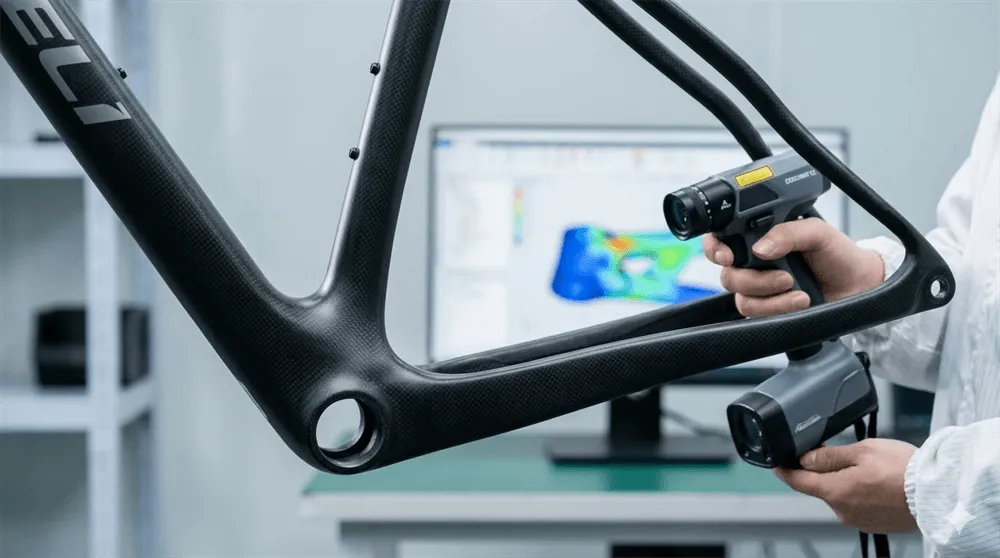
Precise dimensions are related to riding posture and performance. Common tools include laser measuring instruments and coordinate measuring machines.
- Stack & Reach: Affect rider comfort and riding posture.
- Bottom Bracket (BB) and Dropout: Critical load-bearing points; dimensional errors can lead to installation mismatch or stress concentration.
Through carbon fiber bike frame QC processes, every critical dimension is ensured to be within tolerance.
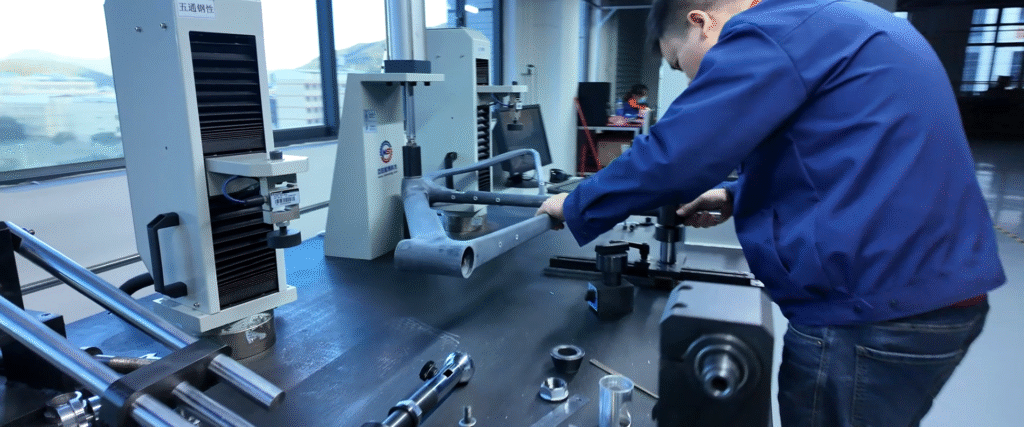
3.3: Structural Testing
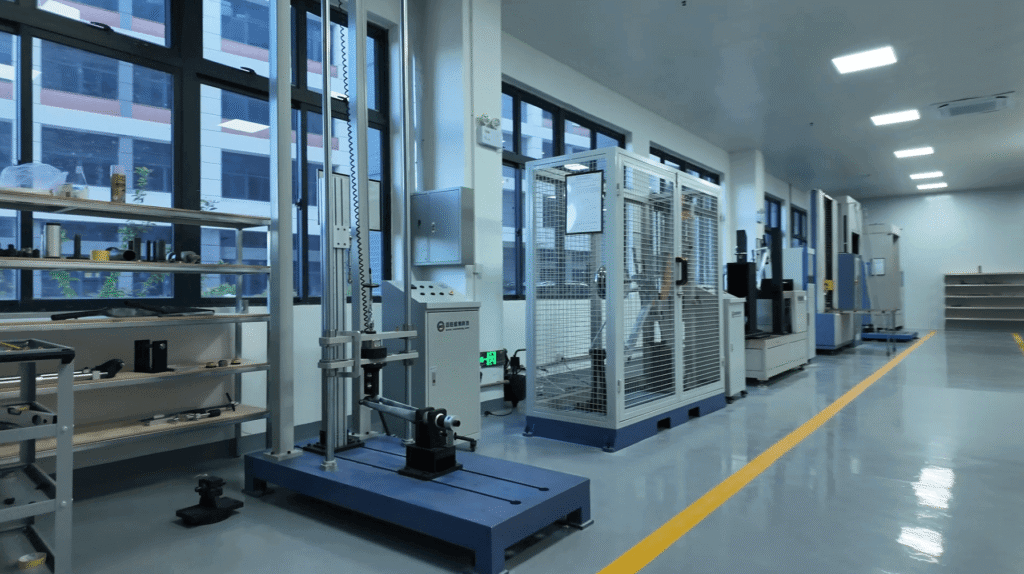
Structural testing is a crucial step in evaluating frame strength and durability.
- Static Load Test: Simulates long-term riding loads.
- Fatigue Test: Tests the frame’s lifespan under repeated stress, preventing microcrack accumulation that could lead to breakage.
Commonly known in the industry as the “torture test,” emphasizing extreme durability.
3.4: Non-Destructive Testing (NDT) Methods
NDT technology can detect internal defects without damaging the frame.
- X-ray: Detects internal cracks and delamination.
- Ultrasound: Precisely detects fiber arrangement and air bubble location.
- Infrared Scan: Assess resin distribution and curing uniformity.
Through these steps, manufacturers are able to perform a complete carbon frame inspection process, providing riders with high-safety and high-performance carbon fiber frames.
The Importance of Carbon Frame Inspection
Professional carbon frame inspection is not only part of the production process, but also a guarantee of carbon fiber frame quality and riding safety. Through systematic bike frame quality control and bicycle frame quality checks, manufacturers can identify potential defects in advance, optimize structural performance, and enhance the competitiveness of the final product in the market. Its importance is mainly reflected in three aspects: safety, performance, and brand reputation.

4.1: Ensuring Riding Safety
Carbon fiber frames withstand enormous stress during high-intensity riding, sudden braking, or off-road bumps. Professional carbon frame inspection can detect microcracks, delamination, or stress concentration points, preventing accidental breakage. Commonly known in the industry as “crack catch,” through NDT technology and structural performance testing, it ensures that every frame has reliable safety before being put on the road.
4.2: Enhancing Product Lifespan and Performance
Strict carbon fiber bike frame QC not only prevents premature damage but also optimizes frame weight and stiffness distribution, making the riding experience lighter and smoother. Through precise dimensional checks, fatigue testing, and resin curing monitoring, manufacturers can create high-end frames that are both lightweight and durable, meeting the “stiff-but-light” performance requirements.
4.3: Enhancing Brand Trust and Customer Satisfaction
A high-quality bicycle frame quality check process is a key selling point for premium brands. By publishing inspection reports and implementing transparent QC processes, brands not only reduce returns and complaints but also strengthen customer trust. The industry term “QC pedigree” is commonly used to describe this traceable quality assurance system, which directly impacts consumer brand loyalty and word-of-mouth marketing.
Best Practices for Bike Frame Quality Control
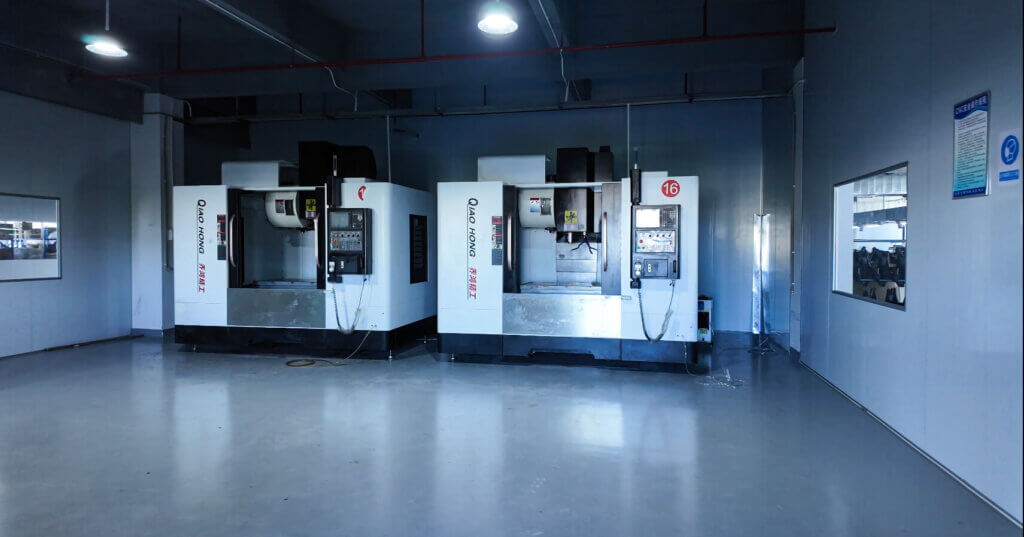
Effective bike frame quality control relies not only on rigorous inspection processes but also on a combination of industry standards, advanced technologies, and continuous improvement mechanisms. Through scientific carbon frame inspection and carbon fiber bike frame QC, manufacturers can minimize defect rates and improve frame performance and customer satisfaction. Here are three key practices for achieving optimal QC.
5.1: Standardized QC Processes
Standardized processes are the foundation for ensuring consistency and traceability. Carbon fiber frame production often follows international standards such as ISO 9001 and EN 14781 to develop QC manuals covering raw material verification, lamination control, mold precision, and outgoing inspection. Commonly known in the industry as a “QC playbook,” this helps new employees quickly master the processes while ensuring that every batch of frames meets bicycle frame quality check requirements.
5.2: Automated and Manual Inspection Methods
Combining automated equipment with manual inspection can significantly improve the detection rate. Laser measurement accurately assesses critical dimensions, vision inspection systems capture minute surface defects, and manual inspection identifies microcracks hidden within complex structures. This “human-machine collaborative” QC approach makes carbon frame inspection more comprehensive and efficient.
5.3: Continuous Improvement and Feedback Mechanisms
Continuous improvement is key to maintaining competitiveness for high-end brands. By regularly tracking rework rates, collecting customer feedback, and analyzing production data, manufacturers can optimize process parameters, improve lamination techniques, and adjust mold precision. The industry term “QC loop” describes this closed-loop improvement process, ensuring that carbon fiber bike frame QC and bike frame quality control continuously move towards the goal of zero defects.
Summary
Professional carbon bike frame quality inspection is the core guarantee of the safety, durability, and performance of high-end carbon fiber frames. From raw materials, lamination, and mold control to appearance, dimensional, and structural performance testing, every step is indispensable. Through systematic carbon fiber bike frame QC and bicycle frame quality checks, manufacturers can identify material and process defects and proactively prevent safety hazards such as cracks or stress concentrations.
Combining standardized processes (ISO/EN), automated and manual inspection, and continuous improvement mechanisms (“QC loop”/“QC pedigree”) maximizes defect rate reduction, optimizes weight and rigidity, and enhances brand trust and customer satisfaction. High-quality carbon fiber frames stem from rigorous and professional carbon frame inspection; every step reflects the brand’s commitment.