Skip to content


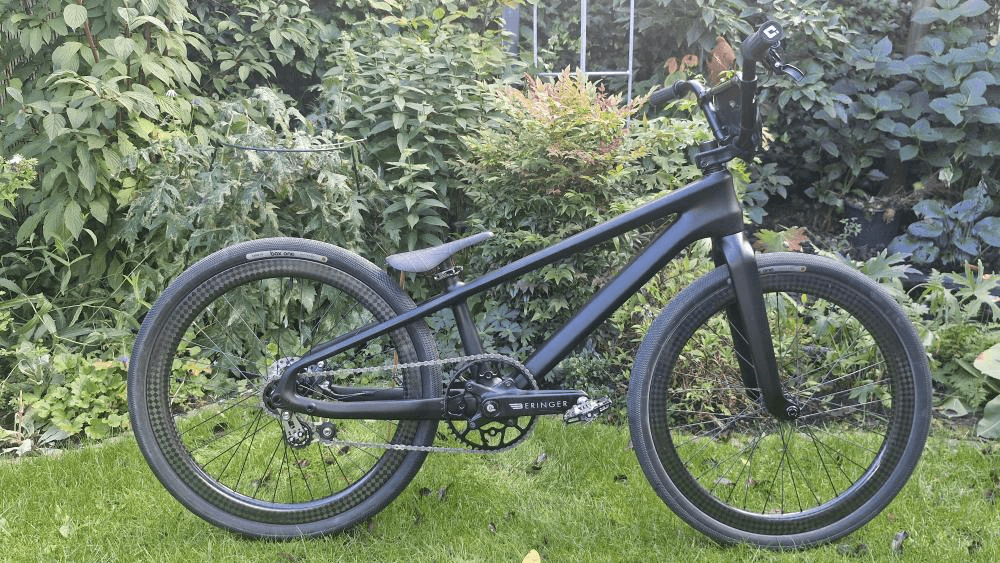
When you see BMX riders leaping and tackling on tracks on the street, you’ll rarely see BMX bike frames made of carbon fiber. This is no accident. While carbon fiber is becoming increasingly popular in road, mountain, and track BMX bikes due to its lightweight and high rigidity, BMX bike frames face challenges in street environments, including high impacts, frequent falls, and maintenance difficulties.
According to data from cyclingindustry.news, over 68% of street BMX riders still prefer steel or aluminum frames because these materials are easier to repair after a collision and are less expensive. As a manufacturer with over a decade of experience producing carbon fiber bicycle components, I have a deep understanding of molding, fatigue resistance, and stress distribution: even with the best-designed BMX bike frames, the realities of street use limit the widespread adoption of carbon fiber. This article will combine market data and an engineering perspective to analyze why BMX frames remain a niche choice on the street and explore the feasibility and development direction of carbon fiber BMX in the future.
Introduction to Carbon BMX Bike Frames
Carbon fiber BMX frames are renowned for their lightweight and high rigidity, and are widely used in track, freestyle, and some street riding. As “frames for BMX bikes,” they balance strength, fatigue resistance, and stress distribution, which is particularly crucial for flares, pump jumps, and grid tricks.
They typically employ high-modulus carbon fiber lamination and localized reinforcement to balance lightweight and impact resistance. Whether “BMX bike frames” or “bike frame BMX,” the geometry is optimized based on the rider’s height, style, and jumping habits to ensure stability during every air trick or drop.
1.1: What is a BMX Bike Frame?
The BMX frame is the core skeleton of a BMX bike, determining the overall handling and crashworthiness. BMX frames can be categorized into three types based on their intended use:
Street: Emphasizing durability and agility, suitable for grind, manual, and gap jumps.
Race: Focusing on lightweight and explosive power, commonly seen in BMX track racing.
Freestyle: Balancing lightweight and impact resistance, suitable for ramp, vert half-pipe, or flatland freestyle performances.
Street frames typically use steel or aluminum alloys, while in high-end racing or freestyle frames, “BMX bike frames carbon” is increasingly becoming the choice, reducing overall weight while maintaining strength and improving jump and cornering agility.
1.2: Carbon Fiber in BMX Bike Frames
The application of carbon fiber in BMX frames mainly focuses on material lightweighting, stiffness optimization, and fatigue resistance. Compared to aluminum alloys or chrome-molybdenum steel, carbon fiber boasts a higher strength-to-weight ratio, making BMX bike frames perform exceptionally well in jumps, air tricks, and impact scenarios.
Modern carbon fiber BMX frames typically employ monocoque molding or tube-to-tube layup techniques, with reinforced nodes added to stress concentration areas to ensure the BMX bike frame doesn’t easily break during grinds or drops. This reinforcement process is known in the European and American BMX industry as “stress-zone reinforcement,” a crucial factor for professional freestyle riders choosing high-end carbon fiber frames.
Furthermore, the geometry of carbon fiber frames allows for stack and reach adjustments, optimizing handling and allowing riders to maintain balance and land accurately during spins and flips. This is a key reason why BMX frames are favored by high-end racing and freestyle riders.
Street BMX Riders’ Frame Requirements
Street BMX riders differ from track or freestyle riders in their frame selection, focusing more on durability, shock absorption, and cost control. This directly impacts the application and popularity of “BMX bike frames” in street environments.
2.1: Durability vs. Weight
Street riders frequently subject their frames to high-intensity impacts during grinds, manual jumps, gap jumps, or stair set jumps. Therefore, “frames for BMX bikes” need high impact resistance and fatigue strength, which are more important than lightweight.
While carbon fiber frames offer a significant weight advantage, reducing the difficulty of mid-air maneuvering and improving jump accuracy, street riders are often concerned about cracks or breaks during grinds or drops. In contrast, chromoly or high-strength aluminum alloy frames remain the preferred choice for street riders due to their durability and ease of repair. In Europe and America, riders commonly refer to steel frames as “bombproof frames,” meaning frames that are virtually indestructible.
2.2: Cost & Maintenance
Carbon fiber BMX frames are significantly more expensive than steel or aluminum frames, typically costing 2-3 times more. Furthermore, damaged carbon fiber frames are difficult and costly to repair, requiring professional laminate repair.
In contrast, “BMX bike frames” or “bike frame BMX” are made of steel or aluminum, making them more affordable, and street riders can easily repair them through welding or partial replacement. Considering durability, ease of maintenance, and budget, street riders often prioritize cost-effectiveness when choosing a frame, rather than simply pursuing lightweight design.
Why Carbon BMX Bike Frames Are Rare on the Streets
Despite the advantages of carbon fiber BMX frames in terms of lightweighting and handling, they are rarely used by street riders, primarily due to limitations in material properties, design and manufacturing, and market acceptance.
3.1: Material Limitations
Carbon fiber exhibits excellent high strength under static loads but is sensitive to frequent impact loading and crash fatigue. The grind, manual, and gap jumps of street BMX bikes often create localized stress concentrations, which can easily lead to microcracks or breakage. Therefore, “BMX bike frames” pose a durability risk for street use. In contrast, steel or aluminum frames are better able to withstand this “bombproof” level of impact.
3.2: Design & Manufacturing Challenges
Carbon fiber BMX frames require precise molding and advanced layup technology. Stress distribution and fatigue life must be considered during the design process. For small-batch street frames, production costs are high and customization is difficult. Even with “frames for BMX bikes carbon,” complex geometric adjustments and localized thickening increase manufacturing time and repair complexity.
3.3: Market Acceptance
Street riders prefer steel or aluminum frames due to their cost-effectiveness, impact resistance, and ease of repair. Even high-end riders who experiment with “BMX bikes frame carbon” often use carbon fiber frames for track use or freestyle performances, while daily street practice primarily relies on durable steel or aluminum frames. Within the European and American BMX community, these street steel frames are commonly referred to as “workhorse frames,” signifying highly durable frames that are resistant to damage from crashes.
Potential Advantages of Carbon BMX Bike Frames
While carbon fiber BMX frames have limited street use, their unique advantages are gaining increasing attention on the track and in professional freestyle riding. These advantages include lightweight construction, handling, customizable appearance, and performance optimization for competition.
4.1: Lightweight & Maneuverability
Carbon fiber has an extremely high strength-to-weight ratio, making BMX bike frames more agile during flips, spins, and quick turns. Compared to traditional steel or aluminum frames, the lighter weight reduces inertia and improves the precision of jumps, air tricks, and grinds. Professional riders in Europe and America commonly refer to this lightweight, high-rigidity frame as a “feather frame,” meaning it’s as light as a feather yet can withstand high-intensity maneuvers.
4.2: Unique Aesthetics & Customization Options
Carbon fiber frames are easy to mold and color/pattern laminate, allowing for a personalized look while optimizing localized stress distribution. As “frames for BMX bikes carbon,” designers can adjust the geometry setup to suit the rider’s body type and riding style, providing customized stack and reach solutions to ensure each bike is both aesthetically pleasing and high-performing. Street and freestyle riders refer to these customized bikes as “one-off builds,” emphasizing their uniqueness.
4.3: Suitable for Race & Freestyle Applications
Carbon fiber BMX frames are particularly well-suited for racing tracks and professional freestyle performances. Through high-modulus carbon fiber lamination and reinforced nodes, “bike frame BMX” provides excellent stiffness and handling in high-intensity environments such as vert ramps, flatlands, or dirt jumps. Its lightweight nature also enhances acceleration and aerodynamics, giving riders a smoother experience in racing and freestyle maneuvers.
Conclusion & Manufacturer Insights
Based on the preceding analysis, street BMX riders need to weigh durability, cost, lightweight design, and handling when choosing a frame. Steel or aluminum alloy frames remain the preferred choice for daily street practice due to their “bombproof frame” characteristics, ease of maintenance, and cost-effectiveness, while carbon fiber “BMX bike frames” are more suitable for track use, freestyle performances, or high-end custom riders.
In the future, carbon fiber BMX frames are expected to improve impact resistance through optimized lamination technology, localized thickening designs, and geometric parameter adjustments (stack & reach customization), making “frames for BMX bikes carbon” increasingly feasible in street scenarios. Meanwhile, lightweight design and handling advantages remain their core selling points; professional riders in Europe and America refer to them as “feather frames,” emphasizing the combination of lightness and high rigidity.
For riders, choosing the right frame should take into account riding environment, style, and budget: if you mainly do jumps, grids, or flatland tricks, consider a carbon fiber frame to improve handling and agility; if you practice on the street or prioritize durability, a steel/aluminum frame is more reliable. In addition, paying attention to geometry, material grade, and fatigue resistance when choosing a frame will ensure safe and reliable air tricks or drops.