Skip to content


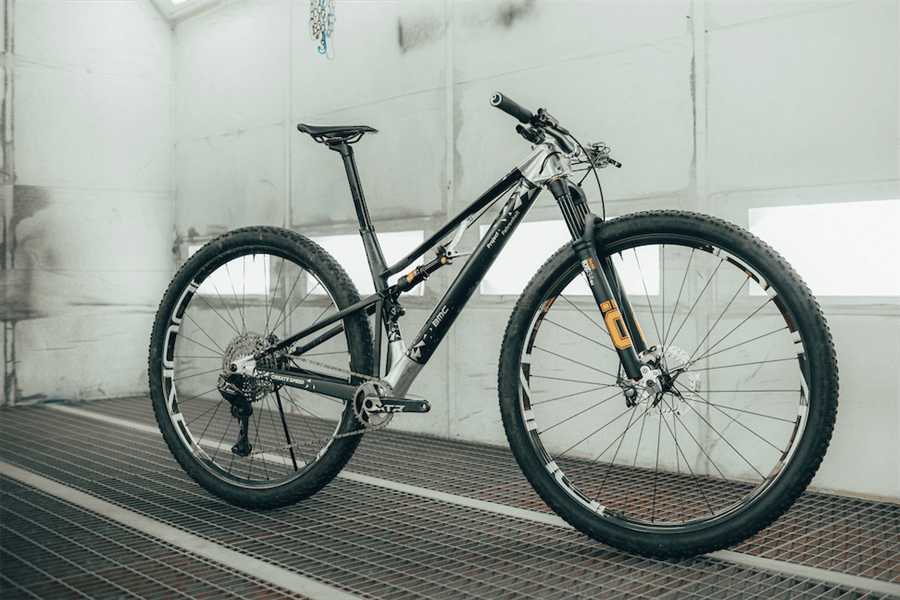
The North American market is hitting a tipping point as Tall riders drive demand for the 32 Inch Mountain Bike. Forum discussions on 32 Inch Mountain Bike frame and 32er MTB frame designs are spiking, specifically comparing 32 inch wheels vs 29er rolling efficiency. With a decade of carbon bicycle frame expertise, we’ve re-engineered the Big wheel mountain bike platform for maximum structural integrity and stability. For riders who have outgrown the 29er, this represents a massive systematic upgrade in performance and handling.

What is a 32 Inch Mountain Bike, and Why the Hype?
The 32 Inch Mountain Bike is rapidly transitioning from a niche concept to a legitimate production reality. As the industry proves the structural viability and market demand for larger platforms, the conversation is heating up. Compared to traditional standards, the 32er focuses on maximum rolling efficiency and high-speed stability. However, this jump in scale demands much more from the frame’s engineering than a standard build.
1.1: The Evolution: From 29ers to Big Wheel Mountain Bikes
Moving from 29ers to Big wheel mountain bikes is, at its core, a quest for superior roll-over capability. Larger wheels naturally “flatten” rock gardens and gravel, providing unmatched straight-line stability alongside a longer wheelbase. For riders prioritizing long-distance cruising and high through-flow performance, the increased diameter offers a much smoother ride—though it requires a strategic recalibration of steering feedback.
1.2: Core Design Logic of a 32 Inch Mountain Bike Frame
A performance-bred 32 Inch Mountain Bike frame isn’t just a scaled-up 29er. It requires a ground-up rethink of the head angle and chainstay length to keep the geometry balanced. When engineering a carbon bicycle frame for this size, we prioritize torsional stiffness and reinforced impact zones. Achieving that “sweet spot” between raw strength and lightweight performance is what makes a 32er MTB frame viable for mass production.
1.3: 32 inch wheels vs 29er: What’s the Real-World Difference?
In the 32 inch wheels vs 29er debate, momentum carries the day. The larger contact radius helps the 32er maintain speed with less effort, though 29ers still hold the edge in snap acceleration and tight, technical maneuvers. Ultimately, the 32er is built for environments where stability and through-speed are king, rather than ultra-tight, technical trails.
Who Should Actually Ride a 32 Inch Mountain Bike?
The 32-inch platform isn’t for everyone, but for specific riders, it’s game-changing. Identifying this demographic is key to positioning the 32 Inch Mountain Bike frame in a market hungry for specialized performance.
2.1: The Ultimate Fit for Tall Riders
Tall cyclists over 180cm often find 29ers cramped. The 32er MTB frame solves this, aligning standover and reach with larger physiques. It creates a natural riding posture and superior leverage that standard big-wheel bikes simply can’t match.
2.2: Stability for XC and Downcountry Enthusiasts
Riders prioritizing long-distance efficiency and through-speed will thrive on the momentum of a Big wheel mountain bike. By optimizing frame geometry and carbon layup, we’ve built a platform that dominates open trails while remaining stiff enough for aggressive climbing.
2.3: Early Adopters and Tech Blazers
There is a segment of riders obsessed with next-gen wheel platforms. These early adopters track wheel size evolution and the physics of 32 inch wheels vs 29er closely. They are ready to embrace the future of MTB balance before it hits the mainstream.
The Reality Check: Who Might Not Fit the 32 Inch MTB Frame?
Every wheel size evolution has its trade-offs. While the 32 Inch MTB frame is a beast for stability and rolling efficiency, it demands a specific rider profile and terrain. Analyzing these limitations isn’t just about marketing; it’s about ensuring the frame geometry aligns with the rider’s actual environment. Let’s be real—32ers aren’t a one-size-fits-all solution.
3.1: Is 32 inch too big? The Geometry Struggle for Smaller Riders
For shorter cyclists, the 32 Inch Mountain Bike frame can present significant hurdles, primarily regarding standover height and center of gravity. Those massive wheels naturally push the bike’s stack higher, making it feel cumbersome in tight switchbacks or technical sections where a 29er would flick through with ease. Unless the frame geometry is aggressively optimized for smaller proportions, low-speed handling can become a chore rather than a thrill.
3.2: Technical Trail and Enduro Purists
Riders who live for playful handling, rapid-fire bunny hops, and snapping the bike through corners might find the Big wheel mountain bike a bit too composed. The massive rotating mass of a 32er provides incredible tracking, but it sacrifices that “pop” and agility required for aggressive Enduro maneuvers. In tight, technical terrain where agility is king, traditional standards still hold the crown for riders who want a bike that reacts to every flick of the wrist.
The 32er Hardtail Advantage: Why Hardtails Win the Big-Wheel Race
The 32er hardtail is the logical starting point for wheel size innovation. It allows us to master the balance between weight and stiffness without the variables of a rear pivot system, providing a clean environment to evaluate the true potential of a 32 Inch Mountain Bike frame.
4.1: Structural Strengths of the 32 Inch Hardtail MTB Frame Bike
A 32 Inch hardtail MTB frame bike offers direct power transfer from the BB to the rear hub, ensuring crisp pedaling efficiency. Ditching the rear shock slashes maintenance and keeps the overall build weight in check. For a Big wheel mountain bike that thrives on roll-over capability, the hardtail layout is the purest way to experience that rolling momentum.
4.2: Why the 32er MTB Frame is More “Production-Ready” as a Hardtail
Optimizing torsional stiffness on a 32er MTB frame is far more efficient within a hardtail architecture. We can focus our carbon layup on reinforcing the BB shell for maximum output. This streamlined production cycle is the most realistic path for proving the 32 inch wheels vs 29er debate and defining The future of MTB wheel sizes.
Custom Geometry for 32er: Why Big Wheels Demand a Ground-Up Redesign
You can’t just upscale a 29er. A 32 Inch Mountain Bike frame requires a total rethink of weight distribution and load paths. Without Custom geometry for 32er, you’re just building a giant bike that handles like a tank. Professional engineering is what unlocks the true capability of this platform.
5.1: Rebalancing Head Angle, Chainstays, and Weight Distribution
Scaling to a 32er means the head angle and chainstay length are back on the drawing board. Without synchronized geometry, the bike feels sluggish and wanders. By optimizing the front-center and BB drop, we hit the sweet spot between rock-solid stability and the agility needed to actually flick the bike around.
5.2: Solving Handling Hurdles with Precision Fit
We fine-tune reach, stack, and wheelbase to dial in the perfect riding position. This customization counteracts the larger turning radius, keeping the 32 Inch MTB frame composed in technical sections. For a big wheel setup, geometry is the difference between a gimmick and a race machine.
5.3: Factory Execution: Layup Optimization and Durability
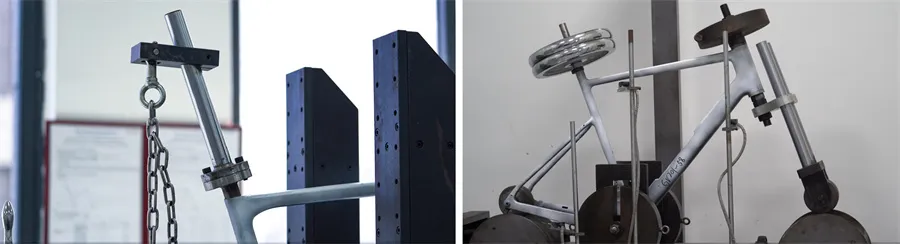
We use carbon layup optimization to maximize torsional stiffness in high-stress zones. Every design undergoes brutal impact testing and prototype validation. By strategically orienting fibers, we maintain a high safety factor while stripping away weight—ensuring the 32er MTB frame remains responsive even at this massive scale.
Will the 32 Inch Mountain Bike Frame Define The Future of MTB Wheel Sizes?
The debate surrounding the 32 Inch Mountain Bike frame is about scalability and commercial viability. From structural engineering to supply chain synchronization, every link determines whether this standard hits the mainstream or remains a high-end curiosity.
6.1: Industry Trends and Market Buy-In
As a primary contender for the next-gen wheel platform, the 32er’s breakout depends on brand backing. If racing regulations stay open to 32 inch wheels, the 32er MTB frame could dominate XC circuits. Without that push, it stays locked in the early adopters phase—a cult classic rather than a global standard.
6.2: Supply Chain Maturity: The Production Bottleneck
A 32 Inch MTB frame is a ground-up engineering challenge, requiring a total rethink of layup optimization at the head tube and rear triangle. The real hurdle is the ecosystem—if fork and wheelset availability don’t keep pace, the momentum for the Big wheel mountain bike will inevitably stall.
6.3: The 3-5 Year Outlook: Mainstream or Niche?
Whether the 32er mirrors the 29er’s rise depends on big-brand adoption. If its roll-over capability proves to be a “cheat code” on the track, the 32 Inch Mountain Bike frame will secure a permanent foothold. If not, it will remain a high-performance choice for the niche market, catering to riders demanding more than the status quo.
Conclusion: The 32 Inch MTB Frame Isn’t for Everyone, But It Might Be For You
The 32 Inch Mountain Bike Frame isn’t about replacing standards; it’s about precision. As a Big wheel mountain bike platform, its roll-over capability and high-speed stability are tailor-made for Tall cyclists and endurance XC/Downcountry riders. Conversely, those prioritizing agility on a technical line will stick with the 29er. Evaluating the 32er MTB frame requires a “style-first” mindset. By balancing frame geometry, structural integrity, and production feasibility, we can move beyond the hype to make data-driven decisions.