Skip to content


Lightweight MTB frames have long been considered key to performance upgrades: faster, more agile, and less strenuous. But the lightest doesn’t necessarily mean the best. True riding performance depends on the balance between frame stiffness, geometry, and comfort. According to OutdoorGearLab data, while carbon fiber frames outperform aluminum alloys in shock absorption and responsiveness, excessive pursuit of lightness can lead to instability and increased fatigue. Many riders find climbing easier after switching to a light MTB frame or lightweight hardtail frame, but experience noticeable vibrations on descents and long distances.
This article will analyze the real performance of light frame mountain bikes from the perspectives of comfort, handling, and fatigue, helping you determine whether “lightest” truly is “best.”

Why Riders Chase Lightweight MTB Frames
Lightweight design has become one of the core selling points of modern mountain bike design. Whether it’s a short burst of speed in XC stages or a long-distance trail ride, riders want frames that reduce the burden without sacrificing handling and stability. This pursuit of lightweight design is not only reflected in brand advertising but also profoundly influences riders’ purchasing decisions. Next, we’ll analyze why lightweight MTB frames have become a popular choice from both psychological and practical performance perspectives.
1.1: The weight obsession in modern mountain biking
“Every gram matters” is a common mantra among XC and racing riders. Lightweight frames improve climbing efficiency, reduce leg fatigue, and make handling feel more responsive. This psychological advantage also exists in everyday trail riding: lightweight design makes it easier for riders to handle technical routes and jumps. According to Pinkbike data, over 60% of mid-to-high-end riders consider frame weight a primary factor when choosing a bike (pinkbike.com).
This “weight obsession” reflects both a pursuit of performance and a sensitivity to riding experience.
1.2: Performance benefits of a lightweight MTB frame
The advantages of a lightweight hardtail frame or full-suspension frame go beyond psychological perception; they provide tangible performance benefits:
- Faster climbing acceleration: Reduced inertia allows leg power to be directly converted into forward momentum;
- Improved responsiveness: The rigidity provided by carbon fiber materials results in almost zero energy loss during pedaling;
- Agile handling: Lightweight design reduces bike inertia, making short corners, jumps, and technical sections easier to control.
In XC racing, a lightweight hardtail frame can gain a significant advantage on uphill sections, while in trail riding, it allows riders to maintain smoother bike movements during continuous drops or rapid route changes. For example, the our M039 Monocoque lightweight hardtail frame excels in XC climbs, offering fast acceleration and responsive handling.

When a Light MTB Frame Isn’t Always Better
Lightweighting isn’t a magic bullet for riding performance. While lightweight MTB frames offer advantages in climbing and short sprints, overly light frames can lead to handling deviations, increased vibrations, and structural fatigue on long rides, technically challenging routes, or high-speed descents. We’ll analyze the trade-offs behind lightweighting from three perspectives: durability, comfort, and handling stability.
Riders on rocky trails often prefer frames like the mtb boost frame M038, which balance light weight with better vibration damping for longer rides.
2.1: Compromises in Durability and Stiffness
Lightweight carbon fiber frames often reduce weight through optimized layup design and thinner wall thickness, but this also limits structural strength. In extreme enduro or trail riding scenarios, high drops, continuous jumps, or rock impacts can cause fatigue cracks or micro-damage. Even top-tier light-frame mountain bikes require riders to compromise on riding style; otherwise, lightweighting can become a safety hazard.
2.2: Comfort and Vibration Damping Issues
Excessive pursuit of lightweighting often sacrifices damping performance. Carbon fiber offers high rigidity but limited shock absorption, causing vibrations to be directly transmitted to the arms and back during riding, increasing muscle fatigue. Compared to traditional aluminum alloy or medium-weight hardtail frames, lightweight hardtail frames experience a significant decrease in comfort on long trails or gravel roads.
According to Bikerumor’s test data, lightweight carbon fiber hardtails transmit approximately 15% more vibrations on continuous gravel sections compared to medium-weight aluminum alloy hardtails.
2.3: Handling stability at high speeds
An overly light frame may lead to instability due to insufficient inertia during high-speed descents or continuous cornering, especially noticeable on technical routes or loose trails. Some professional trail riders still prefer slightly heavier full carbon or hybrid carbon-aluminum frames because the extra weight provides better descent stability and frame support. This is why lighter isn’t always better for light frame mountain bikes; riding style and route characteristics must be considered when choosing one.
Finding the Sweet Spot — Balance Between Weight, Strength, and Comfort
Choosing a lightweight yet comfortable carbon fiber MTB frame isn’t just about weight; it’s about finding the optimal balance between weight, stiffness, and comfort. An ideal lightweight frame should ensure handling stability and vibration absorption while meeting the needs of different riding styles. Below, we analyze how to choose the right lightweight MTB frame for you from three perspectives: geometry, intended use, and manufacturing process.
3.1: Understanding Geometry and Stiffness Balance
Lightweight doesn’t mean sacrificing handling. Frame geometry and material stiffness directly affect riding feel and energy transfer efficiency. A well-balanced stack and reach, combined with appropriate stiffness, allows a lightweight hardtail frame to remain stable during climbs, sharp turns, and technical sections, while preventing rapid fatigue build-up. By optimizing the carbon fiber layup schedule, sufficient torsional stiffness can be maintained while reducing weight.
3.2: Choose based on riding style (XC, Trail, Enduro)
Different riding styles have different requirements for lightweight design:
| Riding Style | Recommended Frame Type | Key Benefits | Considerations |
|---|---|---|---|
| XC (Cross-Country) | Lightweight Hardtail Frame | Faster climbs, better power transfer, agile handling | Less damping on rough trails |
| Trail / All-Mountain | Full-Suspension Light Frame Mountain Bike Like Our haidelibikes FS830 | Balanced weight and stability, better shock absorption | Slightly heavier, moderate climbing efficiency |
| Enduro / Downhill | Lightweight Full-Suspension Frame | Strong structure for jumps and drops, stable at high speed | Heavier than XC, still careful with extreme impacts |
3.3: Real-world examples from carbon fiber frame manufacturing
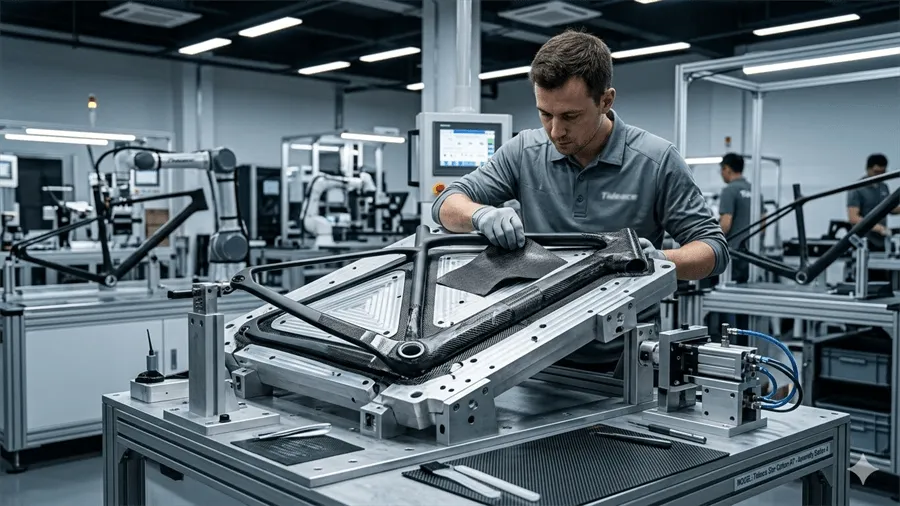
In carbon fiber frame production, the laminate design of high-modulus carbon and standard modulus carbon differs significantly: High-modulus carbon achieves lighter weight, but excessive stiffness may reduce vibration absorption; Standard carbon is slightly heavier, but more durable and has more stable fatigue resistance.
Many European and American brands use hybrid layup in their XC lightweight hardtail frames to balance weight, comfort, and long-term durability. This design philosophy allows riders to enjoy the agility of lightweight construction without sacrificing downhill stability or long-distance comfort.
Maintenance Tips for Lightweight Carbon Frames
While lightweight carbon fiber frames are agile and lightweight, their structure is more sensitive and requires proper use and maintenance to maintain performance and safety. Even high-end lightweight MTB frames or lightweight hardtail frames can suffer minor damage during everyday riding, transport, and installation. Below are key maintenance tips from inspection and torque control to replacement cycles.
4.1: Regular Inspection for Cracks and Delamination
Surface scratches may not affect the structure, but micro-cracks or delamination require close attention. Hidden damage can be detected through visual inspection and a tap test. Especially after a light frame mountain bike has experienced drops, jumps, or gravel impacts, the chain anchors, bottom bracket shell, and seatpost connection should be carefully inspected. Early detection of problems can extend frame life and improve safety.
4.2: Proper Torque and Assembly to Avoid Stress Damage
Torque control is crucial when installing seatposts, forks, or clamps. Over-tightening or uneven clamping can create stress concentration between carbon fiber layers, potentially leading to fatigue damage over time. Using a torque wrench as recommended by the manufacturer is a fundamental step in maintaining the performance and safety of your lightweight MTB frame.
4.3: When to replace your lightweight MTB frame
Even on the surface, carbon fiber can experience invisible fatigue after prolonged riding. Typical signs include unusual noises, decreased riding feel, slight delamination in certain areas, or deformation at stress points. For lightweight hardtail frames and full-suspension light frame mountain bikes, regularly assessing the lifespan and accumulated stress is crucial to preventing accidental breakage and ensuring safety.
The Lightest Frame Isn’t Always the Smartest Choice
While lightweight design is appealing, the lightest lightweight MTB frame isn’t always the best choice. As shown above, while lightweight frames improve climbing efficiency, power, and handling agility, excessive weight reduction can lead to decreased durability, increased vibration transmission, and instability at high speeds. Whether it’s the advantages of a lightweight hardtail frame in XC stages or the challenges of a light frame mountain bike on trails/Enduro routes, it reminds riders that weight is only one aspect of performance.
The truly ideal carbon fiber frame should strike a balance between weight, stiffness, geometry, and comfort. When purchasing, don’t just look at the weight in grams; pay attention to the laminate process, material modulus (high-modulus vs. standard carbon), geometry (stack & reach), and your riding style and route characteristics. The core concept: find the lightweight that suits you, rather than pursuing the lightest, to maintain an efficient, stable, and comfortable riding experience on climbs, jumps, gravel, or long-distance rides.