Skip to content


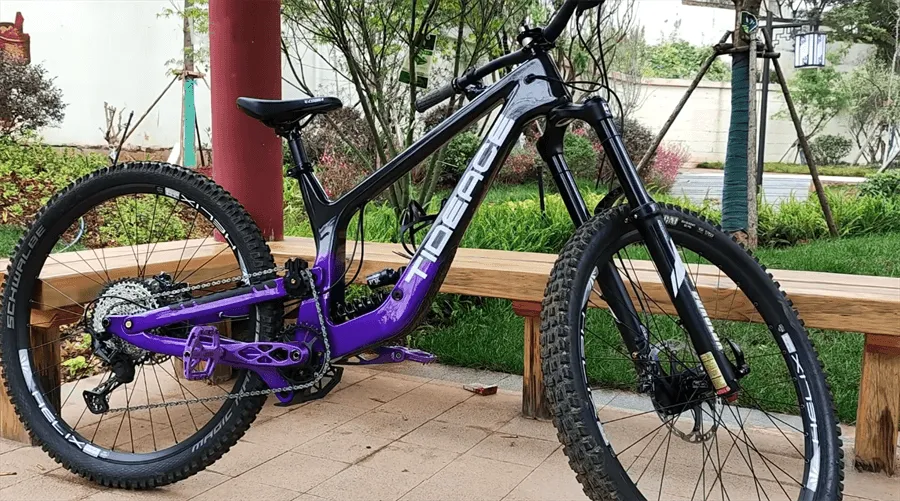
As a manufacturer and trader specializing in carbon fiber bicycle components for over a decade, leveraging our extensive production experience and solid engineering background, we’ll focus today on the topic of “carbon mountain bike frames”: What kind of performance and structural integrity can a high-quality carbon fiber mountain bike frame maintain after 5 to 10 years of riding?
According to existing industry research, ordinary carbon fiber frames, with proper maintenance, can have an average lifespan of 5-10 years, or even longer.
However, research also indicates that impact damage and microcrack accumulation are key hidden dangers leading to a decline in the performance of carbon mountain bike frames.
This article will delve into three dimensions: “materials/manufacturing processes,” “usage environment/riding habits,” and “maintenance,” combining our years of practical experience in producing carbon fiber MTB bike frames to reveal those invisible but crucial details and tell you how to determine “how many more years my frame mountain bike can last.”
What is a Carbon Mountain Bike Frame?
A Carbon Mountain Bike Frame is a mountain bike frame made of high-performance carbon fiber. Compared to traditional aluminum alloy or steel frames, it is the preferred choice for off-road and XC riders seeking performance due to its lightweight, rigidity, and excellent vibration absorption. In technical terms, riders often refer to it as a “CF MTB frame” or “full carbon frame,” while in the European and American secondhand markets, “carbon rig” is commonly used to refer to a full carbon frame.
1.1: Basic Structure of a Carbon Fiber Mountain Bike Frame
Tubing Type: High-modulus carbon fiber is the core material for modern mountain bike frame carbon, with T700 and T800 grades being the most common. T700 carbon fiber offers a good strength-to-weight ratio, suitable for all-terrain riding; T800 is more suitable for high-impact riding such as enduro or downhill riding due to its superior fatigue resistance.
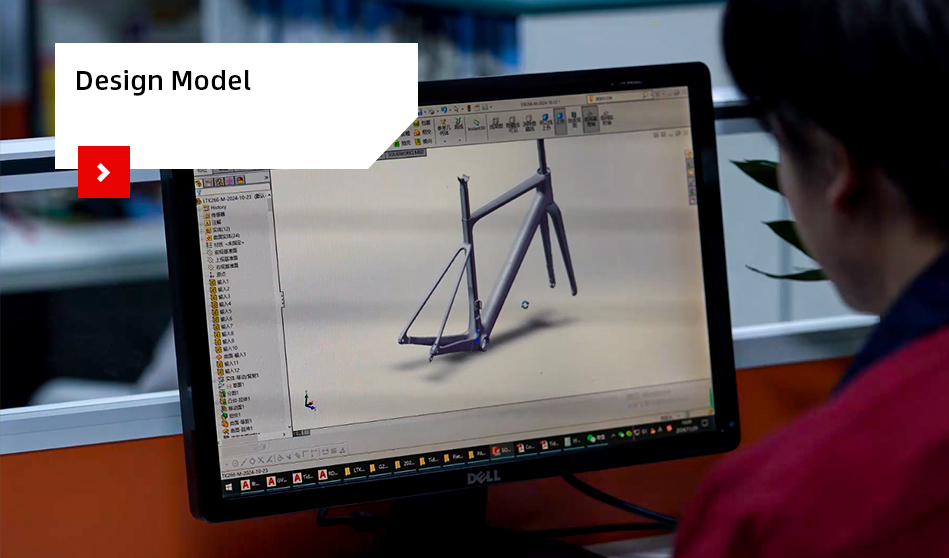
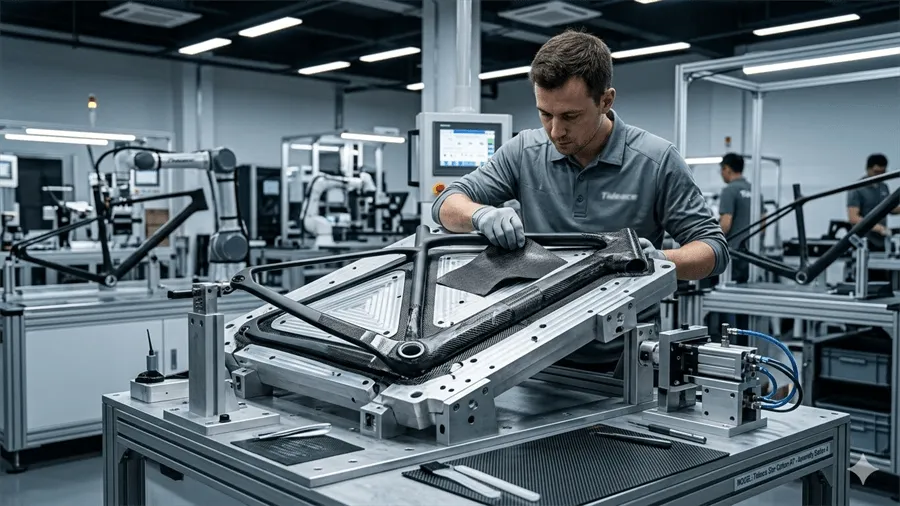
Frame Design and Molding Process: High-end carbon fiber mountain bike frames often employ monocoque molding or tube-to-tube lamination technology. Monocoque molding ensures seamless joint transitions, improving overall rigidity and impact resistance, while tube-to-tube design facilitates customized sizes and complex tube adjustments. Modern European and American brands also often combine “internal molding” and “bladder technology” to optimize the frame’s internal structure, reducing resin buildup and weight while increasing frame strength.
1.2: Advantages and Challenges of Frame Mountain Bikes
Lightweight: Carbon fiber frames are 10%-20% lighter than aluminum alloy frames, significantly reducing energy consumption during climbs and long-distance rides. European and American mountain bikers often say, “saving every pound counts,” meaning every pound of weight is related to efficiency.
High Strength and Rigidity: A proper laminated layout allows the carbon fiber mtb bike frame to maintain high rigidity under lateral forces, improving pedaling efficiency and handling precision.
Potential Crack Risk: While carbon fiber is strong, it is also brittle. Impacts or prolonged micro-vibrations can cause invisible hairline cracks, commonly known as “spider cracks.” This is why riders often use the “tap test” (lightly tapping the tubing and listening to the sound change) to initially assess the frame’s health.
Durability Factors of Carbon Mountain Bike Frames
The durability of carbon fiber mountain bike frames is not determined by a single factor, but rather by the combined effects of materials, manufacturing processes, and the usage environment. Understanding these factors can help riders maintain their frame mountain bikes more scientifically and extend their lifespan, while also providing important guidance for choosing the right carbon fiber MTB bike frame.
2.1: Material Factors
The Impact of Different Carbon Fiber Grades on Lifespan: High-modulus carbon fiber (T800/T1000), while lighter and stiffer, is more prone to microcracks under prolonged repeated impacts than medium-modulus carbon fiber (T700/T800). The industry commonly uses “stiffness-to-weight ratio” and “fatigue resistance” to describe the durability of carbon fiber frames. Choosing the appropriate grade of carbon mountain bike frame requires balancing weight, stiffness, and fatigue resistance.
Resin Type and Curing Process: The quality of the epoxy resin and the curing method directly affect the overall strength of the frame. High-modulus epoxy combined with autoclave or oven curing processes can reduce air bubbles and uneven lamination, thus improving the long-term stability of mountain bike frame carbon. In industry jargon, “proper layup + resin synergy” is sometimes referred to as the core factor determining frame lifespan.
2.2: Manufacturing Process Factors
Lamination Design and Tube Selection: The layup schedule and tube geometry of the frame determine stress distribution. Complex tube shapes or asymmetric lamination can help improve rigidity in critical areas, but improper design can lead to localized fatigue accumulation and delamination.
Reinforcement of Connections: The BB86, head tube, down tube, and chainstays are the areas with the highest stress. European and American manufacturers typically use additional carbon reinforcement patches or bladder molding technology to optimize internal support and reduce the risk of micro-failures.
2.3: Environmental Factors
Mountain Bike Riding Intensity, Shock, and Vibration: During high-intensity off-road, enduro, or downhill riding, frame mountain bikes face repeated shocks and vibrations. Long-term accumulation can lead to the propagation of microcracks. Riders commonly refer to this as “ride abuse” or “hammering,” a key behavioral factor affecting the lifespan of carbon fiber MTB bike frames.
The Effects of Climate and Humidity on Carbon Fiber Frames: Extreme temperatures, humidity, or prolonged exposure to ultraviolet radiation accelerate resin aging, affecting the structural integrity of the carbon fiber frame. European and American cyclists often describe this chronic degradation as “UV fade” or “resin creep.” Proper storage and maintenance can significantly extend the frame’s lifespan.
Common Problems with Carbon Fiber MTB Bike Frames After 5-10 Years of Use
Even top-of-the-line carbon mountain bike frames can develop a range of durability issues after years of riding. Understanding these potential risks helps riders take timely action to ensure the safety and performance of their frame mountain bike.
| Issue Type | Symptoms | Possible Causes | Inspection Methods |
|---|---|---|---|
| Stiffness Loss | Pedaling feels less efficient | Micro-cracks accumulation | Tap test |
| Reduced Elasticity | Vibration absorption decreases / boardy feel | Resin fatigue, prolonged UV exposure | Visual inspection / vibration analysis |
| Micro-cracks | Hairline cracks / delamination | Repeated impacts / ride abuse | Ultrasonic testing / frame inspection service |
3.1: Fatigue Cracks and Micro-Damage
How to Check for Minor Cracks
After prolonged use, carbon fiber MTB bike frames may develop hairline cracks or micro-cracks. Technicians in Europe and America often use the “tap test” (lightly tapping the frame and listening for changes in sound) and “visual inspection under light” to detect early cracks. Localized wobbling or slight delamination are early signs; timely detection can prevent serious accidents.
Signs Affecting Structural Safety
Obvious cracks, localized squeaking, or abnormal elasticity of the frame under stress may indicate compromised structural integrity in a carbon mountain bike frame. Some riders refer to this phenomenon as “creep” or “frame fatigue,” a common sign of carbon fiber frames after many years of use.
3.2: Problems Caused by Improper Maintenance
**Improper Torque:** Overly tight or loose bolts can cause localized stress concentration in the carbon fiber, leading to micro-failures, commonly known in the industry as “over-torque damage.”
**Collisions and Impacts:** Accidental impacts during enduro, downhill, or trail riding can cause the accumulation of invisible microcracks. Even if the frame appears intact, it may harbor potential safety hazards.
**Prolonged Exposure to Sunlight:** Ultraviolet (UV) radiation and high temperatures accelerate resin aging, reducing the stiffness and elasticity of the carbon fiber mountain bike frame.
3.3: Performance Changes After Long-Term Use
**Decreased Stiffness:** As microcracks and resin fatigue accumulate, the pedaling stiffness of the frame mountain bike may decrease, affecting handling and efficiency.
**Changes in Elasticity and Vibration Absorption:** The frame’s shock absorption performance may weaken, resulting in a stiffer ride or the appearance of localized vibrations. Riders in Europe and America often use the term “boardy feel” to describe this loss of elasticity, meaning the frame is no longer as “lively” as when it was new.
Best Practices for Extending the Life of Your Mountain Bike Frame Carbon
Proper use and maintenance can significantly extend the lifespan of your carbon mountain bike frame, keeping it performing at its best for years. This article summarizes key practices from daily checks to riding habits and storage environment.
4.1: Regular Inspections and Maintenance
Critical load-bearing components such as the BB86, head tube, and down tube require regular inspection. Microcracks or delamination can be detected through tap tests, visual inspections, and minor stress tests. Professional technicians often refer to this as a “frame health check,” a crucial method for determining the safety of a carbon fiber MTB bike frame.
4.2: Optimizing Riding Habits
Reducing extreme impacts and landing impacts is key to extending frame life. Avoiding “hammering” and excessive jumping abuse, while controlling tire pressure and suspension adjustment, can reduce the risk of microcrack accumulation and maintain the rigidity and elasticity of the mountain bike frame carbon.
4.3: Storage and Environmental Protection
Avoid prolonged exposure to high temperatures, UV radiation, and excessive humidity. Prolonged exposure can lead to resin creep and a decline in carbon fiber performance. Storing in a dry, cool place and using a frame cover is a common practice among professional technicians in Europe and America.
How to Determine if Your Carbon Fiber MTB Bike Frame Needs Replacement
Even high-end carbon mountain bike frames can develop safety hazards after prolonged riding. Timely assessment of frame health is crucial for ensuring riding safety and extending the lifespan of your frame mountain bike.
5.1: Visible Cracks and Damage
Visible cracks, delamination, or impact marks are the most obvious signs that your frame needs replacing.
These are commonly referred to in the industry as “spider cracks” or “check lines,” and typically appear in high-stress areas such as the head tube, downtube, and chainstays.
5.2: Signs of Decreased Riding Performance
Decreased pedaling stiffness, looser handling, and reduced vibration absorption (boardy feel) are all signs of potential aging in a frame mountain bike carbon frame.
Abnormal noises or slight shaking may also indicate the accumulation of micro-failures.
5.3: Professional Testing Methods and Service Recommendations
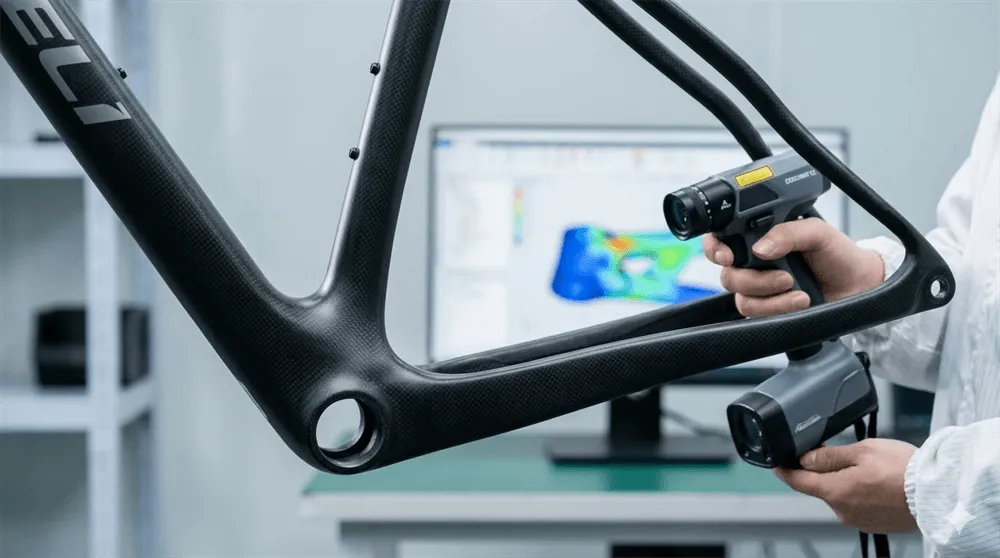
Ultrasonic testing, X-rays, or vibration analysis can detect micro-cracks invisible to the naked eye.
It is recommended to send the bike to a professional repair shop or the manufacturer for inspection and maintenance. European and American manufacturers typically refer to this service as “frame inspection service.”
For carbon fiber MTB bike frames that have shown obvious structural damage, they should be replaced promptly to ensure safety.
Conclusion: Performance of Carbon Mountain Bike Frames in Long-Term Riding
High-quality carbon mountain bike frames maintain excellent rigidity and handling performance even after 5-10 years of riding. The appropriate carbon fiber grade, high-modulus resin, scientific layout schedule, and reinforcement of key areas give the frame mountain bike strong fatigue resistance.
Long-term use may lead to micro-cracks, delamination, or a boardy feel, but proper torque control, avoiding “ride abuse,” UV protection, and regular tap tests or professional frame inspection services can effectively extend the life of the mountain bike frame carbon.
In short, choosing a well-designed and well-crafted carbon fiber MTB bike frame, combined with scientific use and regular inspections, allows riders to ride safely for many years while enjoying lightweight comfort. A properly maintained frame is often referred to in the industry as a “bulletproof rig”—lightweight and durable, it is an ideal choice for a long-term investment.