Skip to content


Carbon fiber frames have become the preferred choice for high-performance bicycles due to their exceptional lightness and strength. To ensure these carbon fiber bicycle frames deliver superior performance in extreme conditions, manufacturers must validate their performance through rigorous testing. For example, stiffness testing measures the frame’s bending to assess its responsiveness and stability during intense riding, impacting the rider’s handling. Fatigue testing typically simulates the stress of prolonged riding, with many top brands (such as Trek and Specialized) conducting over 500,000 cycles of repeated load testing to ensure the frame’s long-term durability under high loads. Meanwhile, drop and impact tests simulate real-world collision scenarios, checking the frame’s resistance to impact.
According to Bikerumor, Trek’s top-of-the-line carbon fiber frames can withstand impact forces of approximately 1500N, meaning they can maintain structural integrity under extreme conditions. For bulk buyers, these tests not only guarantee quality but also effectively reduce product after-sales risks.
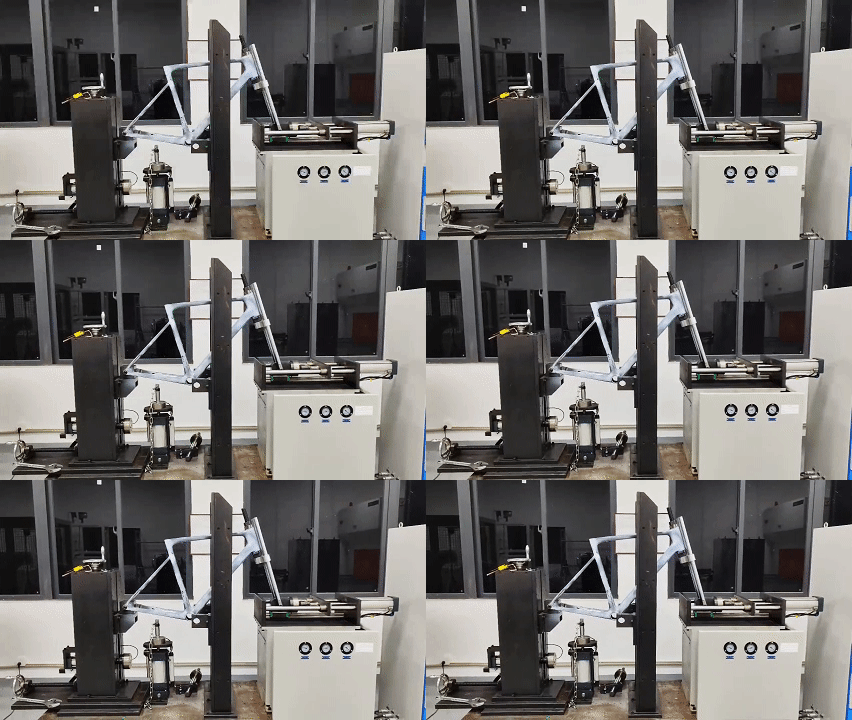
Testing Carbon Fiber Frames: A Crucial Step in Ensuring High-Quality Frames
Carbon fiber frames have become the preferred choice for modern high-performance bicycles due to their lightweight and strong properties. As one of the core components of a bicycle, the quality of the frame directly determines riding comfort, stability, and safety. Therefore, testing carbon fiber frames is crucial, as it ensures that the frame maintains superior performance under various extreme conditions through rigorous testing processes.
The manufacturing of carbon fiber frames relies not only on high-quality carbon fiber materials but also on multiple tests to verify their rigidity, durability, and safety. Whether for racing or everyday riding, the performance and stability of the frame are core factors affecting the riding experience. Through rigorous testing, the frame can remain intact under different loads and impacts, preventing cracks or fractures at critical moments and avoiding safety hazards.
Stiffness Testing: How it Affects the Performance of Carbon Fiber Bicycle Frames
Stiffness is a crucial factor determining the performance of carbon fiber bicycle frames. Stiffness testing evaluates the frame’s performance during riding through static and dynamic methods, ensuring efficient power transmission and precise handling under various riding conditions. Carbon fiber bike frames are the preferred choice for top cyclists due to their exceptional stiffness and lightweight properties, and these characteristics are guaranteed through rigorous bicycle frame testing.
1: What is Stiffness Testing?
Stiffness testing examines the performance of carbon fiber frames under load, divided into static and dynamic forms. Static testing observes the bending and deformation of the frame under applied pressure, while dynamic testing simulates the stress response of the frame during actual riding. These tests ensure that the frame has sufficient strength and stability during use, reducing the negative effects of excessive flexibility or rigidity.
Through carbon bike frame stiffness testing, manufacturers can verify the frame’s load-bearing capacity in different environments, ensuring its reliability during high-speed and extreme riding.
2: The Impact of Stiffness on Riding Experience
Stiffness directly affects riding comfort and handling. A flexible frame provides better comfort but is less efficient at high speeds or during climbs; while an overly rigid frame increases discomfort from road vibrations. Finding a balance between stiffness and flexibility effectively improves the frame’s power transmission efficiency, avoids energy waste, and enhances handling.
Proper stiffness design makes carbon fiber bike frames more efficient at high speeds, while also enhancing stability and precision during turns, which is core to high-performance frames.

Drop Test: A Crucial Step in Ensuring Frame Durability
The drop test is a critical step in verifying the durability of carbon fiber frames, simulating falls and impacts that may occur during actual use. Whether for city riding or off-road cycling, frames inevitably encounter collisions during use. The drop test ensures that the frame remains stable and safe even under strong impacts. Through this test, the design of the carbon fiber frame can be optimized, improving the overall durability of the frame components, providing consumers with confidence in their purchase, and ensuring that the frame can withstand various impacts during daily use.
1: Drop Test Standards and Procedures
The drop test standards include dropping the frame from a certain height to simulate possible impact situations. The testing process rigorously evaluates the frame’s performance under different impact forces, especially in critical areas such as the front fork, downtube, and chainstays. The main steps of the test include:
Height and Angle Setting: The frame is dropped from a specific height and angle to simulate different scenarios.
Impact Force Analysis: Evaluating the impact force on the frame during the fall.
Fatigue Testing: Repeated drop tests are conducted to ensure the frame’s long-term impact resistance.
These steps ensure that the carbon fiber frame maintains a high level of impact resistance and durability under extreme conditions.
2: How Drop Tests Verify Frame Impact Resistance
The drop test simulates the frame’s response under high-intensity impacts, verifying its impact resistance. Critical parts of the frame, such as joints and stress points, are rigorously tested. Test scenarios include high-altitude drops and impacts on irregular surfaces, ensuring that the frame remains stable even when encountering obstacles. The test also evaluates the frame’s recovery ability, ensuring that no permanent damage occurs after impact.
Through drop tests, manufacturers can identify potential structural weaknesses, such as micro-cracks, further optimizing the design and manufacturing process of carbon fiber frames, improving their durability and market competitiveness.

Fatigue Testing: Verifying the Long-Term Stability of Carbon Fiber Frames
In the development of carbon fiber frames, fatigue testing is a core process for ensuring long-term stability. By simulating the repeated stress of prolonged cycling, carbon fiber frames undergo a series of rigorous tests to verify their durability. Different types of fatigue tests simulate the frame’s performance under daily use, competitive cycling, or harsh environments, ensuring that the frame maintains its performance and safety after long-term use.
1: Horizontal Fatigue Testing: Verifying the Structural Load-Bearing Capacity of the Frame
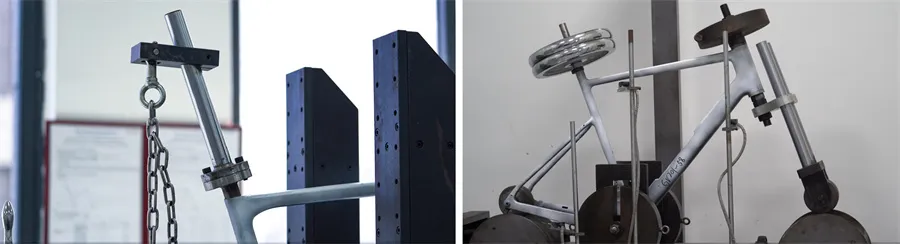
Horizontal fatigue testing primarily simulates the horizontal stress on the frame during daily cycling. By repeatedly applying heavy pressure similar to that experienced during riding, the test verifies whether the frame can maintain its structural stability and strength. This test is crucial for the frame’s durability, especially for evaluating the resistance to common points of failure during cycling, such as the down tube and top tube connections. Keywords: bicycle frame testing, carbon fiber bike frame, frame fatigue resistance
2: Seatpost Dynamic Fatigue Testing: Ensuring the Long-Term Stability of the Seatpost and Frame Connection
Seatpost dynamic fatigue testing simulates the impact of the rider’s weight on the seatpost during cycling. This test helps verify the strength and stability of the seatpost-to-frame connection, ensuring that it does not loosen or break during long-term riding. This test is particularly important for carbon fiber frames used in long-distance cycling and competitive use.
3: Pedal Force Fatigue Testing: Testing the Overall Load-Bearing Capacity of the Frame
Pedal force fatigue testing simulates the force applied by the rider to the pedals. Through prolonged and repeated pedaling, it assesses the frame’s durability under repeated pedaling forces. This test focuses primarily on the frame’s down tube, bottom bracket, and pedal connections, ensuring that they remain stable even under prolonged high-intensity use.

Impact Resistance Testing: Can Carbon Fiber Frames Withstand Extreme Challenges?
The impact resistance of carbon fiber frames is a crucial factor in evaluating their durability and safety, especially considering the frequent and intense impacts encountered during cycling. Through rigorous impact resistance testing, engineers ensure the frame’s stability in complex environments, protecting riders from accidental damage. These tests simulate real-world impact scenarios, ensuring that every carbon fiber frame can withstand high-intensity impacts and guaranteeing the durability of high-quality bicycle components.
1: What is Impact Resistance Testing?
Impact resistance testing evaluates the strength and toughness of the frame by simulating impacts that a bicycle might experience on rough terrain or at high speeds. The tests typically involve dropping the frame from a certain height or angle, or assessing the frame’s deformation under impact. This test visually demonstrates the carbon fiber frame’s resistance to falls and impacts, ensuring that it maintains structural integrity even in extreme environments, thus improving the reliability of carbon fiber frames.
2: Impact Performance Analysis of Carbon Fiber Frames
The impact absorption capacity of carbon fiber frames is crucial when facing complex road conditions and competitive environments. By testing different types of impacts, engineers can optimize the frame design, making the stress distribution more reasonable and reducing the risk of frame damage. High rigidity and appropriate frame elasticity effectively counteract the damage caused by impacts, ensuring rider safety and guaranteeing stable performance in both everyday riding and extreme challenges.

Summary: How Carbon Fiber Frame Testing Ensures High Quality and Lasting Performance
Through a series of rigorous carbon fiber frame tests, manufacturers ensure that each frame meets the highest standards in performance and durability. From stiffness and impact resistance to fatigue testing, these tests provide reliable assurance of the frame’s excellent performance in various riding environments. Whether for everyday riding or extreme challenges, comprehensively tested carbon fiber frames maintain high levels of rigidity and safety, ensuring long-term stable performance.
1: The Hallmarks of a High-Quality Carbon Fiber Frame
High-quality carbon fiber frames possess distinct characteristics: a balance of rigidity and toughness, ensuring handling and stability; and having undergone fatigue and impact testing, maintaining structural integrity during long rides and accidental impacts. Excellent frames utilize top-quality bicycle components, ensuring that every detail is rigorously inspected. When purchasing, riders should pay attention to the frame’s weight, rigidity, and impact resistance to ensure they choose a frame that suits their needs and enhances their riding experience.
Choosing a rigorously tested, high-quality carbon fiber frame makes riding safer, more stable, and more comfortable. If you have any questions or require custom services, please feel free to contact us to create your perfect riding experience.