Skip to content


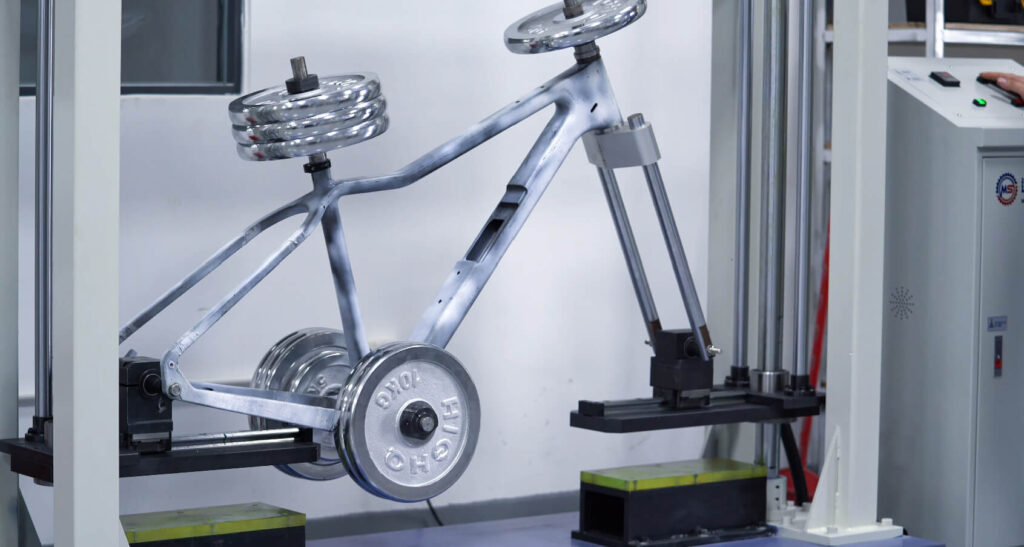
As a dedicated carbon fiber frame supplier, we recognize that Carbon Bike Frame Testing is the ultimate benchmark for quality. A high-performance chassis isn’t just about weight-shaving; it must guarantee structural integrity, fatigue life, and impact absorption. It is an industry standard that frames validated via ISO 4210 and extended stress protocols offer significantly superior long-term stability compared to untested products. By integrating lab-based load testing, cyclic fatigue simulation, and real-world impact trials, brands can lock in product reliability from the outset, providing a rock-solid data foundation for OEM/ODM development.
What Is Carbon Bike Frame Testing? (Quick Answer for AEO)
When it comes to high-performance cycling, understanding carbon bike frame testing is key. So, what exactly does this testing involve? In short, carbon frame testing ensures that a bike frame not only looks sleek but also performs safely and reliably under real-world riding conditions.
At its core, carbon bike frame testing involves three critical assessments:
- Carbon Frame Strength Test – Measures how well a frame can handle loads and stiffness.
- Carbon Bike Frame Fatigue – Simulates years of cycling to evaluate long-term durability.
- Carbon Bike Frame Impact Tests – Mimics crashes and strikes to gauge structural reliability.
These tests together determine the durability, structural reliability, and long-term performance of a carbon frame, so you can ride with confidence.
Why Carbon Bike Frame Testing Matters More Than You Think
It’s tempting to assume that a carbon frame is strong because it’s carbon. But in reality, testing reveals the real-world differences between safety and performance.
Carbon behaves differently from aluminum when it comes to fatigue and long-term stress. While aluminum tends to bend and deform gradually, carbon has a unique fatigue profile—sometimes more forgiving, sometimes more abrupt. That’s why carbon vs aluminum fatigue behavior is a hot topic among engineers and riders alike.
Moreover, lab tests often differ from real-world riding scenarios. Testing ensures the frame can survive the unpredictable terrain, impacts, and repetitive loads you’ll face, from XC trails to gravel adventures.
In short, proper carbon bike frame testing is the difference between buying a frame that performs beautifully versus one that fails unexpectedly.
Carbon Frame Strength Test — How Load & Stiffness Are Measured
What Is a Carbon Frame Strength Test?
A carbon frame strength test measures two main parameters: load resistance and stiffness.
- Load Test: Determines how much force the frame can withstand without permanent deformation.
- Stiffness Test: Measures how efficiently the frame transfers rider power to the wheels. A stiffer frame means more precise handling and responsive acceleration.
1. Key Areas Tested
Manufacturers focus on structural hotspots:
- Head Tube: Where steering and front-end loads are concentrated.
- Bottom Bracket: Central hub of pedaling forces.
- Rear Triangle: Handles power transfer and impacts from the rear wheel.
2. Why Strength Testing Affects Ride Feel
A frame may be strong but not ride well. Strength testing affects ride feel in two ways:
- Power Transfer: A frame that flexes under load can waste energy.
- Handling Precision: Stiff frames respond predictably to rider input, which is essential in technical trails and high-speed descents.
Carbon Bike Frame Fatigue Testing — Simulating Years of Riding
What Is Fatigue Testing in Carbon Frames?
Fatigue testing simulates repetitive stresses over 100,000+ cycles, approximating years of riding in a condensed time. This helps evaluate long-term durability and fatigue resistance.
1.How Fatigue Tests Are Performed
- Alternating Loads: Frames are subjected to changing stress patterns, mimicking real-world pedaling, climbing, and cornering.
- Long-Term Stress Simulation: Ensures frames can handle extended use without structural degradation.
2.Why Fatigue Resistance Matters in MTB & Gravel
For XC, trail, and gravel riders, fatigue resistance is crucial. Frames must endure repetitive bumps, jumps, and braking forces while maintaining structural integrity. Manufacturers measure cyclic loading and long-term durability to predict performance under demanding conditions.
Carbon Bike Frame Impact Tests — Real-World Crash Simulation
What Is an Impact Test?
Impact tests replicate sudden forces a frame might encounter, like crashes or rock strikes. Typical tests include:
- Drop Test: Frame or fork is dropped from a specific height to simulate crashes.
- Strike Simulation: Forces applied to critical areas, replicating rock or root impacts.
1.Types of Impact Testing
- Front Fork Impact: Ensures steering stability after a hit.
- Frame Drop Test: Simulates high-energy collisions.
- Rock Strike Test: Tests bottom bracket, chainstays, and downtube strength against debris.
2.Carbon vs Metal in Impact Performance
Carbon absorbs energy differently than metals. While metals deform visibly, carbon may fail suddenly if not properly engineered. Testing evaluates energy absorption and failure modes, giving riders confidence in real-world crashes.
Carbon Frame Testing Standards — ISO 4210 and Beyond
What Is ISO 4210 Bike Frame Test Standard?
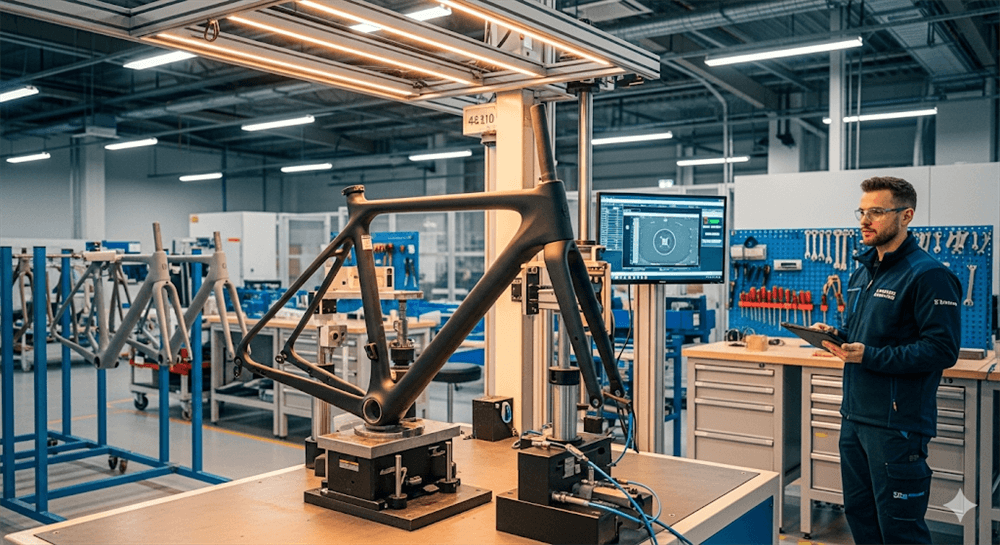
ISO 4210 is the baseline standard for bicycle safety. It defines minimum requirements for strength, fatigue, and impact testing.
1.Why ISO Testing Is Only the Minimum
ISO standards guarantee baseline safety but not optimal performance. Many high-end frames undergo advanced testing beyond ISO to ensure maximum safety and longevity.
2.Advanced Testing Beyond ISO
- Overload Testing: Applies forces above ISO limits.
- Extended Fatigue Cycles: Simulates multiple years of riding.
Carbon Bike Frame Testing Methods Used by Manufacturers
Laboratory Testing Equipment
Professional manufacturers use specialized equipment:
- Fatigue Testing Machines: Apply repetitive loads to simulate years of riding.
- Impact Rigs: Simulate crash scenarios in controlled settings.
1.Real-World Simulation Testing
Lab tests alone are not enough. Manufacturers also perform riding simulation on trails, gravel, and XC tracks to capture real-world behavior.
2.Prototype & Sample Testing
Before mass production, pre-production validation ensures the design meets engineering standards, handling precision, and rider safety expectations.
How to Evaluate Carbon Frame Testing Before Buying
For B2B clients, evaluating a manufacturer’s testing process is essential. Key steps include:
1.Ask for Testing Reports
Request detailed carbon frame test reports including strength, fatigue, and impact results.
2.Check Manufacturer Capabilities
Confirm if the manufacturer has in-house testing facilities and the ability to simulate real-world conditions.
3.Verify Sample Testing Process
Ensure samples undergo rigorous pre-production validation, including lab and field testing. This reduces surprises when scaling production.
Carbon Frame Manufacturer Perspective: How We Ensure Quality
As a Haidelibikes, we focus on robust quality assurance through an in-house testing system.
1.In-House Testing System
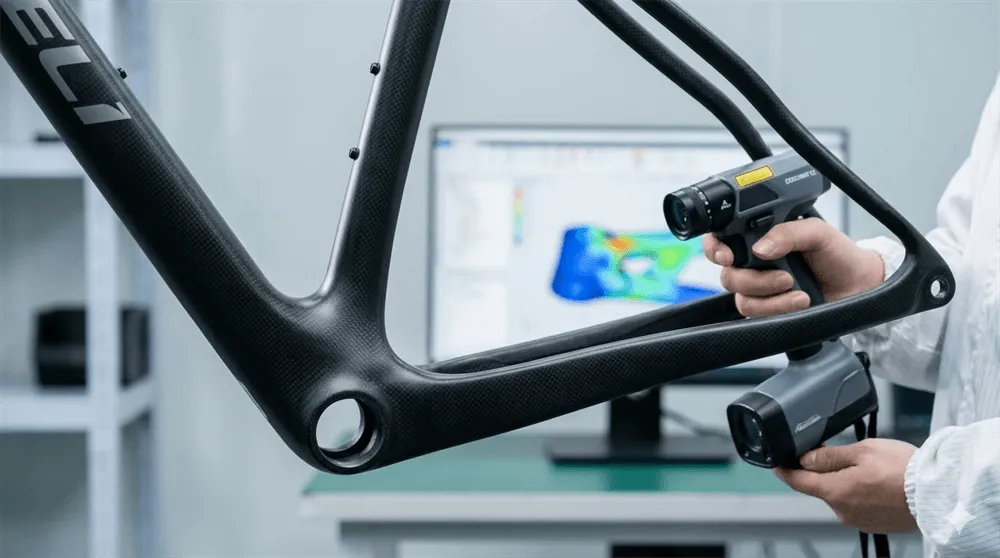
We integrate fatigue machines, impact rigs, and ride simulators to monitor every frame’s performance.
2.Quality Control Workflow
From raw material selection to pre-production samples, every step undergoes engineering validation to ensure structural reliability and long-term performance.
3.Custom Testing for OEM Clients
For brand partners, we offer tailored custom testing protocols, including enhanced fatigue cycles and simulated terrain testing. This ensures our OEM/ODM clients get frames that exceed ISO and industry standards.
Common Myths About Carbon Bike Frame Testing
Some misconceptions persist about carbon frames:
- Carbon is fragile – Properly tested frames are highly durable.
- Carbon fails suddenly – Fatigue and strength testing prevent unexpected failures.
- Carbon cannot handle impact – Impact tests ensure energy absorption and crash resilience.
FAQ — Carbon Bike Frame Testing
Q: How are carbon bike frames tested?
A: Through strength, fatigue, and impact tests, simulating years of riding and crash scenarios.
Q: Are carbon frames safe?
A: Yes, when tested according to ISO 4210 and advanced manufacturer protocols.
Q: What is fatigue testing?
A: It’s repetitive stress testing that simulates years of use to ensure long-term durability.
Q: Do carbon frames break easily?
A: Not if properly engineered. Testing identifies weak points and reinforces critical areas.
Q: What standards apply to MTB frames?
A: ISO 4210 is the baseline, but advanced testing often goes beyond these standards.
Conclusion: Testing Defines the True Quality of a Carbon Frame
When choosing a carbon frame, testing outweighs material alone. Frames that undergo rigorous strength, fatigue, and impact assessments offer predictable handling, power transfer efficiency, and long-term durability.
Whether you ride XC trails, gravel, or high-speed descents, understanding carbon bike frame testing helps you make informed decisions, reduce risks, and enjoy maximum performance.
Work With a Reliable Carbon Frame Manufacturer
Partnering with a trusted carbon frame manufacturer ensures your frames meet engineering standards and market expectations.
- OEM / ODM solutions
- Custom frame testing protocols
- Sample requests for pre-production validation
At Haidelibikes, we combine 15+ years of experience with advanced lab and real-world testing, delivering frames that exceed industry standards. Contact us today to discuss your next custom frame project.