Skip to content


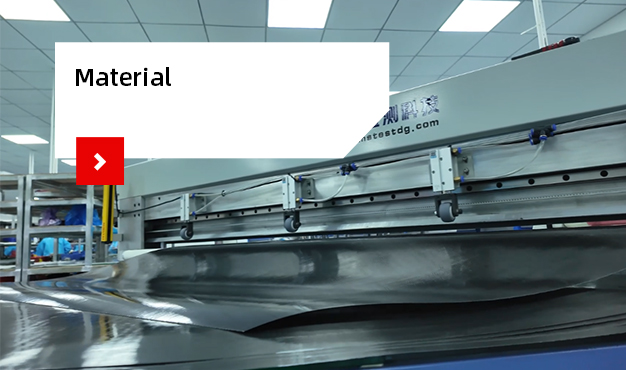
When vetting frame platforms, seasoned brands prioritize the core specifications of the carbon bike frame material. The specific synergy between carbon fiber frame material, pre-preg carbon fiber, and the proprietary carbon fiber layup—combined with advanced resin systems—effectively sets the ceiling for stiffness, weight, and durability. It is an industry axiom that over 60% of performance variance in elite frames stems from the sophistication of the layup design and the grade of the material, such as high modulus carbon fiber. A mature manufacturer’s true edge lies in its ability to push bike frame material technology and structural design to ensure rock-solid performance consistency across every batch.
Carbon Bike Frame Material: Performance and Limits
In product development, carbon bike frame material sets the ceiling for both performance and cost. As a premier application of advanced composite material, re-engineering the synergy between carbon fiber frame material, resin systems, and layup architecture allows engineers to balance aggressive weight-shaving with extreme rigidity—the foundational DNA of any high-performance bike frame material.
1.1: Anatomy of Carbon Fiber Frame Composition
A standard carbon fiber frame composition blends structural fibers with an epoxy resin matrix. These are built via precision carbon fiber layup into a carbon composite bike frame. Even marginal variations in fiber modulus or resin ratios create significant gaps in strength and weight—the primary technical differentiator between elite frames and generic alternatives.
1.2: Why Carbon Dominates the Premium Market
Compared to alloys, carbon fiber offers an unrivaled stiffness-to-weight ratio while providing superior vibration damping and fatigue resistance. Through sophisticated layup tuning, we meticulously manipulate lateral stiffness and vertical compliance to achieve superior ride feel. This granular control is exactly why carbon remains the undisputed choice for high-end racing chassis.
Carbon Fiber Frame Material: Grading and Performance Ceilings
The synergy between carbon fiber grades and resin systems effectively sets the ceiling for weight, rigidity, and fatigue life. True value in carbon bike frame material lies in the sophisticated integration of materials and structural engineering. By balancing aerospace-grade carbon fiber with optimized resin systems, we strike a critical equilibrium between cost-efficiency, peak performance, and mass-production stability.
| Material Grade | Modulus | Weight Impact | Stiffness-to-Weight Ratio | Typical Use Cases | Cost Level |
|---|---|---|---|---|---|
| T700 | Standard | Moderate | Standard | Entry to mid-level road & MTB | Moderate |
| T800 | High | Light | High | Mid to high-level MTB/road | Higher |
| T1000 | Ultra-High | Light | Very High | High-end racing road/TT bikes | Premium |
| M40X | Very High | Ultra-light | Maximum | High-end aero, pro MTB, gravel | Top-tier |
2.1: Fiber Grades: T700, T800, T1000, and M40X
Led by Toray carbon fiber standards, T700, T800, and T1000 meet distinct tensile and modulus targets. Among these, Torayca M40X is a high-modulus powerhouse, essential for the aggressive weight-shaving required by elite Road and Aero platforms. Compared to standard modulus options, high modulus carbon fiber is the non-negotiable choice for chassis demanding ultra-sharp power transfer.
2.2: The Resin System: The Foundation of Thermoset Composites
Within the carbon fiber resin system, epoxy resin—a critical thermoset composites component—dictates interlaminar shear strength and fatigue resistance. A premium resin matrix is essential for structural integrity, neutralizing the risks of delamination or micro-cracking. It remains a decisive factor in engineering world-class carbon fiber frame material.
Engineering Logic: Carbon Bike Frame Construction Material
A frame’s edge is defined by the synergy of bike frame material technology and composite materials execution. By optimizing layup logic and multi-layer stacking, we balance aggressive weight-shaving with uncompromised rigidity. These processes directly dictate impact absorption and fatigue life—the true differentiators for high-end MTB, Road, and Gravel platforms.
3.1: Carbon Fiber Layup and Structural Architecture
Meticulous carbon fiber layup and multi-layer carbon fiber stacking are the pillars of a reinforced carbon structure. This design locks in stiffness at critical load points while fine-tuning vertical compliance and ride quality.
3.2: Pre-preg Integration and the Preforming Process
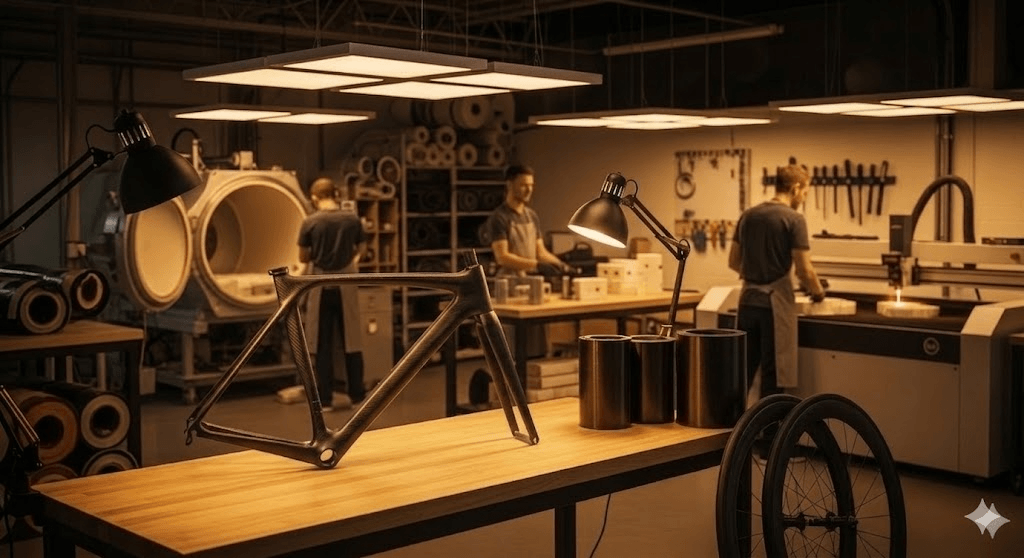
Leveraging pre-preg carbon fiber within a controlled preforming process allows absolute command over fiber orientation before the mold closes. This proactive management eliminates voids at the source, drastically boosting structural stability and mass-production consistency.
3.3: Molding and Monocoque Construction
Utilizing monocoque construction and internal molding technology, we integrate the headtube and stays into a seamless unit. This approach eliminates performance bottlenecks at traditional junctions and maximizes mechanical efficiency, providing a rock-solid foundation for elite frames.
Performance Definition: How Carbon Bike Frame Material Shapes the Ride
A frame’s performance ceiling is dictated by the strategic selection and architecture of the carbon bike frame material. By re-engineering the carbon fiber layup and resin system, we can balance aggressive weight-shaving with uncompromised rigidity and fatigue life. Integrating elite materials like Torayca M40X into a multi-layer composite structure doesn’t just bolster strength and durability; it fundamentally refines the ride feel, ensuring a stable, high-performance experience across Road, MTB, and Gravel platforms.
4.1: Structural Integrity (Strength and Durability)
Focusing on strength and durability and impact resistance to guarantee absolute structural redundancy and long-term stability under peak loads.
4.2: The Rigidity-Compliance Balance (Ride Feel)
Specific carbon fiber layup architectures define the compliance vs stiffness ratio, which is the primary driver behind tactile feedback and ride quality.
4.3: Lightweighting and Elite Performance
Leveraging lightweight bike frame material and high-modulus fibers (e.g., M40X) to slash overall weight while maintaining the critical thresholds for structural stiffness and durability.
H2: Material Logic: Carbon vs. Aluminum vs. Steel vs. Titanium
Chassis material dictates a frame’s performance ceiling. While carbon vs aluminum bike frame choices focus on maximizing the stiffness-to-weight ratio and structural integrity, steel and titanium prioritize ride feel and longevity. Evaluating impact resistance and fatigue resistance is essential to locking in the right architecture for Road, MTB, or Gravel platforms.
5.1: Carbon vs. Aluminum: Performance vs. Efficiency
The carbon bike frame leads in elite racing due to its unrivaled power-to-weight and directional layup potential. Aluminum (aluminum bike frame / carbon vs alloy frame) serves as the pragmatic choice for cost-effective or casual builds. Final performance stems from engineering precision, not just the material tag.
5.2: Steel & Titanium: Resilience and Fatigue Life
Steel (steel bike frame material) provides natural damping, while titanium (titanium bike frame) balances low weight with extreme fatigue life. For premium builds, the synergy between material properties and composite layup engineering defines the ultimate ride quality.
Category-Specific Material Strategy
The right carbon bike frame material is the foundation of any build. Because Road, Aero, MTB, and Gravel platforms have unique stress profiles, optimizing carbon fiber layup, pre-preg carbon fiber, and reinforced carbon structure is non-negotiable for achieving consistent performance and fatigue life.
6.1: Road / Aero: Efficiency and Speed
Elite Road and Aero frames leverage aero bike carbon construction. High-modulus fibers (e.g., Torayca M40X) enable aggressive weight-shaving without sacrificing the rigidity required for explosive sprints.
6.2: MTB: Structural Integrity and Impact Resistance
MTB frames focus on durability. A reinforced carbon structure and impact-focused layup ensure the chassis remains stable and fatigue-resistant through the most demanding technical sections.
6.3: Gravel / Endurance: Compliance and Efficiency
Gravel builds prioritize vibration damping. Pairing endurance bike frame material with targeted carbon fiber layup maximizes vertical compliance for comfort while locking in lateral stiffness for pedaling efficiency.
Benchmarking the Quality of Carbon Bike Frame Material
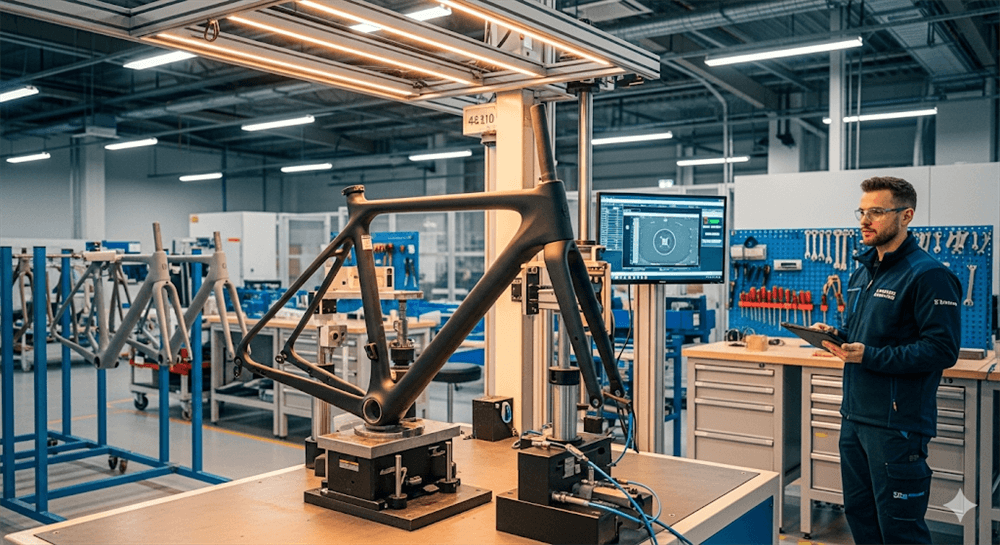
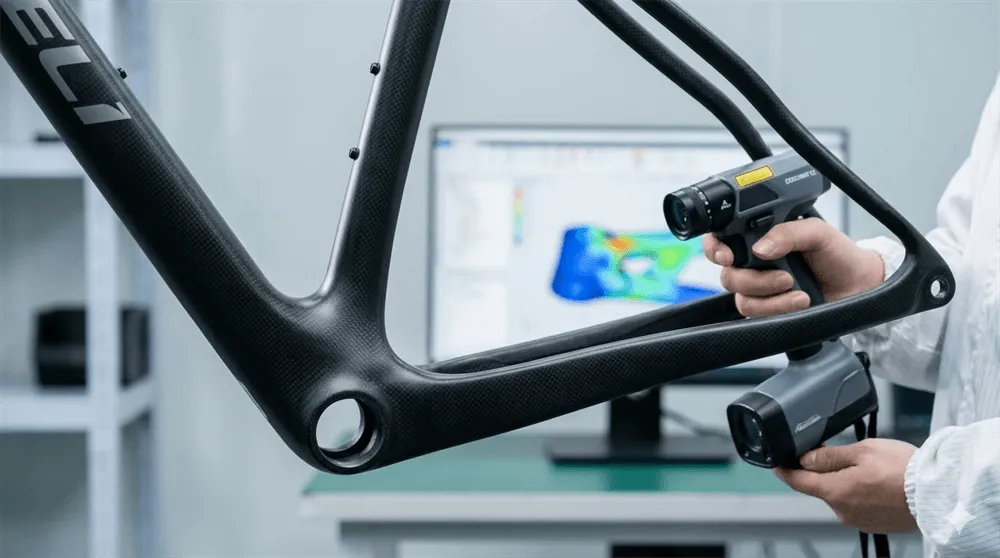
The caliber of carbon bike frame material isn’t just about the fiber grade; it’s dictated by the precision of the composite layup process and the stability of the resin matrix. High-end chassis rely on Toray or M40X high-modulus carbon fiber, validated through rigorous composite inspection to ensure ply-by-ply consistency. Mastering these benchmarks allows brands to distinguish real-world stiffness, durability, and ride feel—ensuring a reliable tier-one supplier partnership.
7.1: Critical Evaluation Metrics
-
Carbon fiber grades: Verification of high-modulus or aerospace-grade fibers (e.g., Toray series).
-
Layup Execution: Control over fiber orientation, ply count, and thickness distribution.
-
Resin system management: Precision in resin-to-fiber ratios and curing uniformity.
7.2: Common Quality Gaps
-
Structural Flaws: Delamination, voids, or uneven resin distribution.
-
Performance Variance: The stark contrast in stiffness, longevity, and weight between generic and premium materials.
Material and Structural Optimization: Our Edge
With 11+ years in carbon manufacturing, we utilize a refined system for carbon bike frame material selection and structural design. By perfecting the composite layup process and fiber placement process with M40X fibers, we optimize stiffness and weight for any project—ensuring elite performance while eliminating batch variance.
8.1: Tiered Material Sourcing
We align carbon fiber grades with specific performance targets. Whether utilizing high-modulus M40X or versatile T700/T800, we balance peak performance with cost efficiency.
8.2: Bespoke Material Layup Engineering
Through advanced stiffness-to-weight ratio optimization, we create custom layup protocols for Road, MTB, and Gravel. This guarantees that every frame maintains industrial-grade consistency and stability.
8.3: Vertical Development Capability
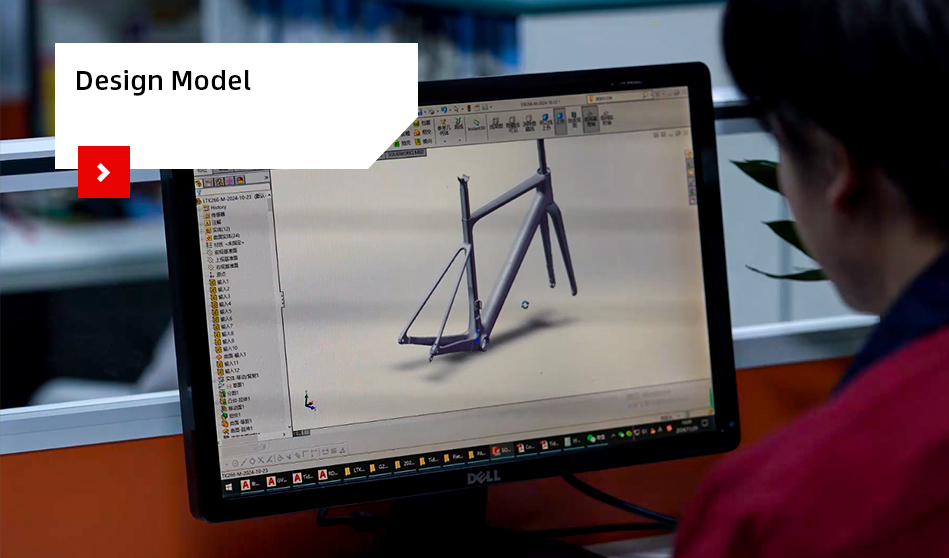
Integrating 3D design, preforming process, and molding, we offer a seamless development cycle. This end-to-end approach accelerates delivery and cements structural reliability from the initial fiber selection.
Future Trends in Carbon Bike Frame Material
Carbon bike frame material is shifting toward high-performance, circular-economy, and automated production. Re-engineering the composite layup process enables manufacturers to maximize the stiffness-to-weight ratio and batch consistency. This evolution supports elite Road, MTB, and Gravel builds while meeting the global demand for next generation composite materials and sustainable carbon fiber bikes.
9.1: High-Modulus Integration (M40X)
Fibers like Torayca M40X set the ceiling for lightweight rigidity. Their structural properties allow for aggressive weight-shaving and more optimized carbon fiber layup designs in premium racing platforms.
9.2: Sustainable Carbon Fiber Bikes
Recycled carbon fiber combined with eco-resins reduces carbon footprints without compromising strength and durability. This shift provides brands with a strategic path toward high-performance, sustainable manufacturing.
9.3: Automated Layup Optimization (AFP)
AI-optimized automated fiber placement (AFP) ensures total control over carbon layup material. By neutralizing defects like wrinkles and voids, it brings industrial-grade repeatability and reliability to high-volume, high-end frame production.
Conclusion: Engineering Trumps Raw Materials
Carbon bike frame material is just the starting point. Elite grades like Torayca M40X rely on precise carbon fiber layup and composite layup process optimization to hit aggressive stiffness and weight targets. For B2B partners, a factory’s carbon frame manufacturing expertise is the true differentiator. Choosing manufacturing depth over material labels is the only strategy that ensures consistent performance and secure, high-volume delivery.