Skip to content


When choosing a 29er hardtail Mountain Bike Frame, many details determine your riding experience for years. Whether for XC racing, weekend trails, or daily commuting, cyclists on Reddit and MTBR emphasize one thing—don’t trust spec sheets alone. The key factors are bike geometry, carbon fiber layup, and how well it fits your riding style. According to Singletracks, over 48% of riders buying a 29er MTB hardtail or carbon frame overlook the reach and head tube angle, often causing fatigue and unstable handling. As the saying goes, “If the geometry is wrong, all upgrades are wasted.” This guide highlights common buying mistakes from an engineer’s perspective, helping you find a frame that truly suits you.
Why is the 29er Hardtail Frame so popular? (Trends and Core Advantages)
As XC and Trail riding terrain becomes increasingly diverse, more and more American riders are focusing on the three core metrics: efficiency, roll speed, and controllability. Compared to traditional wheel diameters, the 29er hardtail frame demonstrates more stable track handling and lower energy loss in off-road testing, making it a top choice for many Trail and XC riders upgrading their bikes. The following will break it down in more detail from three perspectives: speed, lightweight design, and changing trends.
1: The Speed Advantage of the 29er MTB Hardtail Frame in Off-Road Riding
The larger wheel diameter provides superior roll-over ability, maintaining a higher average speed on gravel, root zones, and narrow sections. Many American bike shops call it a “momentum keeper” because the 29er hardtail MTB frame better retains kinetic energy, reducing the number of stops and restarts required on XC routes, making it particularly suitable for long trails and uphill sections.
2: The Balance of Lightweight and Rigidity Brought by the 29er MTB Carbon Frame
In carbon fiber frames, high-modulus carbon fiber layups allow the 29er MTB carbon frame to achieve both lightweight design and lateral stiffness while maintaining vertical shock absorption. American cyclists often say, “Carbon done right changes everything,” because the engineered carbon frame MTB 29er finds a more ideal balance between climbing efficiency and sprint stiffness, making it particularly suitable for racing-level XC or light trail riding.
3: Why More and More Riders Are Abandoning the 27.5 and Switching to the 29er Hardtail MTB Frame
This trend stems from real-world performance: at the same riding intensity, the 29er Hardtail MTB frame offers more stable traction, better downhill straight-line control, and a lower risk of getting stuck (especially on soft surfaces and gravel slopes). Many riders switching from the 27.5 have reported that the 29er’s advantage is “not just faster, but much less strenuous,” which is a key reason for the 29er’s strong comeback in American XC races and weekend trail riding.

Mistake 1: Ignoring the Actual Impact of Frame Geometry
Many riders, when choosing a 29er hardtail frame, only focus on the material and weight, neglecting the frame geometry, which truly determines handling and riding efficiency. Geometry is not just a “spec table decoration”; it directly affects your stability on technical sections, uphill power output efficiency, and confidence on high-speed descents. This is why mechanics in European and American bike shops often say, “Geometry first, specs second.”
1: The Impact of Reach, Stack, and Head Tube Angle Changes on Handling
Reach determines your foreleg extension, Stack determines your upper body pressure, and the head tube angle (HTA) affects the overall stability and agility of the bike. The trend towards longer Reach and a moderately looser HTA is more common in 29er hardtail MTB frames, providing greater stability on high-speed gravel and forest trail curves. Shorter Reach and a steeper HTA are better suited for beginners or XC riders who want more agile handling. Choosing the wrong one will make you feel like the bike is riding you, not that you’re in control.
2: Trail and BB Drop determine climbing efficiency and descent stability
A higher Trail value makes the bike more stable, but relatively sluggish on technical climbs; a lower Trail value makes it more agile but more prone to “tail-stepping.” BB Drop relates to the center of gravity, affecting climbing efficiency and descent ground feel. This is why high-end 29er MTB carbon frames emphasize geometric balance rather than simply pursuing lightweight design. Poor geometry cannot be compensated for by any upgrades.
Mistake Two: Focusing Only on Materials, Ignoring Carbon Layup Design
Many riders, when choosing a 29er MTB carbon frame, focus on material codes like “T700” and “T800,” neglecting the core factor truly affecting frame strength, impact resistance, and riding feel: the carbon layup design. A high-quality carbon frame MTB 29er often wins not because of its materials, but because of its engineering design details. The following content will break down the most easily overlooked and problematic aspects of the industry.
1: Carbon Fiber Grade (T700/T800) is Not the Only Factor Determining Quality
Many beginners believe “T800 = better,” but actual durability depends on the resin ratio, prepreg direction, and reinforcement zones. If the ply design is inadequate, even a T800 frame can easily break upon impact, while a high-quality 29er hardtail MTB frame often achieves a more stable structure through a combination of carbon fiber and localized reinforcement.
2: Why a high-quality carbon frame MTB 29er should be judged by its ply design, not its weight.
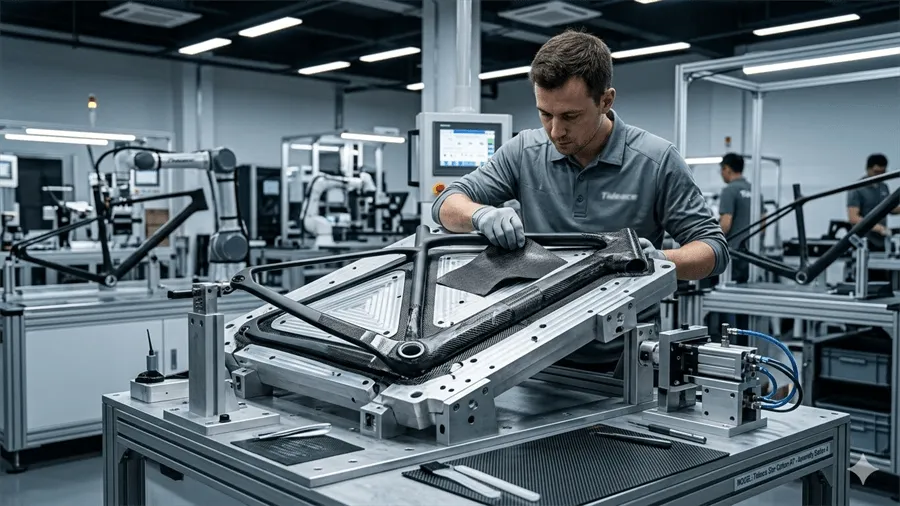
Truly professional 29er frames don’t solely pursue lightweight design. Manufacturers typically use multi-directional layups in key stress areas like the bottom bracket, head tube, and rear triangle to improve torsional stiffness and impact resistance. A lightweight 29er MTB carbon frame without a proper structure is commonly referred to as “paper-carbon” in the European and American industry.
3: How to distinguish a high-quality 29er MTB carbon frame from a cheap, poorly made product.
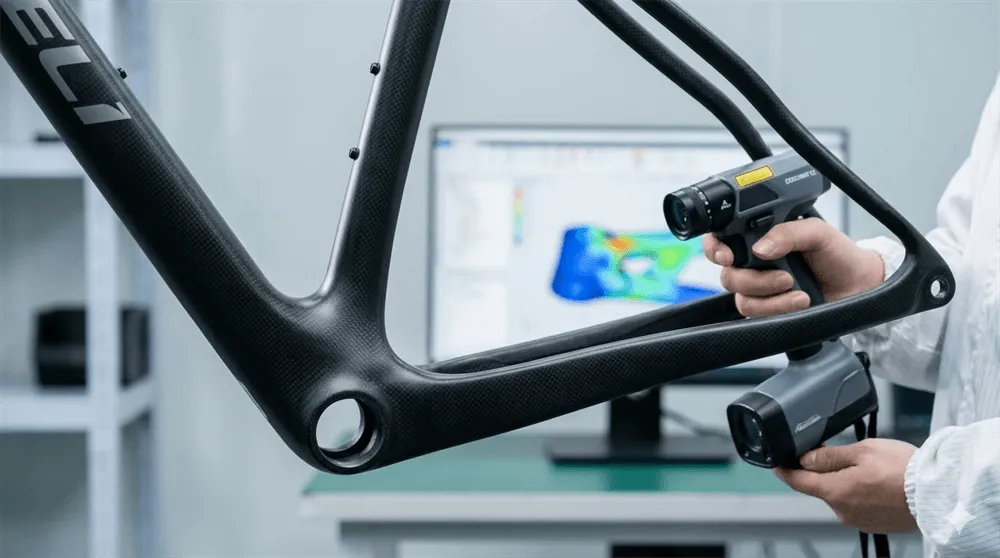
Judgment methods include: whether the inner wall is smooth, whether it uses a monocoque process, whether the cable routing holes are free of burrs, and whether the rear fork symmetry is precise. Cheap 29er carbon hardtail frames often suffer from excessive resin, voids between layers, and insufficient reinforcement, making them prone to microcracks or delamination over long-term use.
Learning these assessment methods will allow you to quickly identify truly worthwhile products among the many 29er hardtail frames available.

Mistake Three: Ignoring the Matching of Riding Scenarios and Frame Type
When choosing a 29er hardtail frame, different riding scenarios place vastly different demands on frame performance. Whether it’s daily trail commuting, XC racing, or long-distance bikepacking, you need to consider key factors such as geometry, wheel diameter compatibility, carbon fiber ply strength, and tire clearance. Ignoring these compatibility issues can easily lead to driver fatigue, poor climbing efficiency, and even chain or wheelset interference problems. Understanding the optimal combination of riding scenarios and the 29er MTB hardtail frame or 29er carbon MTB frame is the core strategy for improving the riding experience.
1: Trail Commuting vs. XC Racing: Which is More Suitable for the 29er Hardtail MTB Frame?
For trail commuting emphasizes comfort and durability. When choosing a 29er hardtail MTB frame, priority should be given to the cushioning performance of the lightweight carbon frame and tire width compatibility. XC racing prioritizes climbing efficiency and precise handling. The lightweight and rigid advantages of a 29er mtb carbon frame significantly enhance acceleration response and off-road performance.
2: Is a 29er carbon mtb frame suitable for long-distance bikepacking?
Long-distance bikepacking demands high load capacity, tire compatibility, and frame durability. A high-quality 29er carbon mtb frame can balance lightweight and load capacity, but the bottom bracket height, wheelbase, and mounting point design must be carefully considered to avoid swaying or fatigue during long rides.
3: Is a full-suspension frame more suitable for high-drop trails? When is a hardtail more efficient?
High-drop trails often have complex terrain and high suspension requirements. A full-suspension frame can absorb large impacts and protect the rider’s joints. However, for trails that are not technically demanding or prioritize climbing efficiency, the 29er hardtail mtb frame, due to its light weight and fast pedal response, still provides more efficient energy transfer and is the first choice for many experienced trail riders and XC experts.
Mistake Four: Focusing Only on Price While Ignoring Durability and After-Sales Service
Many riders, when choosing a 29er hardtail frame or 29er carbon MTB frame, only focus on the price tag, neglecting the importance of materials, craftsmanship, carbon fiber layup quality, and after-sales support. Cheap frames may be appealing in the short term, but hidden problems are easily exposed over long-term use, such as delamination, insufficient resin, or substandard paint finish. These will all affect the riding experience and safety. Next, we will analyze these issues in detail and teach you how to identify a high-value 29er MTB hardtail frame.
1: Common Hidden Problems of Cheap 29er Hardtail Frames (Delamination, Insufficient Resin, Substandard Paint Finish)
Low-priced carbon fiber frames often cut corners on layup thickness, resin penetration, and paint finish. Common issues include:
- Delamination: Even minor impacts during riding can cause noise or cracks;
- Insufficient Resin Starvation: Reduces overall rigidity, leading to fatigue during long rides;
- Cheap Paint Finish: Easily scratched, bubbles appear, and may even cover up minor cracks.
These problems are often referred to as “cheap tub” or “one-hit wonders” on European and American forums like Pinkbike and MTBR, meaning they will cause problems after only a few rides.
2: How a High-Quality 29er Carbon MTB Frame Demonstrates Value in the Details
A high-quality 29er MTB carbon frame is not only lightweight and rigid, but also demonstrates professional standards in the details:
- Neat inner wall stitching and reasonable carbon fiber layering;
- Precise connections at the bottom bracket, head tube, and chainstays with strict manufacturing tolerances;
- Uniform paint finish with a wear-resistant and UV-resistant protective layer.
These details directly affect riding stability and handling, which are also the “ride-ready” characteristics mentioned by European and American riders.
3: Why After-Sales Warranty Determines the Long-Term Stability of a Bike Frame
Even the best quality frames can develop minor cracks or manufacturing defects during long-term riding. A carbon frame MTB 29er with a comprehensive after-sales warranty ensures timely support and repair services in case of quality issues, avoiding additional financial losses. European and American brands often use lifetime warranties or crash replacement programs as selling points; this not only guarantees quality but also gives riders greater peace of mind on long trails or downhill rides.
Mistake Five: Ignoring Parts Compatibility (BB Specifications, Tire Width, Disc Brake Standards)
Many riders focus only on frame material and geometry when purchasing a 29er hardtail frame, neglecting parts compatibility. An incompatible bottom bracket (BB), wheelset spacing, or maximum tire width can lead to chain friction, difficulty installing wheels, or limited upgrade options. Understanding these details not only allows the 29er MTB hardtail frame to perform at its best but also avoids pitfalls during later modifications and maintenance. Below, we’ll explain in detail from three perspectives: BB specifications, Boost standards, and tire width compatibility.
1: The Impact of BB Specifications (BSA / BB92 / PF30) on Maintainability and Stiffness
Different types of bottom brackets (such as BSA threaded, BB92 press-fit, and PF30 large-diameter bottom brackets) directly affect frame stiffness, drivetrain efficiency, and ease of future maintenance. For example, the carbon frame MTB 29er uses a PF30 design, which improves lateral stiffness, but makes installing chain guards or bearings slightly more complex; while the BSA threaded bottom bracket is easier to maintain and is jokingly called a “must-have” by veteran cyclists in Europe and America. Understanding the BB specification will allow you to ensure power transmission and facilitate future upgrades when purchasing a 29er MTB carbon frame.
2: Boost vs Non-Boost → How it affects the wheelset and chainline of a 29er MTB hardtail frame
Boost (148mm rear/110mm front) and Non-Boost specifications directly determine wheelset selection and chainline performance. For the 29er hardtail MTB frame, the Boost design allows for wider wheels, more thorough tire sweeping, and improved lateral stiffness, but non-Boost wheels cannot be directly replaced and require additional fitting. Understanding this difference can prevent the awkward situation of buying wheels that don’t fit properly or disc brake misalignment.
3: Tire Width Compatibility (Max Tire Clearance) and Future Upgrade Potential
Each 29er carbon MTB frame has a maximum tire width limit (Max Tire Clearance). When riding off-road, in mud, or on snow, if the tire is too wide, it can cause brake interference or tire jamming. This is the problem often referred to by European and American cyclists as “tire getting stuck.” Checking tire width compatibility in advance not only ensures smooth riding now but also leaves room for future upgrades to larger or even “Plus” tires.
Mistake Six: Choosing the Wrong Frame Size Leads to Fatigue and Poor Handling
When selecting a 29er hardtail frame, frame size is a key factor affecting riding comfort and handling. Even if you choose the right brand and materials, an unsuitable size can easily lead to knee pain, wrist strain, or a feeling of instability at high speeds. The “Frame Fit Fail” often mentioned by European and American cyclists is precisely because they neglect the matching of height, arm length, and riding style. Next, we will break down the details of size selection from an engineer’s perspective to help you avoid the regret of “buying too big.”
1: How to Choose the Correct 29er Hardtail Frame Size Based on Height and Agility
When choosing a 29er MTB hardtail frame fit, height is only one factor to consider; shoulder width, arm length, and core flexibility are even more important. General recommendations: Size M for riders 170–180cm tall, and Size L for riders 180–190cm tall. However, for riders who enjoy fast XC sprints, a slightly smaller size can enhance handling and agility; for those who prefer trail descents or bikepark riding, a slightly larger size can increase stability. Specialty shops typically use standover height and reach for precise matching, which is what European and American bike shops and online reviews often emphasize as a “tailor-made” feel.
2: Differences in Size Selection for XC and Trail Hardtails
On XC tracks, lightweight design and high pedaling efficiency are more important, so 29er carbon mtb frame sizing tends to be more compact, improving pedaling efficiency and steering agility. Trail or Enduro hardtails prioritize stability and forgiveness; a slightly longer frame provides safety and better compatibility with larger tires (Max Tire Clearance). Understanding this difference will help you choose a 29er hardtail mtb frame that suits both your skill level and riding style.
3: Why Many Riders Regret Buying Too Big
Many riders, seeing “Feel Big” recommendations on European and American online stores or seeking a more stable feel, often choose a size larger. This results in problems such as weak pedaling uphill, unstable control downhill, and neck and shoulder fatigue. This is commonly known in the industry as “Oversize Trap.” The correct approach is to choose based on the carbon 29er sizing index and your own agility, while also considering future upgrade options, such as replacing with longer-travel suspension or wheels, without letting the larger size affect handling.

How to Choose the Right 29er Hardtail Frame? (Engineer’s Advice)
Choosing the right 29er hardtail frame not only affects riding handling but also directly impacts long-distance comfort and upgrade potential. Many cyclists focus only on lightweight design or appearance, neglecting geometry matching, material craftsmanship, and future upgrade options. This section will provide a practical buying guide from an engineer’s perspective, using popular keywords such as 29er MTB hardtail frame, 29er carbon MTB frame, and carbon frame MTB 29er, helping you find a balance between budget, intended use, and durability.
1: Making Your Choice Based on Budget, Intended Use, and Upgrade Plans
Before choosing a frame, clarify your riding scenario: XC racing, trail adventure, or long-distance bikepacking? Different uses place different demands on the stiffness, weight, and wheelset compatibility of the 29er hardtail MTB frame. Also consider your budget and future upgrade plans—do you plan to change the suspension, wheels, or brakes? Proper planning can prevent you from being ripped off after the initial purchase.
2: Comparison of Advantages and Disadvantages of 29er MTB Carbon Frames and Aluminum Alloy Frames
The advantages of carbon fiber 29er MTB carbon frames lie in their lightweight, high rigidity, and good vibration absorption, but they are relatively expensive and prone to damage. Aluminum alloy frames are durable and easy to repair, but their weight and comfort are slightly inferior. European and American cyclists often jokingly refer to older aluminum frames as “plate aluminum hardtails,” while “full carbon frames” are the preferred choice for XC racing and high-end trails. The choice should be based on riding style and terrain requirements.
3: How to Check the Workmanship of Carbon Fiber Frames (Inner Wall, Cable Routing, Paint, Seams)
Even within the same model of carbon frame MTB 29er, the workmanship varies greatly. Check if the inner wall layers are flat, if the cable routing is smooth, if the paint has bubbles or cracks, and if the seams are smooth and even. These details directly determine the frame’s lifespan and safety. There’s a saying in the industry: “Details determine rigidity,” especially for high-end XC or trail hardtail frames, which require strict quality control.
Frequently Asked Questions (Based on Reddit / Real Pain Points from Forums)
When choosing a 29er hardtail MTB frame, riders often have questions: Is a large-diameter hardtail suitable for beginners? Will a carbon fiber hardtail be too bumpy on gravel roads? How do I determine if a 29er carbon MTB frame is worth buying? This section compiles discussions from Reddit and European and American forums, and combines an engineer’s perspective to quickly analyze the key pain points and avoid pitfalls when choosing a hardtail.
1: Is the 29er hardtail MTB frame really more suitable for beginners than the 27.5?
The larger wheel diameter of the 29er MTB hardtail frame provides better rolling efficiency and climbing stability, but the handling response is slightly slower. European and American riders often say, “29er makes you cruise, 27.5 makes you flick.” This section analyzes the real advantages and disadvantages of choosing a hardtail for beginners, combining the geometry of the 29er hardtail MTB frame and the 29er MTB carbon frame.
2: Does a hardtail really “damage your body more” on gravel roads?
Hardtails lack rear suspension, making vibrations more noticeable on gravel. However, a high-quality carbon frame MTB 29er can reduce vibrations through tubing design and optimized layup. Reddit riders have reported that “lightweight carbon tubing feels more ‘soft and bouncy’ than aluminum tubing.” This section analyzes the vibration transmission principle of hardtails and provides tips for choosing a 29er carbon MTB frame for suspension.
3: How to determine if a 29er carbon MTB frame is worth buying?
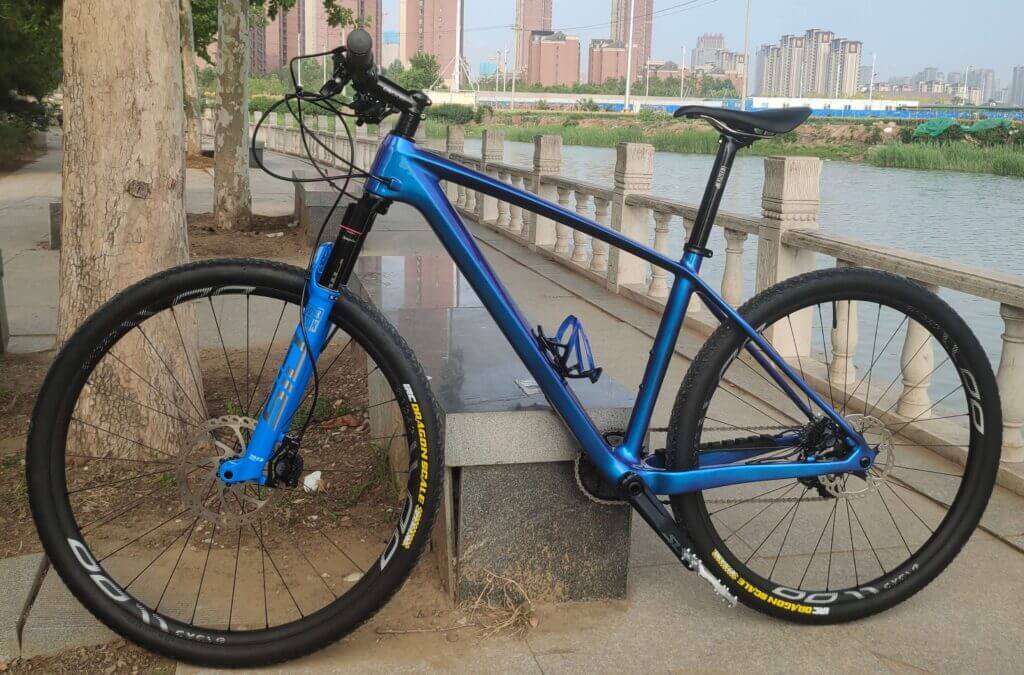
When choosing a carbon fiber hardtail, consider not only weight and appearance, but also tubing grade (T700/T800), layup method, welding, and BB joint quality. In Europe and America, it’s commonly said that “layup quality > paint job,” meaning the layup process is more crucial than the paint job. This section, combining information on the 29er hardtail MTB frame and its parameters, teaches you how to quickly assess the frame’s workmanship and durability, avoiding common pitfalls.
| Feature | What to Check | Recommended / Pro Tip | LSI / Related Keywords |
|---|---|---|---|
| Carbon Material | T700 vs T800 | Higher modulus (T800) for better stiffness | 29er carbon mtb frame, carbon frame mtb 29er |
| Layup Quality | Tube orientation, fiber layering | Look for consistent layup, no bubbles | 29er hardtail mtb frame, 29er mtb hardtail frame |
| Bottom Bracket (BB) | BSA, PF30, BB92 | Ensure compatibility with your drivetrain | carbon frame mtb 29er, hardtail MTB |
| Weight | Overall frame weight | Lighter frames improve climbing, but avoid overly thin tubing | 29er carbon mtb frame, 29er mtb hardtail frame |
| Tire Clearance | Max tire width | Allows future upgrades | 29er hardtail mtb frame, 29er mtb carbon frame |
| Warranty & Brand Support | Manufacturer guarantee | Longer warranty indicates confidence in frame durability | 29er carbon mtb frame, carbon frame mtb 29er |
Avoid Buying Traps and Choose a More Reliable 29er Hardtail Frame for the Longer Term
When choosing a 29er hardtail frame, the easiest pitfall isn’t price, but rather neglecting geometry, material grade, carbon fiber layup, and component compatibility. A high-quality 29er MTB hardtail frame or 29er carbon MTB frame balances climbing and descending handling in terms of geometry parameters such as Reach, Stack, and Head Tube Angle. It also reduces vibration through T700/T800 carbon fiber tubing and proper layup, providing a more stable riding experience. European and American cyclists often say “layup quality > paint job,” emphasizing that carbon fiber craftsmanship is more important than the appearance.
Furthermore, compatibility details such as BB specifications, Boost, and tire width limitations directly affect future upgrade potential and maintenance convenience. Considering these factors comprehensively can help you avoid the pitfalls of inferior hardtails and choose a 29er hardtail MTB frame or carbon frame MTB 29er that truly suits your needs. For more professional customization or testing advice, please contact haidelibikes directly for a one-on-one solution to ensure long-term riding reliability.