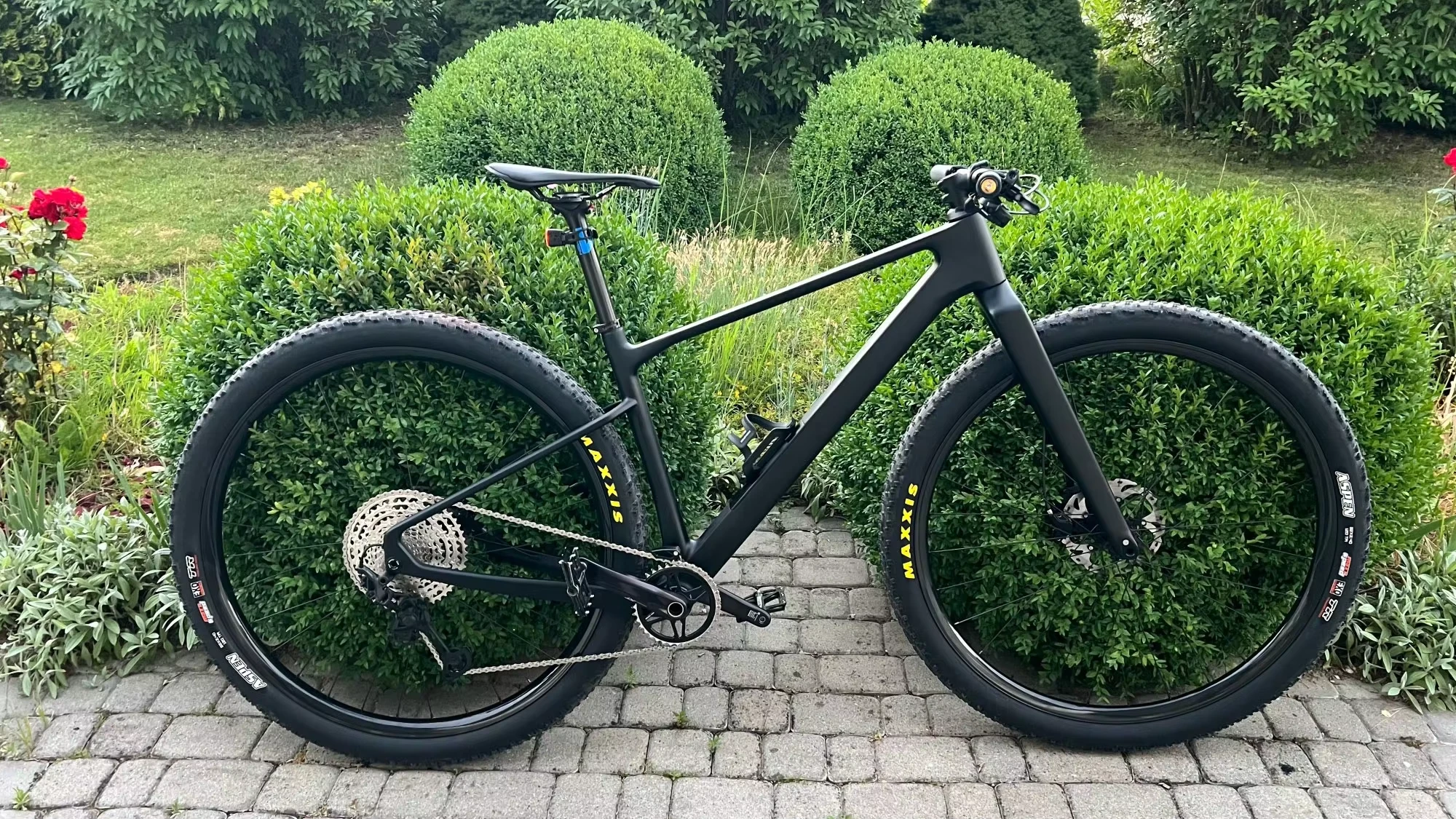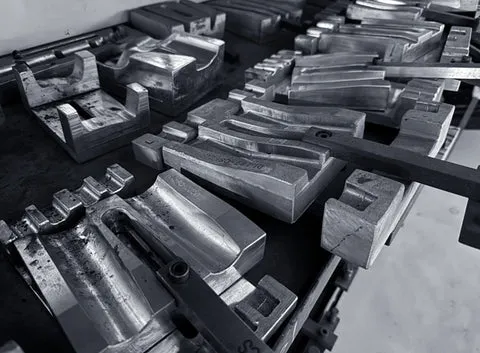
Carbon bike frame forming turns design into structural reality, governing stiffness, weight, and long-term durability. The entire ride character is sealed within the carbon frame molding process, carbon frame layup process, and composite frame manufacturing. Over 70% of performance delta between framesets is realized during forming and layup. For OEM partners, repeatable forming technology and a metric for carbon frame production consistency are the ultimate safeguards for batch quality and brand reputation.
The Logic of Carbon Bike Frame Forming
Carbon bike frame forming turns design into structural reality, governing stiffness, weight, and ride feel. By refining the carbon frame molding process and carbon frame layup process, manufacturers secure stress distribution and consistency. For high-performance Road, Gravel, or MTB frames, forming is the foundation of mass-production reliability.
1.1: Defining Structural Integrity
Forming integrates fiber orientation, tube shaping, and curing to lock in frame structural integrity and ride stiffness. It is the non-negotiable stage for transforming raw composites into a high-performance chassis.
1.2: The Bridge from Layup to Curing
Positioned after cutting and layup, forming bridges the gap between carbon layup and the final curing cycle. Accurate forming ensures each frame meets specific design goals for weight, impact absorption, and rigidity.
1.3: Maximizing Strength and Reliability
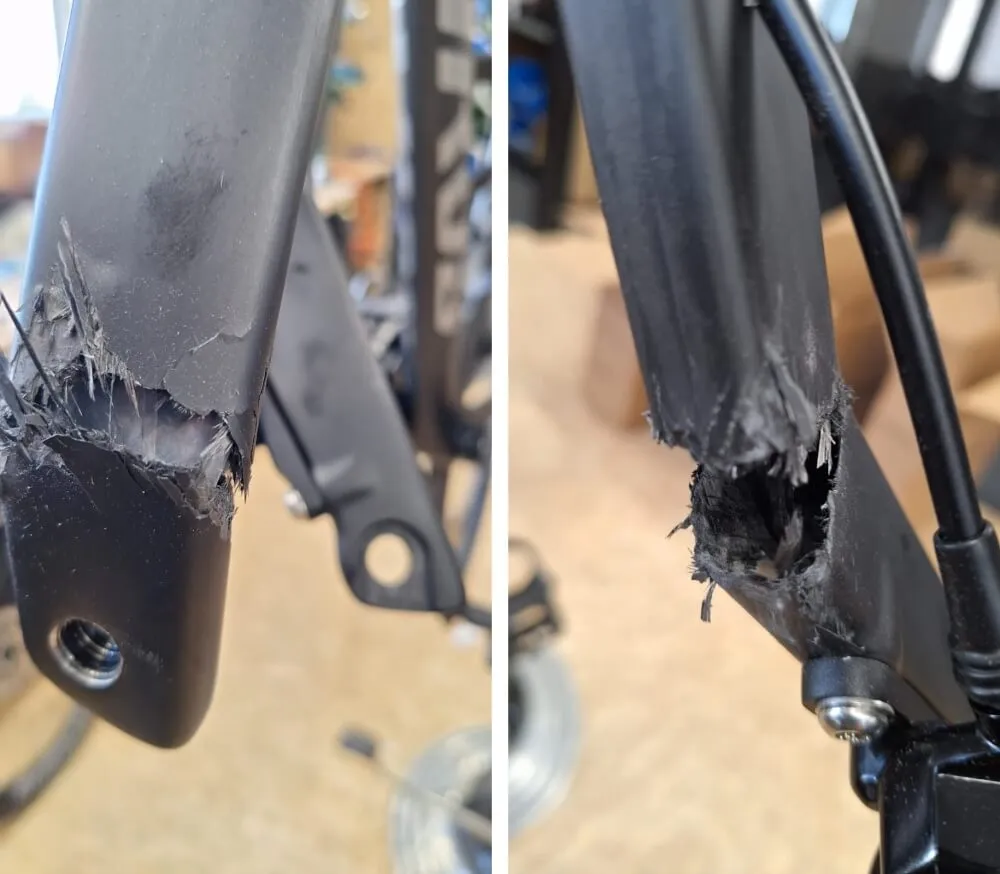
Control over molding pressure, temperature, and layup precision defines carbon fiber bike frame fabrication. Superior forming prevents delamination and internal voids, ensuring a high-performance bike frame building process with long-term structural durability.
The Logic of Carbon Frame Production
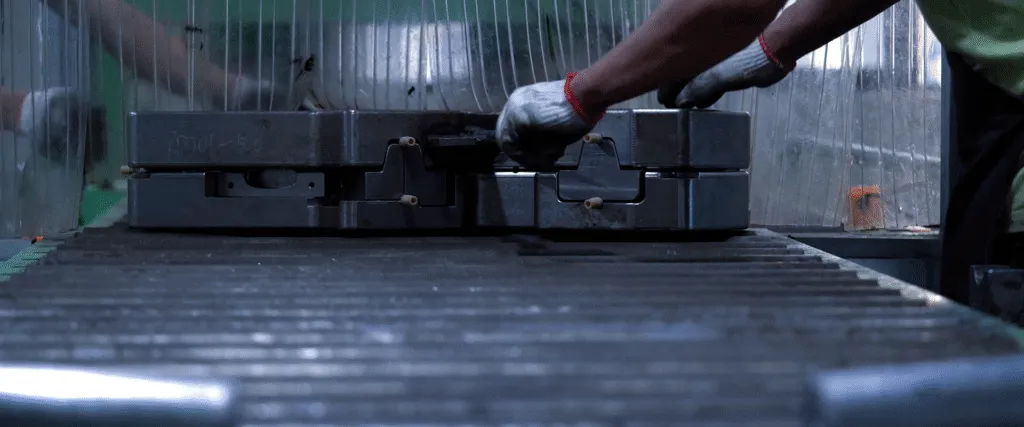
Carbon frame production transforms raw materials into high-performance structures, governing stiffness, weight, and durability. Through expert carbon fiber bike frame fabrication and composite frame manufacturing, we lock in ply accuracy and curing cycles. This guarantees the consistency required for premium OEM framesets and global brand standards.
2.1: Material Foundations (Prepreg / Carbon Cloth)
Material prep is the bedrock of production. Precision cutting and pre-conditioning of T700/T800 prepreg ensure that fiber orientation and strength align with design specs. This initial stage directly impacts structural stability during curing and final frame rigidity.
2.2: From Layup to Finishing
Performance is realized through a strict lifecycle: layup directs stress, forming defines geometry, curing secures the resin matrix, and finishing ensures fitment. This workflow allows Road, MTB, and Gravel frame production to balance lightweight agility with industrial-grade durability.
2.3: Discipline-Specific Manufacturing
Variations in frame geometry and tube profiles across MTB, Road, and Gravel platforms require tailored manufacturing. MTB demands impact resistance; Road focuses on power transfer; Gravel optimizes tire clearance. These needs define the carbon frame production parameters and quality benchmarks.
Mastering the Carbon Frame Molding Process
The carbon frame molding process governs structural strength, weight balance, and batch consistency. Precise control over carbon fiber molding techniques and the frame layup and curing cycle ensures every frame hits rigidity and durability benchmarks. This process minimizes waste while providing a reliable production base for premium Road, Gravel, and MTB framesets.
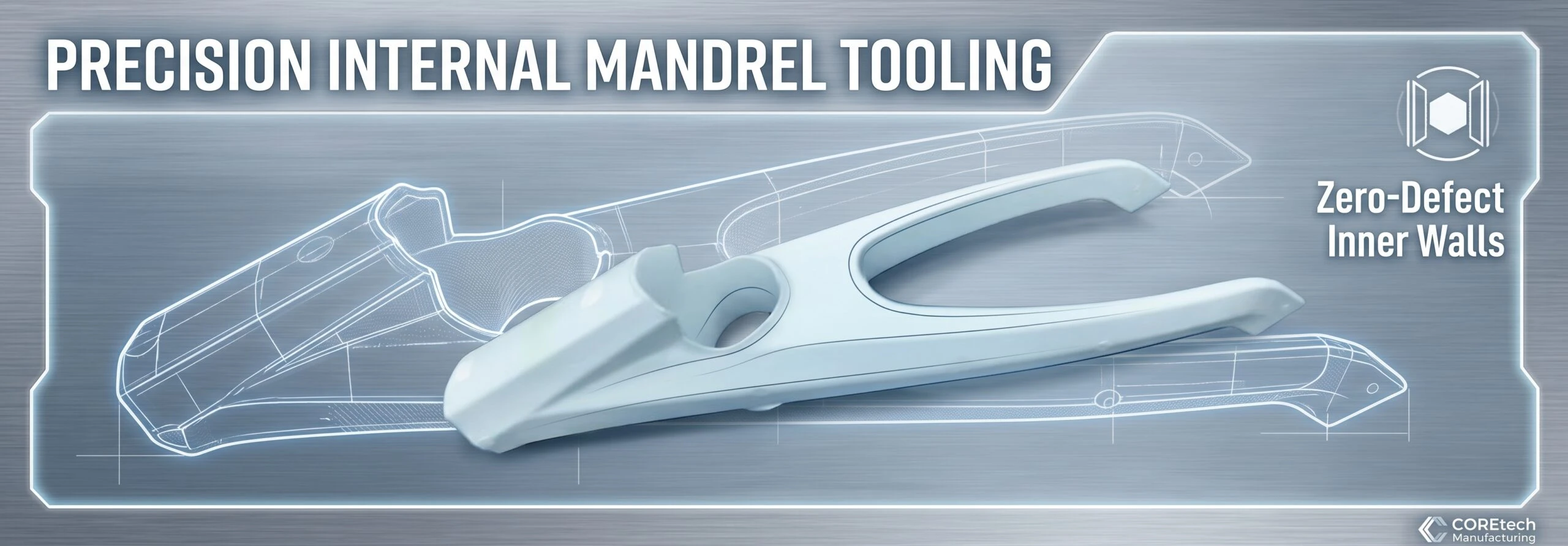
3.1: Core Architectures: Internal, Monocoque, and Tube-to-Tube
-
Internal Molding: Delivers refined internal cavity control for maximum weight reduction.
-
Monocoque: Provides continuous structural integrity, significantly enhancing overall stiffness.
-
Tube-to-Tube: Offers the flexibility required for custom geometry and small-batch production.
Choosing the optimal molding process for specific Road, Gravel, or MTB requirements is the key to balancing carbon composite bike frame performance with manufacturing efficiency.
The Synergy of Carbon Frame Layup and Forming
Molding quality depends on layup precision. Refining the carbon frame layup process and fiber orientation allows for exact control over stiffness and weight distribution post-curing. This coordination is vital for ride quality and long-term durability in high-performance bike frame builds.
4.1: Layup as a Structural Driver
Sequence, angles, and ply counts define the stiffness and compliance of key stress zones. Proper design strengthens the bottom bracket and head tube while maximizing weight-shaving.
4.2: Impact of Frame Layup and Curing
Curing fuses the resin and fiber, preventing delamination and air pockets. This secures carbon frame structural forming consistency, serving as the essential foundation for precision molding and elite ride performance.
Mastering Carbon Composite Bike Frame Forming
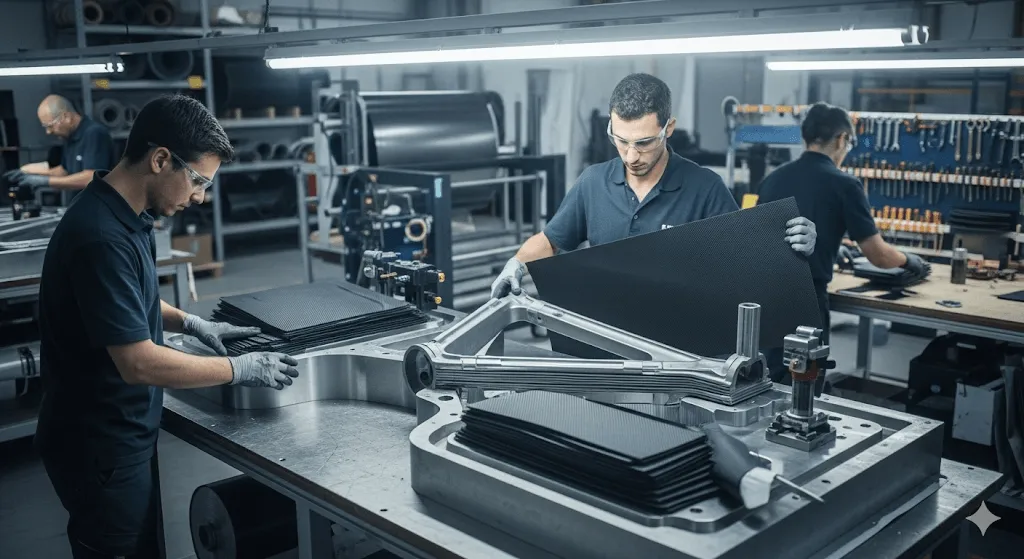
Carbon composite bike frame forming governs structural strength, weight balance, and ride feel. Precise control over the carbon fiber shaping process and frame layup and curing ensures batch consistency in stiffness, compliance, and durability. This workflow maximizes material yield, providing a reliable foundation for premium OEM/ODM projects.
5.1: High-Pressure vs. Standard Molding
High-pressure molding enhances the density and fiber alignment of carbon frame structural forming, essential for high-performance MTB carbon frame manufacturing and road bike carbon frame production. Standard molding offers the cost-effective flexibility required for small-batch or custom bike frame design builds.
5.2: Defect Control and Structural Integrity
Vigilance during carbon composite bike frame forming prevents voids, delamination, and resin instability. By integrating advanced composite forming with a strict frame layup process, we minimize defect rates, securing the safety of each high-performance bike frame while optimizing lightweight carbon frame architecture.
The Logic of Carbon Fiber Shaping and Aero Design
The carbon fiber shaping process defines a frame’s performance ceiling. Precise mold design and fiber control ensure tube rigidity, weight-shaving, and structural consistency. Beyond power transfer, optimized shaping secures the stability and durability required for elite Road, Gravel, and MTB platforms.
6.1: Tooling and Aerodynamic Frame Shaping Implementation
Molding dictates geometric accuracy, specifically for aero tube profiles and reinforced junctions. Leveraging aerodynamic frame shaping and advanced composite foam forming, we achieve the ideal balance of low drag, weight, and strength. This ensures consistent carbon frame quality in volume, offering brands a scalable engineering solution for high-performance builds.
Quality Control and High-Performance Execution
Reliability depends on precise bike frame composite forming and carbon fiber processing methods. Every stage, from layup to molding, governs structural integrity. Stable forming, thermal curing, pressure control, and accurate fiber orientation are essential for balancing lightweight agility with high rigidity, ensuring batch consistency and minimal rework.
7.1: Defect Mitigation and Solutions
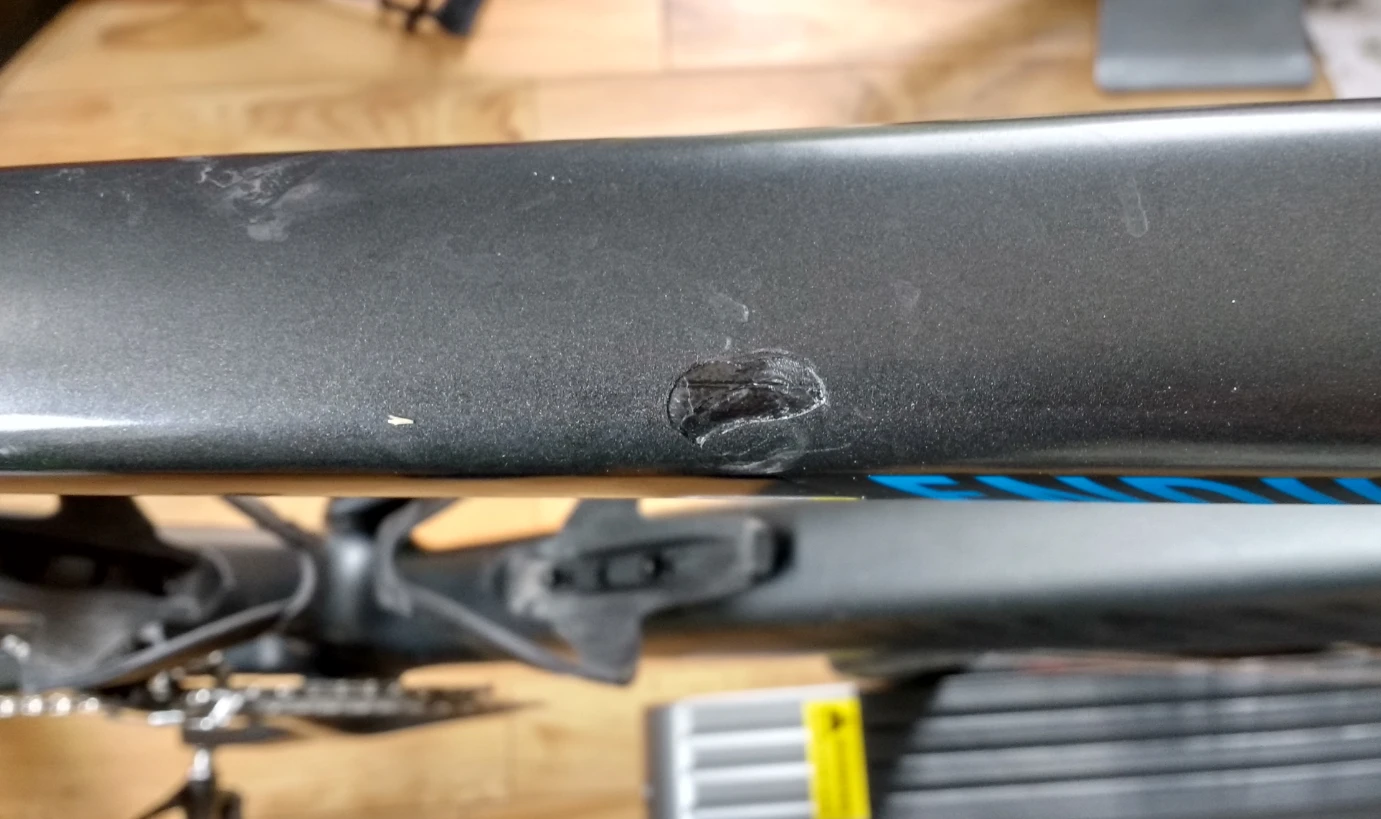
Common issues like delamination, voids, and fiber misalignment are managed by optimizing the layup sequence. Using autoclaves or high-precision tooling alongside strict temperature and pressure monitoring significantly reduces defect rates.
7.2: Engineering High Performance Bike Frames
Combining advanced carbon frame layup process with exact curing control—validated by fatigue and real-world testing—ensures every frame meets weight and stiffness benchmarks. This provides the reliability brands need for successful mass production.
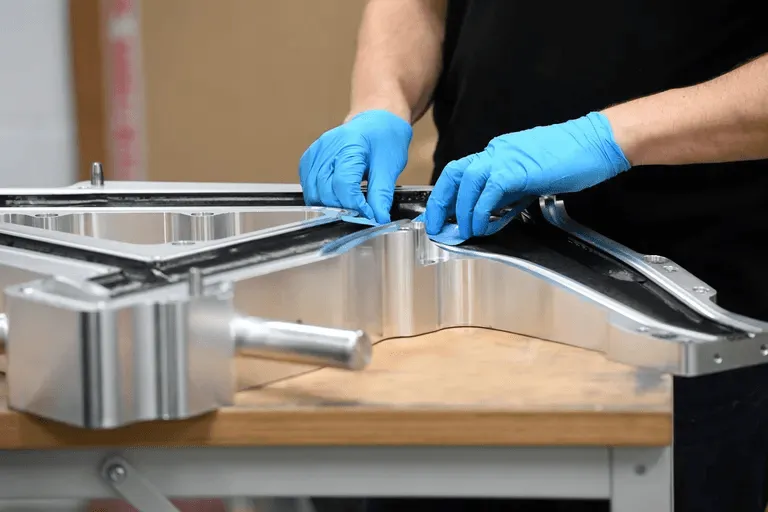
Forming Variances Across Bike Categories
Forming logic dictates a frame’s structural ceiling and ride feel. By optimizing carbon fiber frame construction and the frame layup process, we tailor performance for MTB, Road, and Gravel platforms. Control over curing parameters and fiber orientation is essential for consistent, high-reliability carbon frame production.
| Feature | Road Bike Frames | MTB (Mountain) Frames | Gravel Bike Frames |
| Primary Goal | Power transfer & Aero efficiency | Impact resistance & Durability | Compliance & Versatility |
| Forming Focus | Monocoque for torsional stiffness | Massive reinforcement at high-stress zones | Vibration damping & Tire clearance |
| Layup Priority | Ultra-thin walls (Weight-shaving) | Multi-layer layup (Crash redundancy) | Optimized Fiber Orientation for comfort |
| Critical Junctions | Head tube & Bottom Bracket | Downtube & Pivot/Linkage areas | Chainstays & Seatpost junction |
| Forming Pressure | High precision for aero profiles | Extreme high-pressure for density | Balanced pressure for wall consistency |
Emerging Trends in Carbon Frame Forming Technology
Carbon frame forming technology is evolving toward intelligence and sustainability. Beyond traditional carbon frame layup process and composite frame manufacturing, the industry now integrates precision forming, automation, and digital QC. This ensures the stability of high-performance builds while optimizing material yield and batch uniformity.
9.1: Automation and Intelligent Manufacturing
Automated placement, digital mold monitoring, and AI-driven forming optimization have significantly boosted production accuracy. This secures the consistency essential for lightweight carbon frame and high performance bike frame mass production.
9.2: Sustainable Composites and Efficiency
Sustainability focuses on reclaimed fiber, optimized resin ratios, and scrap minimization. Utilizing refined carbon fiber processing methods allows for the eco-friendly production of elite Road, Gravel, and MTB framesets without sacrificing structural performance.
How to Audit Supplier Forming Capabilities
Evaluating Carbon Bike Frame Forming requires a deep dive into equipment precision and process maturity. Success in OEM partnerships depends on the stability of the carbon frame molding process, carbon frame layup process, and composite frame manufacturing. A supplier must prove they can scale a custom bike frame design without compromising the high performance bike frame benchmarks set by the prototype.
10.1: Tooling and Process Infrastructure
Top-tier suppliers utilize autoclaves and high-pressure molding to maintain strict control over temperature and pressure. This infrastructure is essential for the accuracy of the carbon fiber shaping process and final frame structural forming.
10.2: Custom Design and Engineering Support
Assess the ability to tailor geometry, layup, and aerodynamics to brand specs. A capable partner delivers lightweight, high-stiffness frames while handling the complexities of bespoke custom bike frame design for mass production.
10.3: Consistency and Quality Control
The true test is sample-to-mass repeatability in carbon composite bike frame forming. Monitoring defect rates and ensuring ride quality remains stable across batches is the key to identifying a reliable, long-term manufacturing partner.
Conclusion: Forming as the Arbiter of Frame Performance
Forming is the critical stage where design logic becomes structural reality, governing stiffness, weight, and compliance. In road bike carbon frame production, gravel carbon frame forming, and MTB carbon frame manufacturing, precise carbon frame layup process and molding define durability and batch consistency.
Robust forming technology enables the carbon fiber shaping process to realize custom geometry and aero targets while balancing rigidity and weight. For OEM/ODM partners, selecting a supplier with a mature carbon bike frame forming system and proven consistency is essential for ensuring rapid market entry and long-term product reliability.