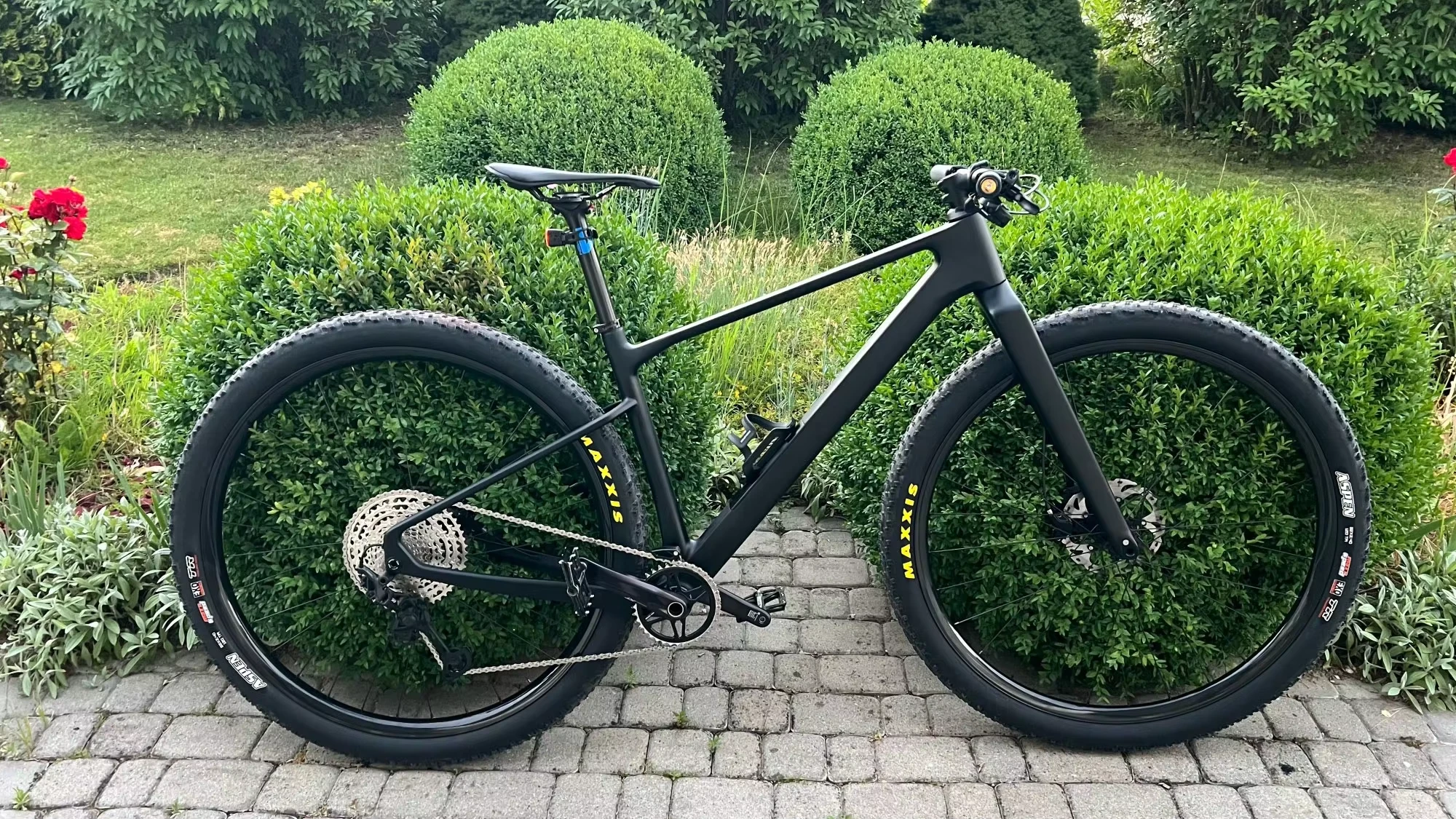
With the evolution of modern trail, downcountry, and marathon riding scenarios, carbon mountain bike frames are no longer solely focused on lightweight design and stiffness. More and more mainstream brands are integrating frame storage boxes into their next-generation carbon MTB frames for storing tools and supplies. User feedback from platforms like Pinkbike and MTBR shows that built-in storage offers significant advantages in terms of center of gravity control, handling stability, and long-distance practicality, which has led this design to gradually become an important feature of modern MTB frames.
Why have frame storage boxes become a “must-have” for modern mountain bikes?
Modern carbon fiber MTBs are evolving towards higher strength and all-terrain capabilities, and riders’ reliance on carrying tools and supplies has increased accordingly. Traditional external mounting solutions often compromise handling stability during high-speed descents and on complex terrain, and can even cause structural interference. Therefore, integrating storage space into the frame has become a necessary step to optimize overall performance and user experience.
1.1 Three major drawbacks of traditional external solutions in hardcore riding
In real-world trail riding, the limitations of backpacks, saddlebags, or waist packs are readily apparent:
- Center of gravity interference: Extra weight raises the center of gravity, causing unnecessary wobbling during technical maneuvers or high-speed cornering, and increasing shoulder and back fatigue.
- Space conflict: On full-suspension bikes, saddlebags are prone to rubbing against the rear wheel during deep suspension compression, and can even restrict the operation of dropper seatposts.
- Poor stability: Tool bags mounted externally can easily loosen and rattle during violent bumps, disrupting the riding rhythm.
1.2 The urgent need for “integration” due to modern geometry evolution
Modern MTB frame geometry pursues extreme mass centralization, which magnifies the shortcomings of traditional carrying solutions:
- Optimized center of gravity: To maintain front-end handling responsiveness, placing spare tires and tools inside the downtube effectively lowers the center of gravity and improves body stability.
- Lightweight aesthetics: Trail and Downcountry riders prefer a “lightweight” setup; integrated design eliminates messy straps and keeps the bike clean and tidy.
- Structural decoupling: Internal integration frees up space around the seatpost, allowing the frame to perfectly accommodate longer-travel dropper posts without sacrificing mechanical performance for tool mounting.
2 How does the built-in storage compartment solve handling challenges?
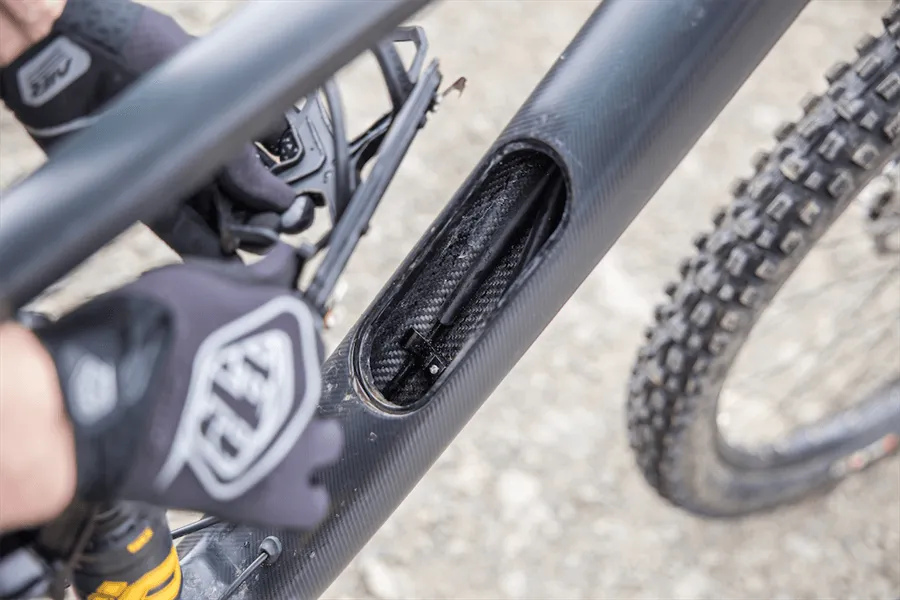
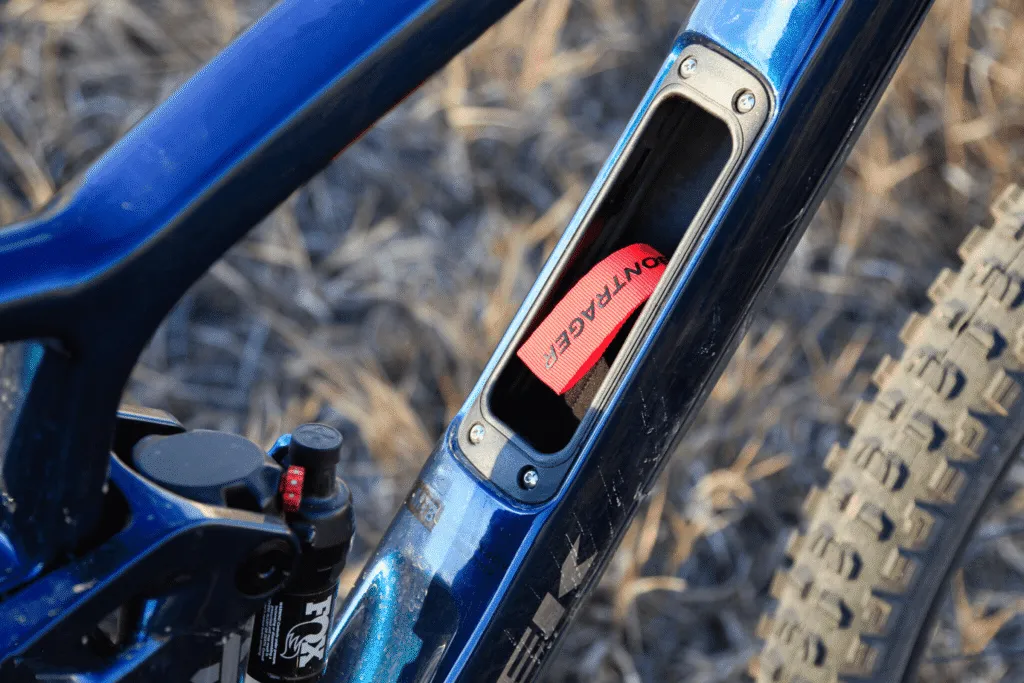
The frame storage compartment is not simply a functional addition, but rather optimizes the weight distribution of the Carbon MTB by reshaping the internal space. The cleverly designed Downtube Storage concentrates tools and supplies in the core area of the bike, improving handling stability from a fundamental physical level without altering the geometry. This is a key feature of modern carbon fiber frame evolution.
2.1 Mass Centralization: Handling Benefits from a Lower Center of Gravity
Through Mass Centralization design, the weight that was previously scattered on the rider’s body or the rear of the bike is moved to the area near the downtube and bottom bracket, directly improving dynamic performance:
- Reduced swing inertia: The closer the center of gravity is to the center, the more responsive the bike is during high-speed direction changes and continuous cornering.
- Enhanced grip stability: For Trail and Downcountry models, this structure allows for more precise wheel tracking during high-speed descents while maintaining the inherent rigidity and instantaneous response of the carbon fiber frame.
2.2 Improved Efficiency: Saying Goodbye to the Burden of External Gear
Built-in storage immediately improves the riding experience:
- Reduced physical burden: Eliminating the heat and swaying of a backpack, riders can more easily maintain stable breathing and rhythm during long rides.
- More intuitive feedback: On rocky or technical terrain, a lower center of gravity frame provides more predictable handling feedback, avoiding interference caused by shifting external attachments, significantly improving riding smoothness and safety.
3 Does Adding a Storage Box Weaken a Carbon MTB Frame?
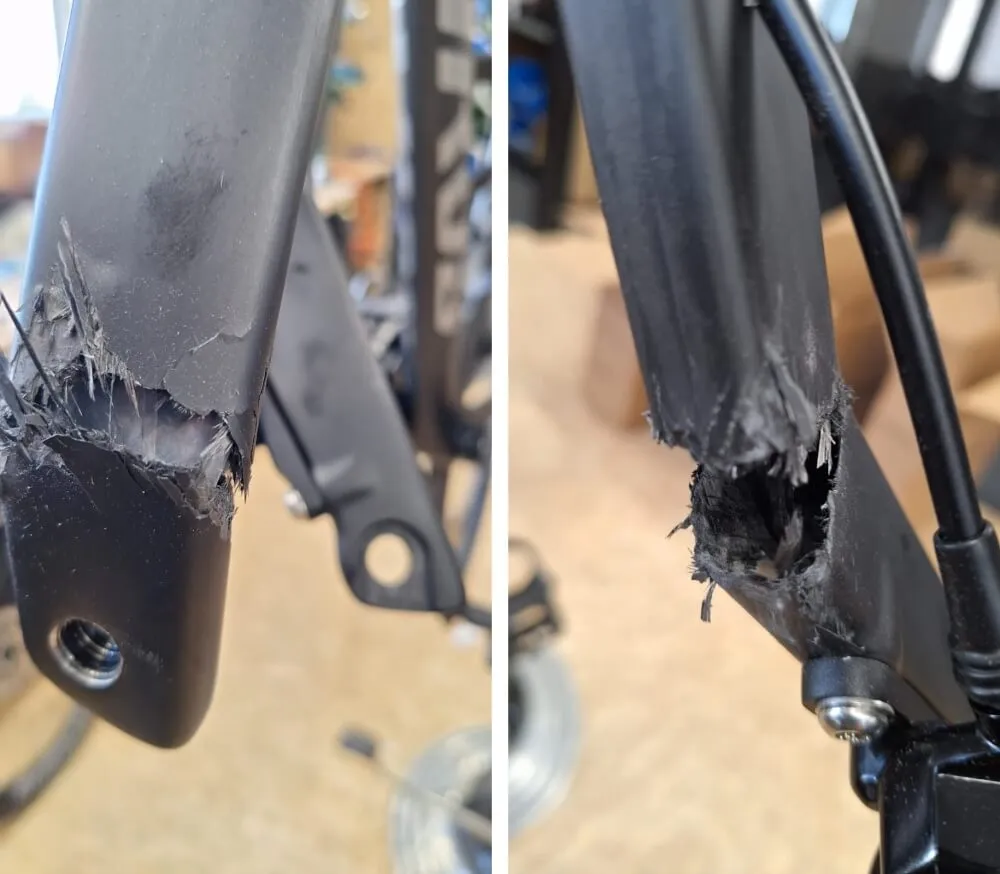
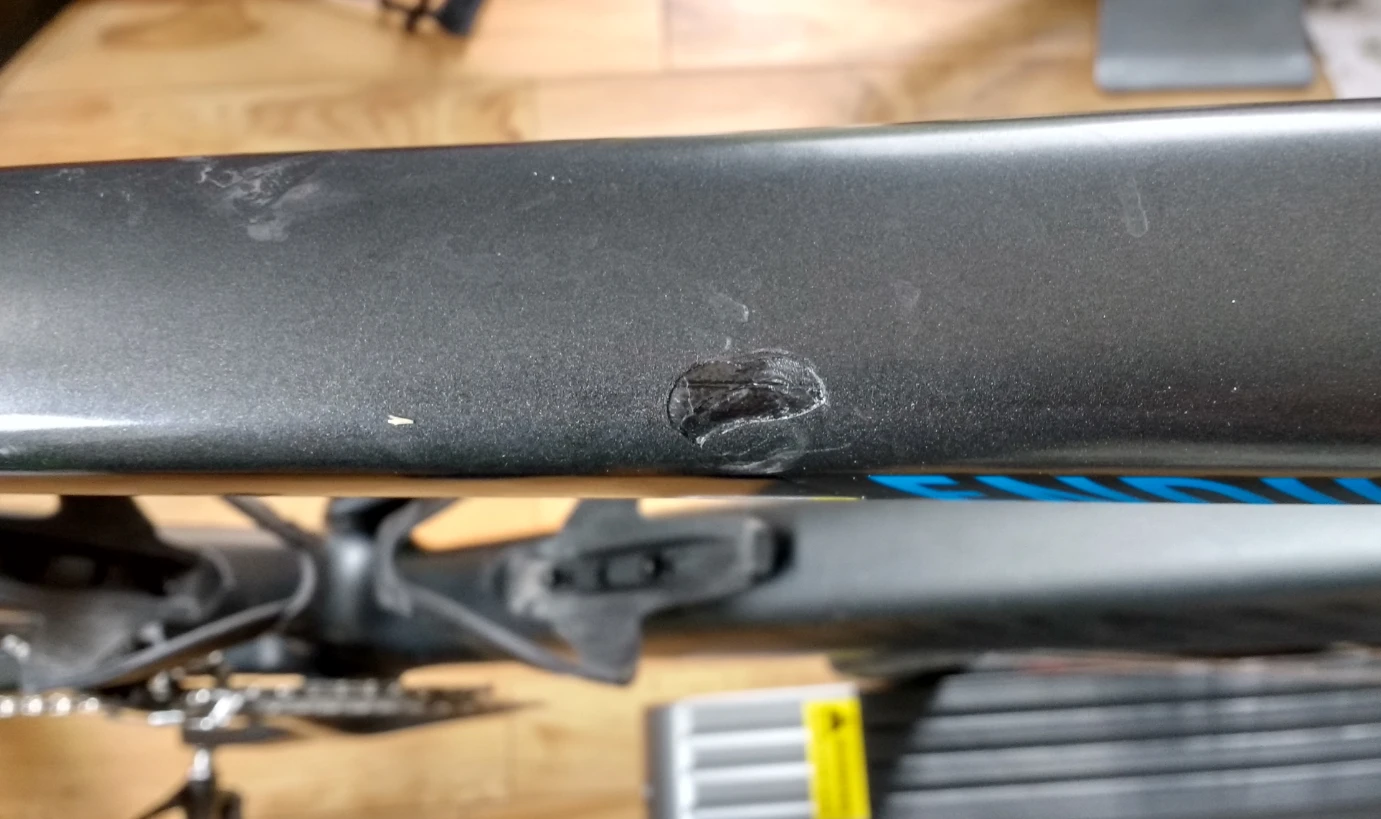
Making a hole in the downtube of a carbon fiber frame does indeed change the frame’s original stress paths and local rigidity. However, “weakening” is not an inevitable result, but rather a design challenge. Whether a modern carbon fiber mountain bike is durable depends not on the presence of a storage compartment, but on the brand’s overall solution in fiber layup, reinforcement techniques, and mechanical simulations.
3.1 Does a Hole in the Downtube Equal Reduced Rigidity? This is actually a misconception.
Many people intuitively believe that a hole will compromise structural integrity, but in actual engineering, a well-designed storage compartment compensates for this by redirecting stress paths:
- Mechanical Simulation: Engineers avoid areas of highest stress concentration, controlling the opening’s position and size within safe thresholds.
- Rigidity Standards Met: As long as the structural logic is sound, modern trail or downcountry frames can still maintain excellent torsional rigidity, and will not feel “soft” when ridden.
3.2 Reinforcement Secrets: How do engineers restore strength at the “hole”?
To ensure structural longevity while incorporating an opening, mature carbon fiber solutions typically employ the following methods:
- Local Reinforcement: High-modulus carbon fibers are used to reinforce the edges of the opening, similar to adding rebar around a window frame, preventing stress concentration that could lead to cracking.
- Complex Layup Strategy: By precisely adjusting the fiber orientation (0°, 45°, 90° interlacing), forces are ensured to smoothly bypass the storage compartment and transfer to the bottom bracket.
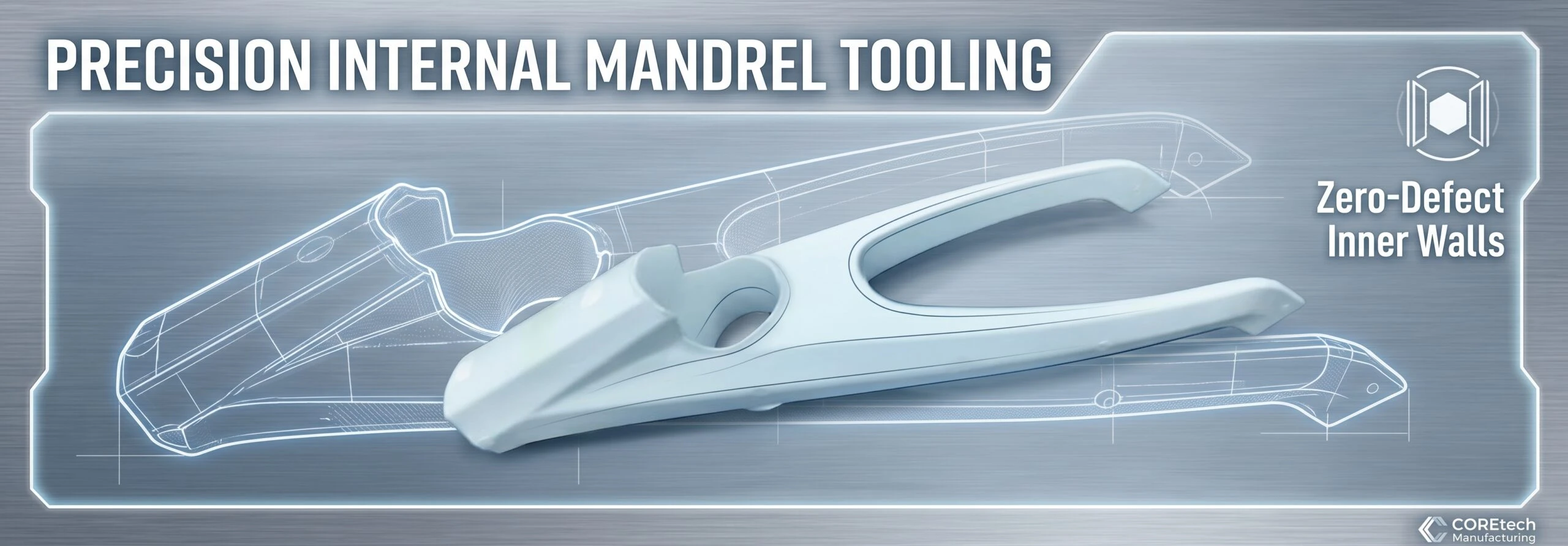
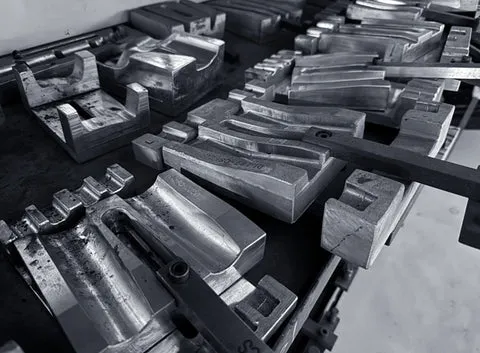
- Integrated Molding Control: High-precision internal molding technology ensures the smoothness of the inner wall of the opening, eliminating any manufacturing defects that could cause fatigue damage.
4 Why have frame storage only recently become truly mature?
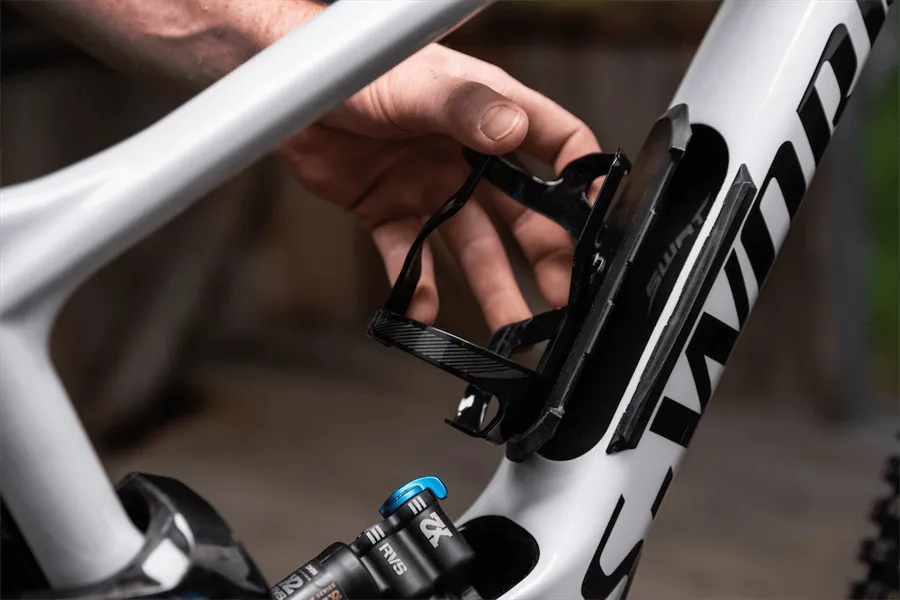
Carbon fiber mountain bikes with integrated storage box have long been plagued by durability issues. With the qualitative leap in carbon fiber molding precision and stress simulation technology in recent years, designers have finally been able to integrate storage box into modern frames without sacrificing strength and lifespan. This is not only a functional addition but also a concentrated demonstration of advanced materials engineering capabilities.
4.1 A Qualitative Leap in Materials Technology: From “Brute-Force Reinforcement” to “Precise Layup”
Today’s top-tier frames no longer rely on simply thickening materials to maintain strength, but instead optimize the structure through smarter methods:
- Optimized Stress Paths: Modern layup precision technology allows fibers to be reoriented in the opening area, maintaining the continuity of frame rigidity.
- High-Precision Tolerances: Combined with high-precision molds, the stress efficiency at the opening is significantly improved. This allows the downtube to pass rigorous stress tests without increasing weight, achieving stable mass production.
4.2 Historical Lessons: Why did early designs often “fail”?
Early storage solutions were mostly “immature” attempts, mainly suffering from three major drawbacks:
- Structural Weaknesses: Older designs often led to excessive stress concentration in the downtube, making them highly susceptible to fatigue cracks from prolonged vibration.
- Sealing and Noise Issues: The lack of mature cover sealing systems in the past resulted in water leakage during washing and annoying noises during riding, which not only caused embarrassment but also corroded the internal structure of the frame.
- Poor Consistency: Limited by the manufacturing and simulation capabilities of the time, these designs struggled to maintain stable performance in large-scale mass production, thus remaining confined to niche markets.
5 Is the frame storage compartment a universal standard feature or a product of specific needs?
While integrated storage has become a major selling point for modern carbon fiber mountain bikes , it’s not the “optimal solution” for all riders. While downtube storage can optimize the center of gravity and improve the long-distance riding experience, for those pursuing extreme lightweight design or specific competitive scenarios, the additional structural weight and complexity might actually be a burden.
5.1 Who would consider integrated storage a “must-have” feature?
For the following riding scenarios, integrated storage are almost an indispensable advantage:
- Trail and Enduro riders: Frequently facing complex terrain and unexpected mechanical failures, being able to securely store spare tubes, tire levers, and multi-tools in the downtube not only reduces physical burden but also improves handling stability.
- Cross-country marathon and long-distance touring: These scenarios demand a high need for supplies and emergency equipment. Without sacrificing frame rigidity, integrated storage allows riders to avoid messy straps and maintain efficient long-distance cruising.
5.2 Which riders can skip this design?
Not all scenarios require drilling holes in the frame; the following groups might value pure structural integrity more:
- Extreme competitive riders (XC Race): Every gram of weight matters in competition. For them, the responsiveness and lightweight advantages of traditional minimalist carbon fiber frames are far more important than storage space.
- Minimalists: If your riding routes are very fixed, or you are more accustomed to carrying a professional hydration pack, then the downtube reinforcement (and the resulting weight increase) required to add a storage compartment may not be worthwhile.
6 What to look for when choosing a carbon fiber frame with a storage compartment?
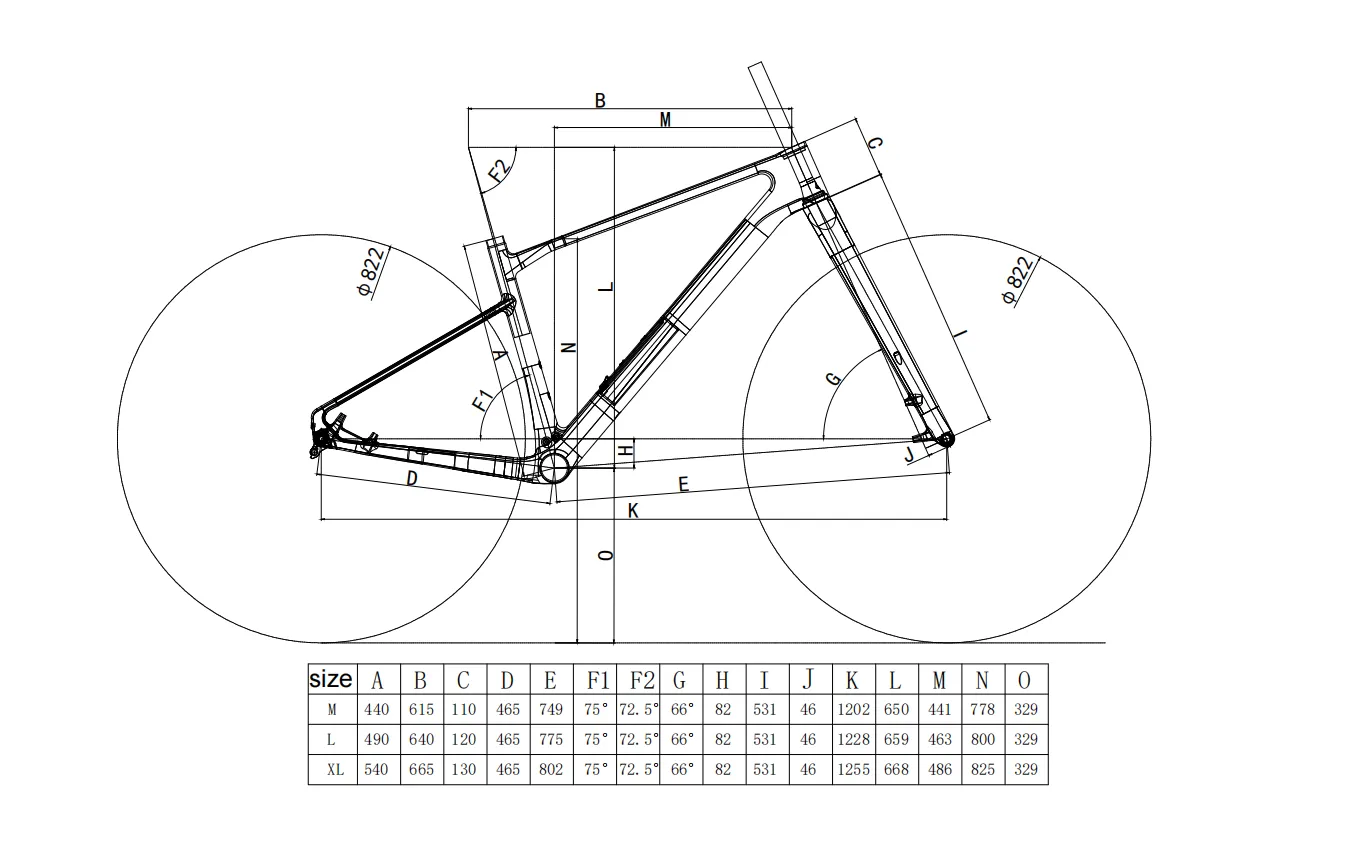
When buying a bike or selecting a product, a storage compartment isn’t simply a matter of digging a hole in the downtube; its engineering logic and manufacturing reliability are crucial. An excellent integrated storage system’s opening position, reinforcement method, and sealing precision directly affect the frame’s rigidity and lifespan. For wholesalers or brand clients, evaluating the OEM manufacturer’s R&D experience and production consistency is more important than focusing solely on features.
6.1 How to determine if the storage box design is “reliable”?
An engineering-sound storage solution must pass the following details:
- Load Path: The opening layout must avoid high-stress areas of the frame, and there must be targeted reinforcement inside to ensure that force transmission is not interrupted by the “hole,” thus maintaining the frame’s intended rigidity.
- Sealing and Protection: Check whether the cover’s sealing structure is dustproof and waterproof, not only to protect tools but also to prevent mud and water from entering the bottom bracket and bearings, causing damage.
- Durability: Is the locking mechanism secure? Does it produce abnormal noises during high-intensity riding? These details determine its performance on real tracks.
| Key Checkpoint | What to Look For | Impact on MTB Frame Performance |
|---|---|---|
| Downtube Opening | Proper location along the downtube to maintain load paths | Ensures frame stiffness and prevents stress concentration |
| Internal Reinforcement | Reinforced layup around storage cavity | Maintains structural integrity and durability |
| Sealing System | Dustproof and waterproof design | Protects tools, prevents water ingress, and improves longevity |
6.2 Choosing the manufacturer is more critical than choosing features: Why is experience irreplaceable?
Why are experienced OEM manufacturers more trustworthy?
- Rigidity Optimization Solutions: Experienced factories know how to compensate for the strength loss caused by the opening through precise carbon fiber layup, ensuring that all frames in mass production meet the design specifications.
- Avoiding Hidden Defects: Inexperienced manufacturers are prone to leaving stress concentration points at the edges of the opening, leading to fatigue cracks in the frame under long-term vibration.
- Quality Stability: Mature manufacturing processes ensure that the tolerances of each batch are within control, avoiding common after-sales problems such as covers that don’t close properly, water leakage in the storage compartment, or abnormal noises.
7 Will frame storage become standard on future carbon fiber frames?
As leading brands and OEM factories continue to optimize structural design, downtube storage compartments are rapidly becoming an irreversible industry trend. For wholesalers and brand clients, the core competitiveness of future products will depend on the depth of integration of the storage system, its modular capabilities, and consistency in mass production. These details directly impact the frame’s durability and real-world performance.
7.1 Market Trend: From “High-End Selling Point” to “Industry Standard”
Feedback from the mainstream market has sent a clear signal:
- Standardization: Top-tier racing models have generally adopted integrated storage as a standard feature, no longer an optional extra.
- Supply Chain Iteration: The simultaneous upgrade of OEM specifications means that storage have been integrated into the underlying design logic of modern mountain bikes, becoming a key indicator of product performance.
7.2 The Evolution of Next-Generation Frame Design
Future designs will no longer be limited to simple space utilization, but will evolve towards a systematic approach:
- Deep Integration: The storage compartment will be more deeply integrated with the downtube structure, internal cable routing, and electronic systems (such as battery compartments), reducing spatial redundancy.
- Modular Expansion: Supporting the replacement of storage modules for different scenarios, enabling quick switching between tool kits, electronic components, or battery packs.
- Structural Performance Optimization: Relying on more mature topology optimization technology, the frame will achieve the ultimate balance between opening size and overall rigidity, ensuring high reliability in large-scale mass production.
For inquiries or custom specifications on modern carbon MTB frames with integrated storage, contact our engineering team.