For a lot of riders in the U.S., the question isn’t whether a carbon frame road bike is fast—it’s whether the frame will slowly break down over time. Scroll through Reddit’s r/cycling and you’ll see plenty of riders joking about listening for that “carbon creak,” as if the frame might suddenly give up one day. But engineering data paints a very different picture. Carbon fiber itself has significantly higher fatigue resistance than aluminum (according to Engineering.com), and a well-built carbon fiber frame road bike can easily deliver more than a decade of structural integrity under normal use.
Testing labs like EFBE in Germany also report that after extreme impact simulations and long-cycle fatigue testing, top-tier frame road bike designs show less than 2% strength loss—far lower than what most riders expect. This is a big reason why the modern light frame road bike dominates both racing and long-distance endurance riding: the material simply holds up.
This article breaks down the real science behind whether carbon frames degrade with age—covering resin aging, impact damage, layup quality, and practical inspection tips—so riders can understand when a carbon frame is good to keep riding and when it’s time for a professional check-up or repair.
What Is a Carbon Fiber Frame Road Bike?
A carbon fiber frame road bike uses high-modulus carbon sheets and a controlled resin system to create a structure that’s lighter, stiffer, and more tunable than metal frames. Because carbon allows engineers to tailor stiffness in each zone, it has become the go-to platform for performance and comfort. The sections below briefly explain material structure, why carbon frames dominate, and how a light frame road bike improves real-world riding.
1.1 Carbon Material Structure and Properties
Carbon fiber is formed from thousands of micro-filaments, each stronger than steel yet far lighter. By combining UD, T700, T800 and other grades, engineers fine-tune stiffness in the bottom bracket, head tube, and rear triangle. This layered design helps a carbon frame road bike resist fatigue, torsion, and impact while keeping weight low—core requirements for a high-performance frame road bike.
1.2 Why Carbon Frame Road Bikes Became Mainstream
Carbon frames offer higher stiffness-to-weight ratios and better vibration control than aluminum or steel. Riders feel more efficient power transfer and a quicker, “snappy” acceleration. Features like internal routing and aero shaping also give a modern carbon road bike a clear aerodynamic advantage.
1.3 Advantages of a Light Frame Road Bike
A quality light frame road bike reduces total weight by 200–400 g, improving climbing efficiency and long-distance comfort. Optimized layup keeps torsional stiffness high, preventing the “noodly frame” feeling during hard sprints and giving riders more confidence in handling and stability.
Does Carbon Fiber Degrade Over Time? A Scientific Explanation
Many riders worry whether a carbon frame road bike will “get brittle” or lose strength with age. To understand the real answer, we need to look at four factors: carbon fiber itself, the resin system, environmental effects, and how carbon compares to metal frames. The sections below break these down with a practical, engineering-focused approach.
2.1 Carbon Fiber Itself Does Not Naturally Break Down or Fatigue
Carbon filaments have extremely high fatigue resistance and do not behave like metals that slowly weaken with repeated stress cycles. High-modulus fibers such as T700 or T800 maintain their tensile strength for decades, and a well-built carbon fiber frame road bike will not “self-crack” unless impacted or crushed. The carbon fibers themselves do not degrade under normal riding loads.
2.2 Resin Aging Mechanisms (UV, Humidity, Temperature Shifts)
What can age over time is the resin system that bonds the carbon layers. UV exposure, high humidity, or large temperature swings may cause slight oxidation or hardening of the resin. However, modern frames use UV-resistant resins and high-temperature curing, greatly slowing this process. For most frame road bike owners, proper storage and intact paint protection are enough to avoid any meaningful resin degradation.
2.3 Realistic Lifespan Under Normal Riding (10–20 Years or More)
Without crashes or structural damage, a carbon frame typically lasts 10–20 years or even longer. Many older carbon frame road bike models still maintain excellent stiffness and alignment after years of use. For commuting or recreational riding, there is no fixed “expiration date” as long as the frame remains crack-free.
2.4 Comparing Lifespan to Aluminum and Steel (Material Differences in a Frame Road Bike)
Aluminum frames gradually weaken from metal fatigue; steel can last longer but is prone to rust and corrosion. Carbon fiber, by contrast, is not affected by metal fatigue and does not soften with age. This difference is a major reason high-end frame road bike designs continue shifting toward carbon. Put simply: metals fail from time, carbon fails from impact—two completely different aging mechanisms.
The Real Causes of Carbon Road Bike Frame Damage
Most carbon road bike frames don’t fail from “natural aging.” The real threats are impact crashes, localized pressure, rough transport, and inconsistencies in material or layup quality. The sections below break down the four most common damage mechanisms, helping riders understand what poses actual risk to a carbon fiber frame road bike.
3.1 Crashes Are Far More Critical Than “Natural Aging”
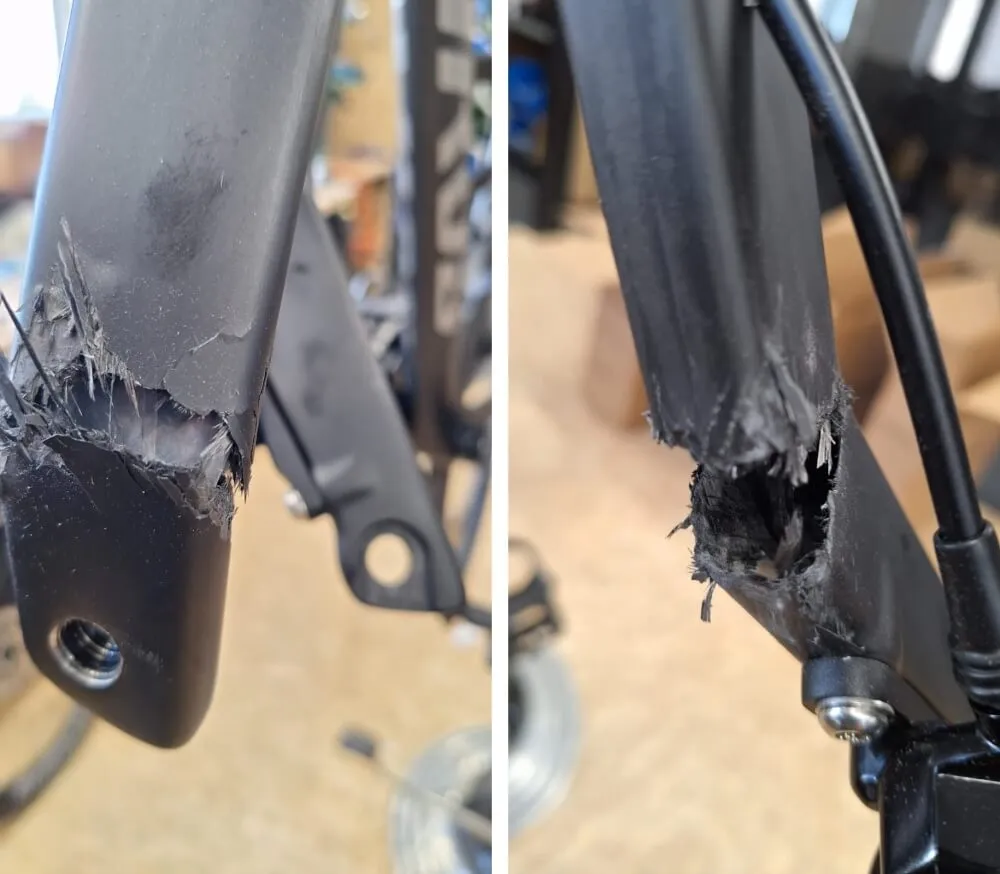
For carbon frames, crash impact is the primary risk. High-speed falls or edge impacts generate sudden localized stress, potentially causing delamination. Even if the frame looks fine externally, the internal structure may be compromised. Shops often use tapping tests or ultrasound inspections to verify structural integrity. In comparison, natural aging has minimal effect on a carbon frame road bike.
3.2 Localized Pressure (Seatpost, Clamp, Stem)
Points like the seatpost, stem, or front derailleur clamp can develop point loads if not torqued correctly, creating local indentations. This is a common weak spot for many lightweight light frame road bikes. Using a torque wrench and carbon assembly paste is essential to prevent crushing or deformation.
3.3 External Forces During Transport
Airline baggage handling or courier shipping can cause unseen damage. Hard impacts or side twists may produce micro-cracks in the frame road bike. Professional packing methods include foam padding, wheel spacers, and avoiding concentrated pressure on the rear triangle or head tube.
3.4 Low-Quality Carbon or Inconsistent Layup (Highlighting 10+ Years of Experience)
Early fatigue in carbon frames usually comes from poor layup, not material aging. Insufficient layer counts, uneven resin distribution, or unreinforced stress zones create weak points. With over 10 years of carbon fiber production experience, our factory ensures UD/T700/T800 materials, precise layup orientation, and controlled curing, making carbon fiber frame road bikes more reliable and free from structural “born-weak” spots.
Lifespan of a Carbon Fiber Frame Road Bike: Industry Standards and Real-World Data
The lifespan of a carbon fiber frame road bike depends on material, design, manufacturing standards, and usage. Factories run rigorous fatigue tests, and real-world rider data shows long-term reliability. Below, we cover industry standards, field-tested cases, and lifespan differences across frame types.
4.1 Factory Fatigue Testing Standards (ISO 4210, etc.)
Top manufacturers follow ISO 4210 or EN 14781, performing cyclic load, bending, and torsion fatigue tests. Simulating pedaling, braking, and road vibrations ensures each carbon fiber frame road bike maintains structural integrity after tens of thousands of cycles.
4.2 Real-World Data: 8–15 Years of Safe Use
Well-made carbon road bike frames can last 8–15 years with proper care. Riders may notice minor wear or indentations, but the overall structure remains strong, exceeding typical replacement cycles.
4.3 Racing vs Commuter Frame Lifespan
Race-oriented frames prioritize extreme lightness and stiffness, handling higher forces, which may slightly reduce fatigue life. Commuter or endurance frame road bikes experience gentler loads, with maintenance being key to longevity.
4.4 Monocoque vs Modular Frame Lifespan
Monocoque frames offer uniform stress distribution, higher fatigue resistance, and better torsional stiffness. Modular frames are easier to transport and repair, but joints can become stress points, requiring careful torque checks to ensure long-term reliability for light frame road bikes.
How to Identify Aging or Damage in Your Carbon Road Bike Frameset
Carbon road bike framesets are lightweight and stiff, but long-term riding or minor impacts can cause internal fatigue or micro-cracks. Detecting aging and damage early is essential for rider safety and extending the life of your carbon bike frame. Through careful observation, tap testing, and attention to key stress points, you can assess frame condition and decide whether professional maintenance is needed.
5.1 Common Damage Signs (Cracks, Paint Chipping, Unusual Noises)
Early signs of carbon frame damage include:
-
Micro-cracks: often found around the bottom bracket, head tube, or rear triangle junctions, which can weaken structural integrity.
-
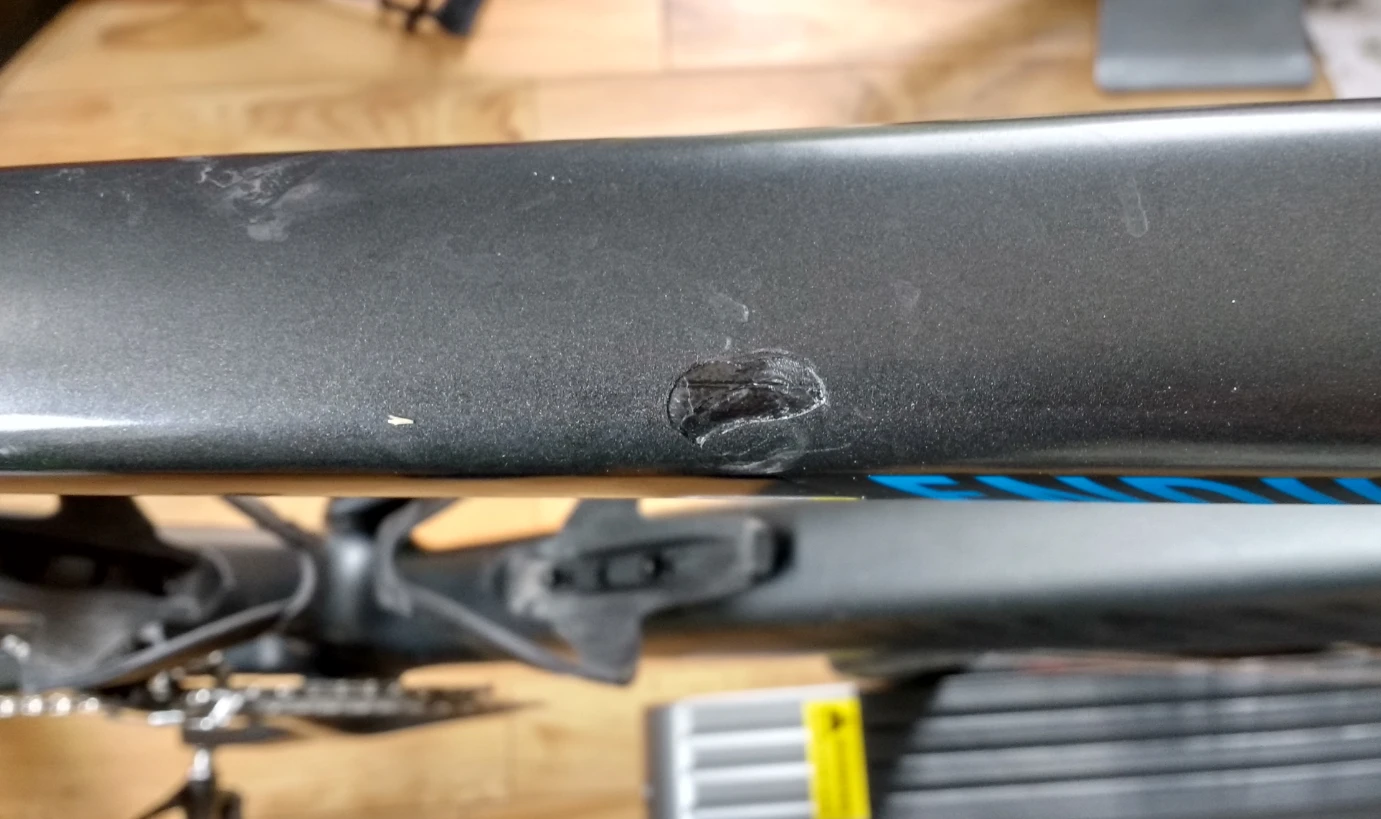
Paint chipping or crazing: may indicate stress concentration points, even if the structure seems intact.
-
Unusual noises (creaking or ticking): sounds during pedaling or riding may suggest internal delamination or fiber fracture.
These are everyday “red flags” that riders notice after regular rides or long-distance trips.
5.2 Visual Inspection and Tap Testing
-
Visual inspection: examine high-stress areas like the bottom bracket, down tube, and rear triangle for cracks, paint anomalies, or local bulges.
-
Tap testing: lightly tap the frame with your finger. A healthy carbon frame produces a crisp sound, while a dull or uneven echo may indicate delamination or internal layer separation.
Using these methods, part of a carbon fiber bike frameset inspection, is practical for routine maintenance and second-hand evaluations.
5.3 When to Seek a Professional Bike Shop
Seek professional assessment if you notice:
-
Visible cracks extending beyond the paint layer
-
Persistent unusual noises that cannot be resolved by tightening or cleaning
-
Frames subjected to major impacts or crashes
Professional shops can use infrared thermography or ultrasound NDE to detect hidden micro-damage, accurately evaluating whether a carbon fiber bike frames has safety risks, ensuring ride security.
How to Extend the Lifespan of Your Carbon Frame Road Bike
To maximize the longevity of a carbon frame road bike, proper handling and regular maintenance are essential. While carbon fiber is lightweight and stiff, it is sensitive to over-torquing, UV exposure, concentrated stress points, and trapped moisture. By installing components with correct torque, avoiding prolonged sun exposure, routinely checking stress zones, and maintaining internal routing and drainage, riders can significantly extend the life of their carbon bike frameset and reduce fatigue damage or safety risks.
6.1 Correct Torque Installation (Preventing Clamp Damage)
-
Follow manufacturer-recommended torque specifications when installing seatposts, stems, and clamps to prevent fiber fracture or localized crushing.
-
This is especially important for high-end road bikes with internal routing seatposts and stems common in the U.S. and European markets.
6.2 Protection from Sunlight and High Temperatures
-
Avoid leaving the bike under direct sunlight for long periods; heat and UV exposure can accelerate resin aging.
-
Use a bike cover or protective sleeve during storage or transport to shield the carbon bike frame surface.
6.3 Regular Inspection of High-Stress Areas
-
Inspect key stress points such as the bottom bracket, head tube, and rear triangle junctions every few months for micro-cracks or paint anomalies.
-
Quick checks like the tap test or shining a flashlight through thin areas can reveal hidden damage early.
6.4 Maintaining the Frame Interior (Internal Routing, Waterproofing, Drainage)
-
For bikes with internal cable routing, ensure cables move freely, waterproofing is intact, and no water is trapped inside.
-
Check drain holes periodically to prevent water accumulation, which can compromise the durability of the carbon fiber bike frameset.
Can Carbon Bike Frames Be Repaired? (Carbon Frame Repair)
While carbon bike framesets are lightweight and stiff, cracks or impact damage often raise the question: can they be safely repaired, and will the frame remain reliable? Correctly identifying crack types, understanding safe repair limits, and knowing repair restrictions are crucial for maintaining the durability and safety of your carbon bike frame.
7.1 Surface Cracks vs. Structural Cracks
-
Surface cracks: usually affect only the paint or resin layer and have minimal impact on the underlying carbon fiber structure.
-
Structural cracks: penetrate the carbon fiber layers, potentially compromising frame stiffness and safety.
Industry jargon often uses “cosmetic vs structural delam” to distinguish between superficial cracks and internal delamination.
7.2 When Repairs Can Be Safe
-
Minor paint or resin cracks can be repaired using professional carbon patches or resin reinforcement.
-
Non-destructive evaluation (NDE) confirms no deep delamination or fiber fracture is present.
-
Repaired frames are generally suitable for daily training or short rides, but caution is advised for high-intensity racing or long-distance use.
7.3 When Full Frame Replacement Is Required
-
Structural cracks in high-stress areas such as the bottom bracket, head tube, or rear triangle junction.
-
Repairs cannot restore original stiffness or pose potential fatigue risk.
-
Frames subjected to severe impacts or crashes.
High-end riders often refer to such frames as “red card frames”, meaning they are unsafe for continued use.
7.4 Will Repaired Frames Be as Strong as New?
-
Professional repairs can restore some structural strength but usually do not reach the original stiffness of a new carbon fiber bike frameset.
-
Repaired frames should avoid overloading, especially during racing or extreme rides.
-
Regular tap tests and visual inspections are recommended to monitor cracks and ensure safety.
Conclusion: Carbon Road Bike Frames Don’t “Naturally Age,” but Proper Use and Inspection Are Key
Carbon road bike frames (carbon bike framesets) don’t naturally fatigue or corrode like metal; their stability and stiffness support long-term use. Still, micro-cracks, delamination, fatigue damage, and improper handling can compromise safety. Following earlier methods—regular visual inspection, tap tests, infrared thermography, bottom bracket and high-stress area checks, correct torque installation, UV protection, and internal drainage maintenance—can effectively extend the life of your carbon bike frame.
The safety lifespan of a light frame road bike depends on routine maintenance and monitoring key stress zones. Spotting “red flags” and addressing minor cracks promptly keeps the frame reliable for long rides and intense training.
For consumers, choosing an experienced manufacturer is essential. Professional factories provide strict quality control, NDE inspections, and optimized designs for internal routing, waterproofing, and drainage, ensuring your carbon fiber bike frameset stays lightweight, hi