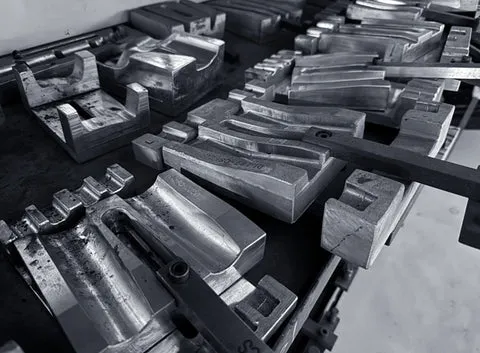
When discussing carbon frame aging, many American cyclists often say, “Stiffness doesn’t lie.” How much does the stiffness of a bike’s carbon frame change after several years of use? This is a concern for many long-distance riders, gravel riders, and weekend “weight enthusiasts.” Professional tests show that high-strength carbon fiber has an extremely long fatigue life, and stiffness degradation is very limited under normal use. For example, BikeRadar’s long-term testing has shown that the structural integrity of high-end frames remains stable even after many years of use (source from: BikeRadar).
However, the accumulation of micro-damage from different riding scenarios, resin aging, and surface layer stress fatigue can slightly affect lateral and torsional stiffness. The “soft front triangle” often mentioned by American bike shop mechanics is a typical example. The degree of impact often depends on the carbon fiber layering method, resin system, rider weight, and usage frequency.
Therefore, discussing the stiffness of carbon frames after many years is not just a material issue, but also relates to manufacturing processes, riding environment, and product level.
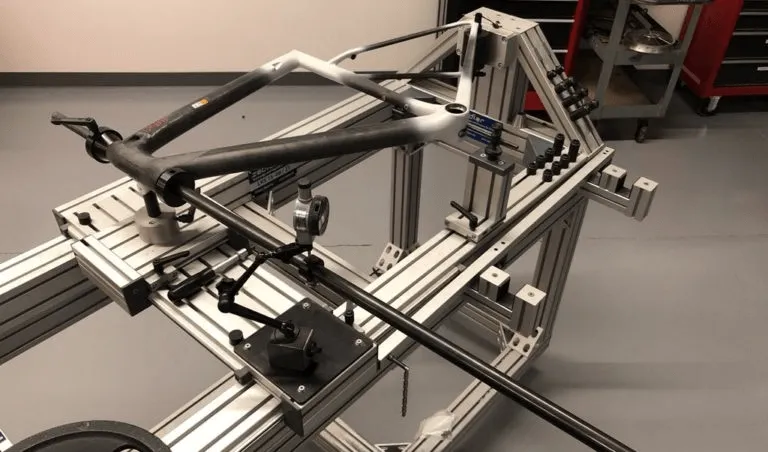
Understanding Frame Stiffness – The Basics
Frame stiffness is a core indicator of whether a carbon frame provides stable handling and efficient pedaling. Whether it’s a carbon racing frame, a CX bike frame, or a mountain bike carbon frame, they all rely on specific stiffness configurations to achieve the desired riding characteristics. To understand the performance of carbon fiber frames after years of use, it’s essential to understand the composition of stiffness and the differences in materials.
1.1: What is Frame Stiffness? (Lateral vs. Longitudinal)
Frame stiffness is mainly divided into lateral stiffness and longitudinal stiffness.
| Stiffness Type | Definition | Impact on Riding | Typical Frames |
|---|---|---|---|
| Lateral | Frame’s resistance to twisting | Cornering stability, handling feedback | Mountain bike, CX bike |
| Longitudinal | Frame’s resistance to compression/elongation | Power transfer, climbing efficiency | Road, Racing, Full carbon |
In the industry, “stiff under load” is often used to describe a frame with sufficient lateral torsional resistance and minimal power loss during pedaling. This is also a structural attribute that many full carbon frames emphasize in their design.
1.2: Why Stiffness Matters for Carbon Bike Frames (Power Transfer & Handling Feedback)
For carbon fiber frames, stiffness determines the directness of the feedback and the crispness of pedaling. A high-stiffness structure reduces power loss, giving riders greater responsiveness during sprints and climbs; while stable torsional stiffness allows the frame to maintain a precise line in high-speed corners.
This is why many cyclists describe frames as “snappy,” “responsive,” or “dead feel”—these are all differences in riding experience resulting from different stiffness settings.
In different types of carbon cycle frames, engineers adjust the stiffness distribution according to the intended use. For example, CX bike frames prioritize controllability, while racing frames emphasize explosive power and structural support.
Material Comparison: Carbon vs. Aluminium vs. Steel
Different materials exhibit varying degrees of stiffness retention over long-term use:
- Carbon: Through directional layup and resin systems, the structure achieves greater precision in the stress path, maintaining a consistent stiffness profile over time.
- Aluminium: More susceptible to fatigue, potentially experiencing stiffness degradation after many years of use.
- Steel: Offers good toughness but is heavier; while maintaining stable stiffness, it is not lightweight.
Therefore, a high-quality full carbon frame typically maintains more robust structural stiffness and mechanical performance over years of riding and heavy loads.
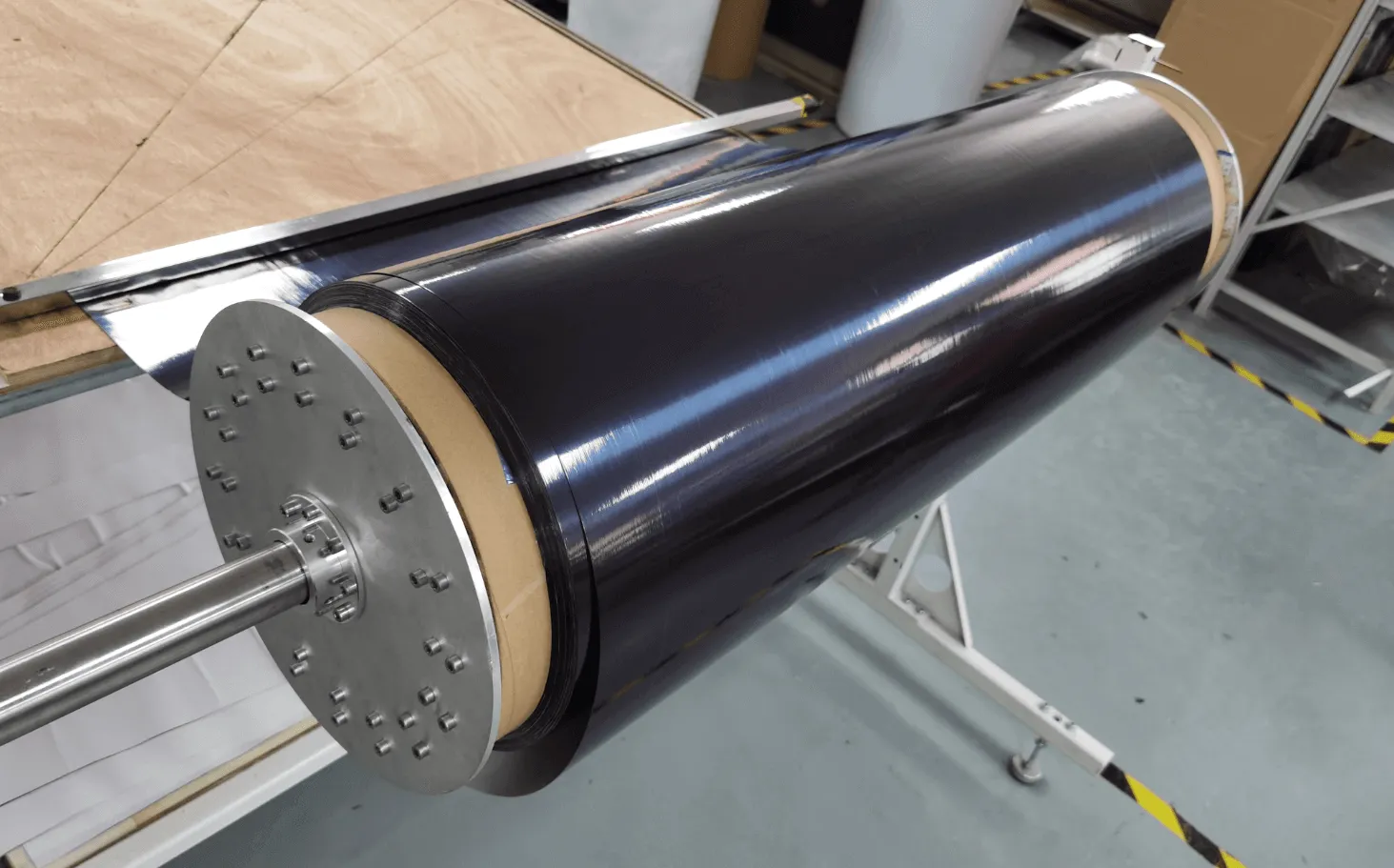
How Carbon Bike Frames Are Built – From Factory to Field
The long-term performance of a bike carbon frame depends not only on the materials themselves but also on the manufacturing process and structural design. From raw material selection to factory quality control, every step affects the stiffness and durability of a full carbon frame or carbon racing frame. Understanding the manufacturing process helps assess changes in frame stiffness after years of use.
2.1: Carbon Lay-up, Resin Systems & Structural Design in Carbon Racing Frame vs Carbon Cycle Frame
The stiffness and weight of a carbon fiber frame are primarily determined by the carbon fiber lay-up stack and the resin system.
Racing frames typically use high-modulus HM carbon fiber in the bottom bracket, downtube, and headtube areas, with high lay-up density, aiming for ultimate longitudinal stiffness and instantaneous response.
Commuter/All-road carbon cycle frames, on the other hand, retain a certain degree of lateral and longitudinal flexibility in their structure to balance comfort and durability.
Common industry terms include:
- Layup stack: The order and thickness of carbon fiber layers;
- Resin bleed: The impact of resin bleed amount and distribution on local stiffness;
- Node junction: Design of critical load-bearing nodes, such as the bottom bracket, head tube, and chainstay connection.
Proper layering design not only improves lateral and longitudinal stiffness but also determines the frame’s fatigue resistance under impact and long-term cyclic stress.
2.2: Manufacturing Quality, Factory QC (“Quality Control”), Why High-End Full Carbon Frame Lasts Longer
The key to maintaining stiffness in high-end full carbon frames over the long term lies in rigorous manufacturing and quality control processes:
- Precise layering and temperature-controlled curing ensure a uniform resin matrix;
- Optimized node stress reduces stress concentration;
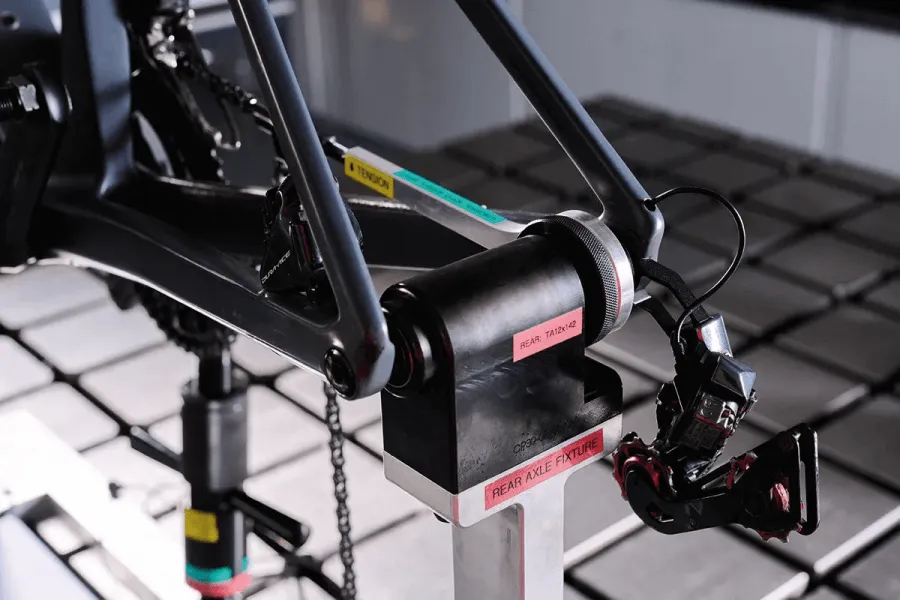
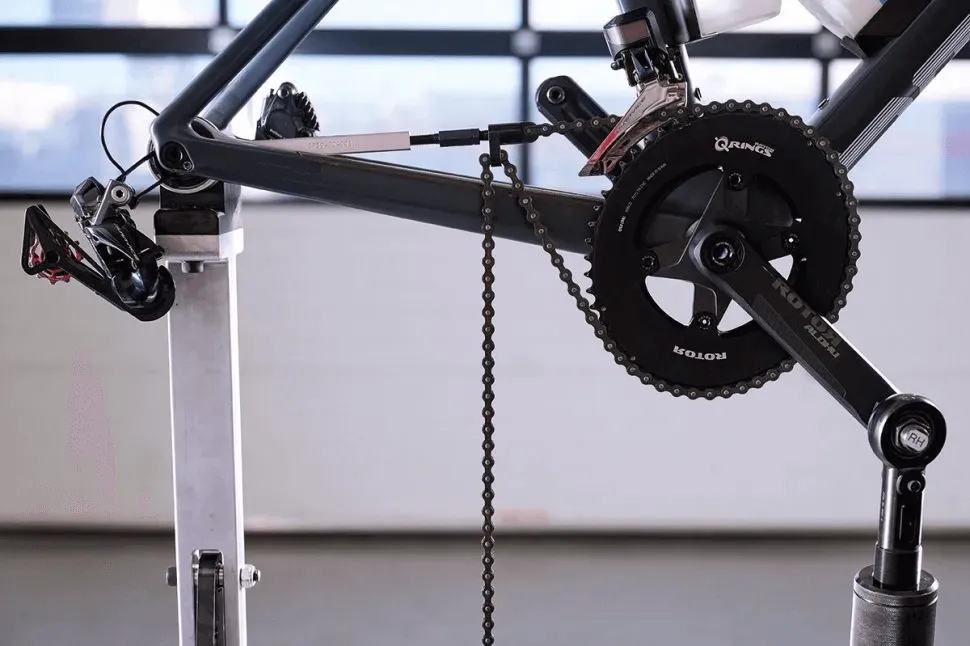
- Ultrasonic testing and torsional stiffness testing are performed before shipment to ensure the integrity of critical structures.
These processes guarantee that racing frames or high-end CX bike frames maintain structural stability even after years of use, while low-end or ordinary carbon cycle frames are prone to localized softening or fatigue accumulation.
What Happens After Years of Use? Real-World Stiffness Changes
Even high-end bike carbon frames face the challenges of vibration, shock, and environmental factors over extended use. Understanding these influencing factors, as well as the fatigue characteristics of the material itself, is crucial for assessing the long-term stiffness of a full carbon frame or carbon racing frame. Below, we analyze frame stiffness changes after years of use from three perspectives: rider concerns, materials science, and external factors.
3.1: Rider Concerns & Myths – “Will My Carbon Frame Go Soft?”
Many cyclists worry that carbon bike frames will soften over time. Real-world feedback shows that most high-quality full carbon frames maintain their lateral and longitudinal stiffness even after tens of thousands of kilometers of riding. The so-called “soft frame” phenomenon often stems from wheelset wear, improper seatpost clamping torque, or drivetrain issues, rather than frame fatigue. Long-term user discussions on Reddit and BikeRadar confirm this, emphasizing that proper installation and maintenance have a greater impact on perceived stiffness than time itself.
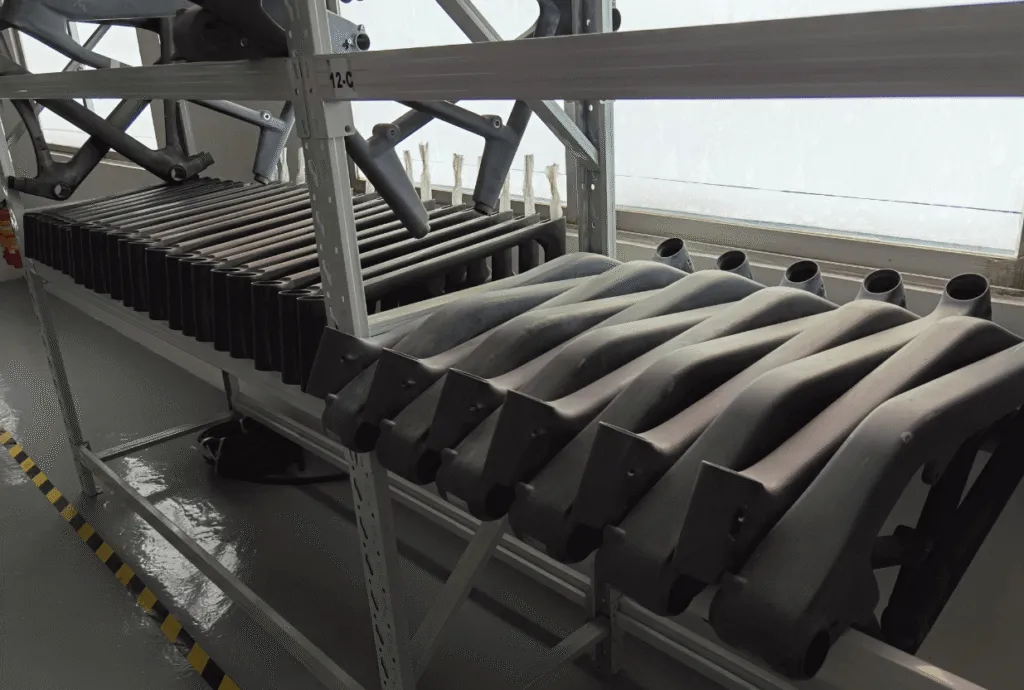
3.2: Material Fatigue, Structural Stress Distribution – Carbon vs. Aluminium vs. Steel
Different materials exhibit significant differences in performance under long-term cyclic loading:
- Carbon: Stress can be precisely distributed through directional layup and resin systems; localized damage has limited impact on overall stiffness.
- Aluminium: Microcracks easily accumulate under high cyclic loading, resulting in significant long-term stiffness degradation.
- Steel: Good toughness and stable stiffness, but heavier.
Fatigue life tests show that a high-quality full carbon frame, under proper use, can withstand millions of cycles with minimal stiffness reduction (refer to CyclingTips data).
3.3: Factors Affecting Long-Term Stiffness – Vibration, Impact, Environment, Improper Repair
Long-term stiffness changes are primarily affected by the following factors:
- High-frequency vibration: Gravel or mountain trails can cause cumulative micro-damage;
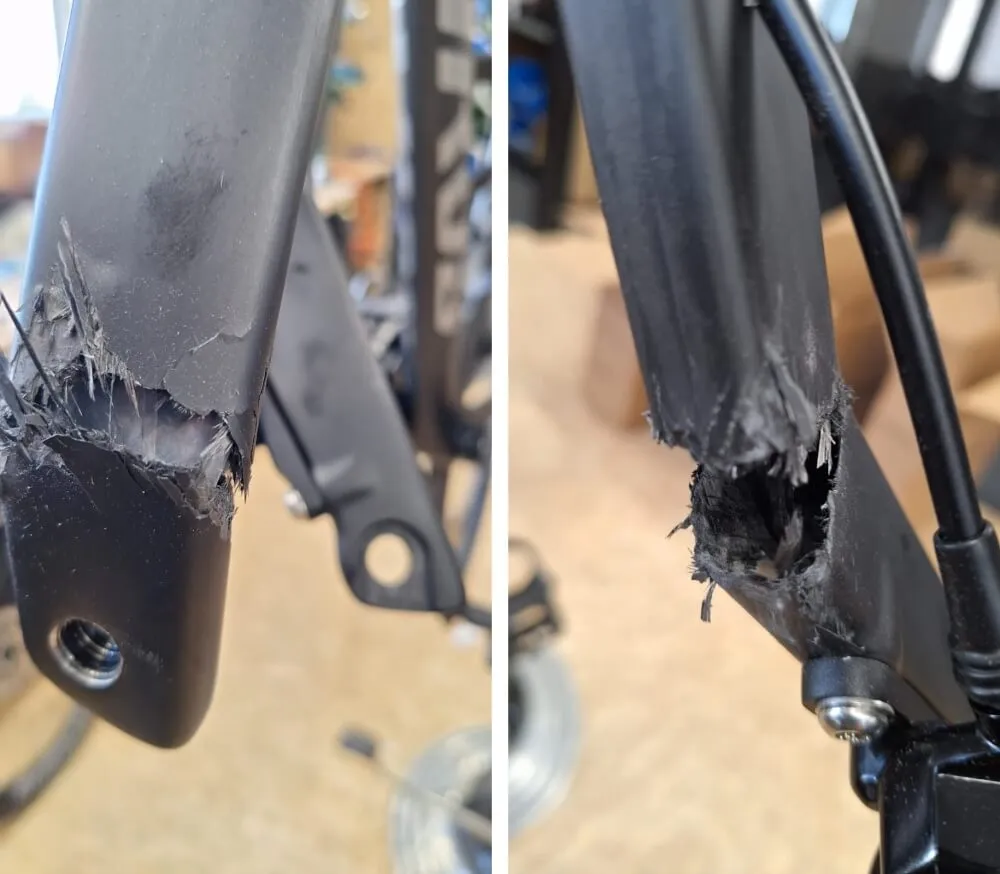
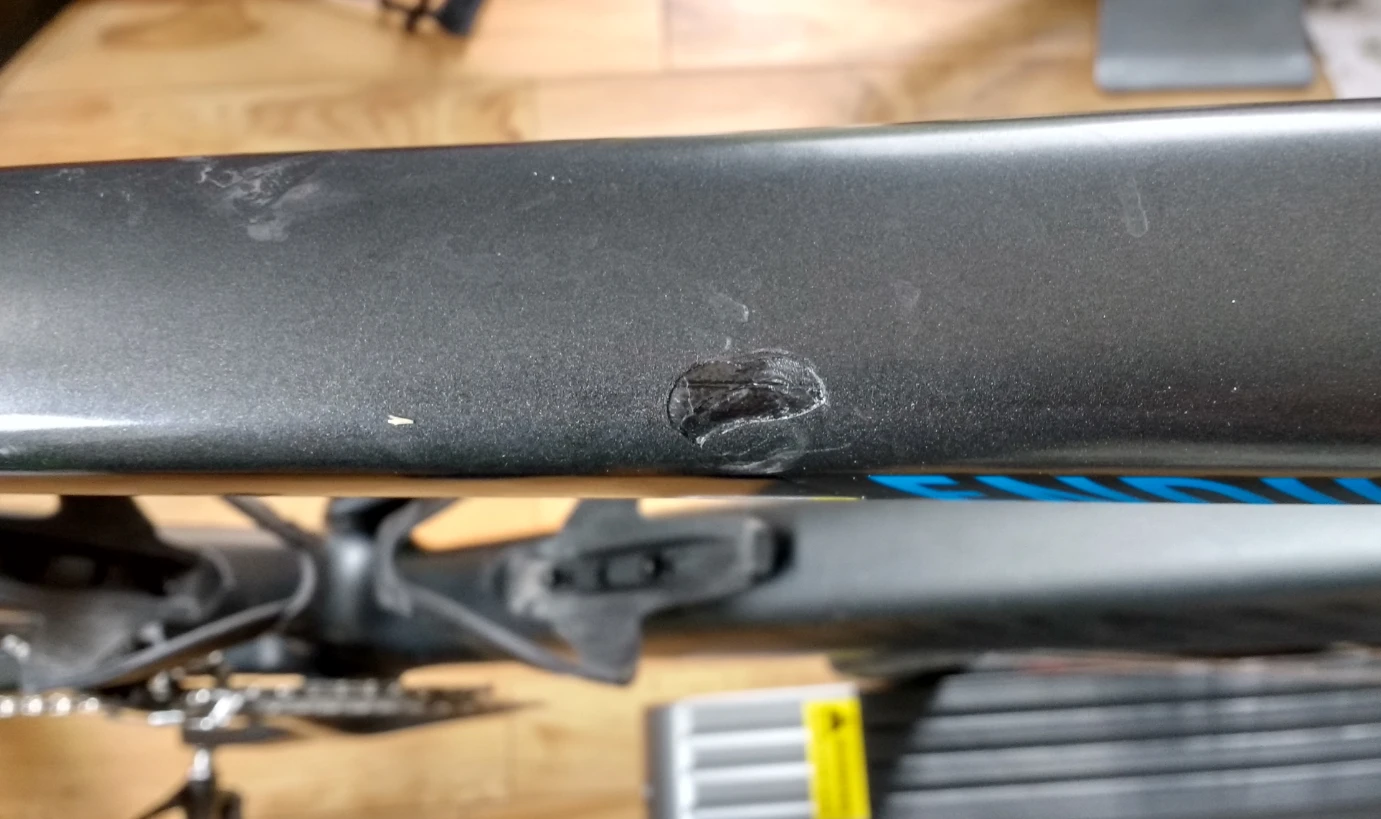
- Impact or falls: Even without visible damage, delamination can occur at node junctions or layup stacks;
- Environmental conditions: High temperatures, UV radiation, and humidity fluctuations can affect the performance of the resin matrix;
- Improper repair: Over-sanding, incorrect patching, or improper torque can cause localized softening.
Understanding these factors can help cyclists determine the position and performance of a carbon cycle frame or CX bike frame that will maintain stable stiffness after years of use.
Maintaining Long-Term Stiffness of Your Carbon Bike Frame
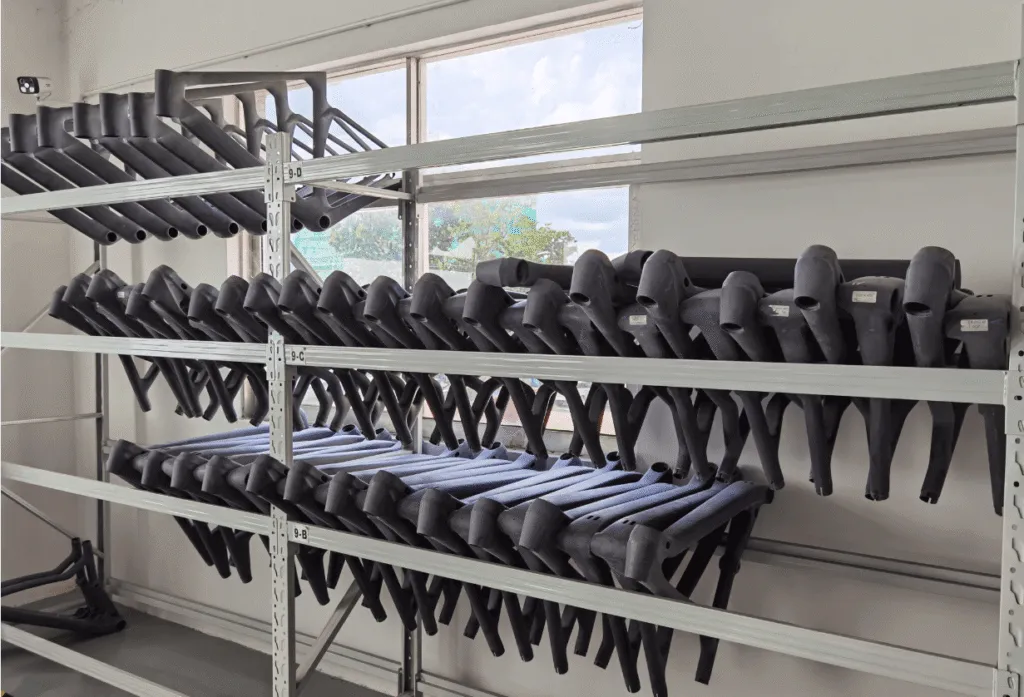
Even high-end full carbon frames can suffer from decreased stiffness due to microcrack buildup or localized stress concentration if not properly maintained. This is why professional quality inspection in carbon bike manufacturing matters: precise layup, resin control, and node junction optimization at the factory level ensure that your frame maintains its intended stiffness over years of use. Regular inspections, proper torque application, and scientific transport and storage can further maximize the lifespan and stability of your carbon racing or carbon cycle frame. Below are practical tips for daily maintenance and storage.
4.1: Inspection & Maintenance Tips – Key Zones (BB Shell, Head Tube, Chainstays), Correct Torque
Maintaining long-term frame stiffness hinges on regularly inspecting key areas:
- BB Shell (Bottom Connector): Check for minor delamination or cracks;
- Head Tube: Ensure the headset is free of wobbling or unusual noises;
- Chainstays (Chainstays): Monitor for lateral torsion and microcracks.
Using a torque wrench to install the seatpost, stem, or clamps, following the manufacturer’s specified torque values, can prevent “crush marks” or localized overload. In industry jargon, this is often referred to as “tight but safe,” emphasizing the need for a secure fit without damaging the carbon fiber. Proper use of carbon assembly paste can further reduce the risk of micro-slippage and wear.
4.2: Transport & Storage Best-Practice – Avoid UV Damage, High Heat, Improper Packing
Transportation and storage are equally critical:
- Avoid prolonged exposure to UV light and high temperatures to prevent resin aging and its impact on stiffness;
- Use hard-shell cases with foam linings for air or long-distance transport, and install shock absorbers on the head tube and fork to prevent stress concentration at joints;
- When storing for extended periods, keep the bike dry and well-ventilated, and moderately reduce tire pressure to minimize static stress on the frame over extended periods.
By employing these methods, a full carbon frame or CX bike frame can maintain its original stiffness and comfortable handling feedback even after many years.
Comparing Frame Types & Trends in 2025
With the development of carbon fiber technology, different types of bike carbon frames will show significant differences in stiffness layout and comfort design in the 2025 market. Understanding the stiffness tuning of various frames, as well as new trends in manufacturing, can help riders choose the product that best suits their riding style and long-term durability among road bike frames, mountain bike frame carbon, or CX bike frames.
5.1: Road vs Mountain vs CX Carbon Frames – Stiffness Tuning per Discipline
Carbon frames for different riding styles have different focuses in stiffness tuning:
- Road carbon frames emphasize longitudinal stiffness to improve pedaling efficiency and acceleration response;
- Mountain bike frame carbon focuses on torsional stiffness to ensure handling stability on complex terrain;
- CX bike frames (Cyclocross) adopt a balanced stiffness design, balancing climbing, jumps, and cornering control.
This discipline-specific stiffness tuning is a common design philosophy among high-end automakers in Europe and America.
5.2: Carbon Racing Frame vs Commuter/Entry Full Carbon Frame – Stiffness vs Comfort Trade-Off
Racing frames pursue extreme stiffness, maximizing power transfer but sacrificing some comfort; commuter or entry-level full carbon frames, by adjusting layer thickness and joint flexibility, improve long-distance comfort while maintaining a certain level of rigidity. Industry jargon often says, “stiff but forgiving,” meaning sufficient rigidity while still absorbing road vibrations.
5.3: Emerging Factory Trends 2025 – Increased Fatigue Testing, Supplier Transparency
High-end frame manufacturing trends for 2025 include: Enhanced fatigue testing to ensure full carbon frames maintain stiffness over long-term use; Supplier transparency, with traceability from carbon fiber grade to resin formulation; Optimized node junction design to reduce stress concentration and microcrack risks.
These trends reflect that carbon fiber frames are not only pursuing the ultimate in performance, but also moving towards higher standards in durability and quality control.
Conclusion – Should You Worry About Your Carbon Frame Going Soft?
Based on the preceding analysis, a high-quality bike carbon frame, with proper use and maintenance, will show almost no significant decrease in stiffness over time. Whether it’s a full carbon frame, carbon racing frame, or mountain bike carbon frame, the structural design, carbon fiber layup stack, resin system, and node optimization determine its long-term stiffness profile. The “softening” often experienced by riders stems from wheel wear, improper torque, or improper maintenance, rather than material degradation of the frame itself.
6.1: Summary of Findings – Longevity of High-Quality Bike Carbon Frame
Experimental data and long-term factory testing show that high-modulus carbon fiber layup combined with precise curing processes can withstand millions of cyclic loads while maintaining relatively stable stiffness. Lateral torsional resistance and longitudinal stiffness ensure responsiveness in acceleration, climbing, and cornering even after years of use. The design of high-end CX bike frames or road bike carbon frames fully embodies the “stiff but forgiving” philosophy: sufficient stiffness while providing comfortable riding feedback.
6.2: Choosing a Durable Carbon Frame for Bikes – Why Manufacturing Experience Matters
When choosing a durable carbon frame, the key lies not in the brand or the material itself, but in manufacturing experience and quality control processes: Precise layup stack matching the resin system; optimized node junction design; and rigorous factory QC (quality inspection, ultrasonic testing, torsional stiffness testing).
Industry experience shows that skilled factories and professional engineers can significantly reduce fatigue risk, allowing full carbon frames and carbon racing frames to maintain high stiffness for many years. As the industry saying goes, “Carbon is only as strong as the hands that made it.”
If you are looking for a durable, high-quality bike carbon frame or want to learn more about our manufacturing process and QC standards, feel free to contact us anytime. Our team is ready to provide professional guidance and help you choose the right frame for your riding needs.