With over a decade of experience in carbon fiber bicycle components, I know that a high-quality enduro MTB frame is essential for unlocking true riding performance. If your enduro mountain bike frame is over three years old, and its geometry is no longer up-to-date, showing obvious material fatigue, or even if a hardtail or fullsuspension enduroframe feels like a hindrance on mountain trails, you might be quietly being limited by your old frame. Industry data shows that the global mountain bike frame market reached approximately $1.4 billion in 2023 and is projected to climb to $2.3 billion by 2032, with a compound annual growth rate of approximately 5.5%.
This indicates that high-performance frames, especially carbon fiber-based enduro MTB frames, are becoming mainstream. Today, we’ll discuss some typical signs that you might be slowing down your bike due to an old frame—hoping to help you determine when it’s time to upgrade your MTB enduroframe.
Why the Frame Matters More Than You Think
An enduro MTB frame is more than just the bike’s skeleton; it directly impacts handling, climbing efficiency, and descent stability. Even with high-end suspension or carbon wheels, insufficient frame geometry or rigidity will limit the riding experience. Subtle differences in head tube angle, seat tube length, and chainstay spacing within an MTB enduro frame determine performance on challenging terrain and overall comfort.
1.1: The Function and Core Structure of an Enduro MTB Frame
Enduro MTB frames support the rider, transmit pedaling power, and absorb impacts from rough terrain. Full suspension enduro frames emphasize rear suspension and descent stability; hardtail enduro frames prioritize rigidity and climbing efficiency. The tube layout and carbon fiber stacking direction directly affect torsional stiffness and durability, which are crucial for unleashing rider performance.
1.2: Carbon vs. Aluminum: Performance Differences Due to Material Differences
Carbon fiber frames are lightweight, offer controllable stiffness, and absorb vibrations well, reducing downhill fatigue. Aluminum alloy frames are durable but have uniform stiffness, resulting in greater vibration transmission and a tendency for “buzz.” Through optimized stacking and tubing, enduro MTB frames balance climbing efficiency and downhill stability, making them the top choice for upgrades among riders in Europe and America.
1.3: The Real Impact of Common Performance Degradation in Older Frames
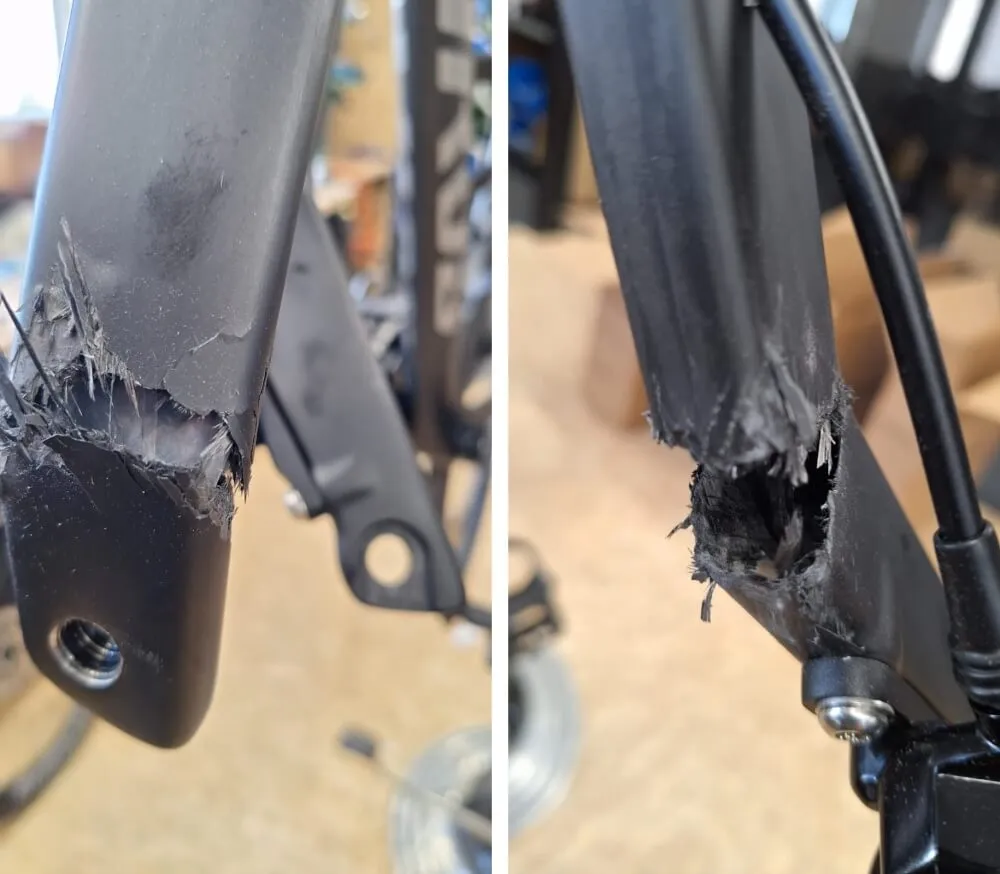
Prolonged use can lead to microcracks, material fatigue, and thread wear. Even if the surface appears intact, this can reduce handling precision. The geometry of older hardtail enduro frames or full suspension enduro frames may be incompatible with modern suspension and wheelsets, creating a “bottleneck” for the rider and limiting speed and downhill performance.
5 Signs Your Old Enduro MTB Frame Needs an Upgrade
Upgrading your enduro MTB frame isn’t just about weight reduction; it’s about riding performance and safety. If your MTB enduro frame exhibits the following characteristics, it might be time to consider a modern enduro mountain bike frame.
1: Microcracks and Fatigue Damage: The Hidden Killer of Structural Strength Decreases
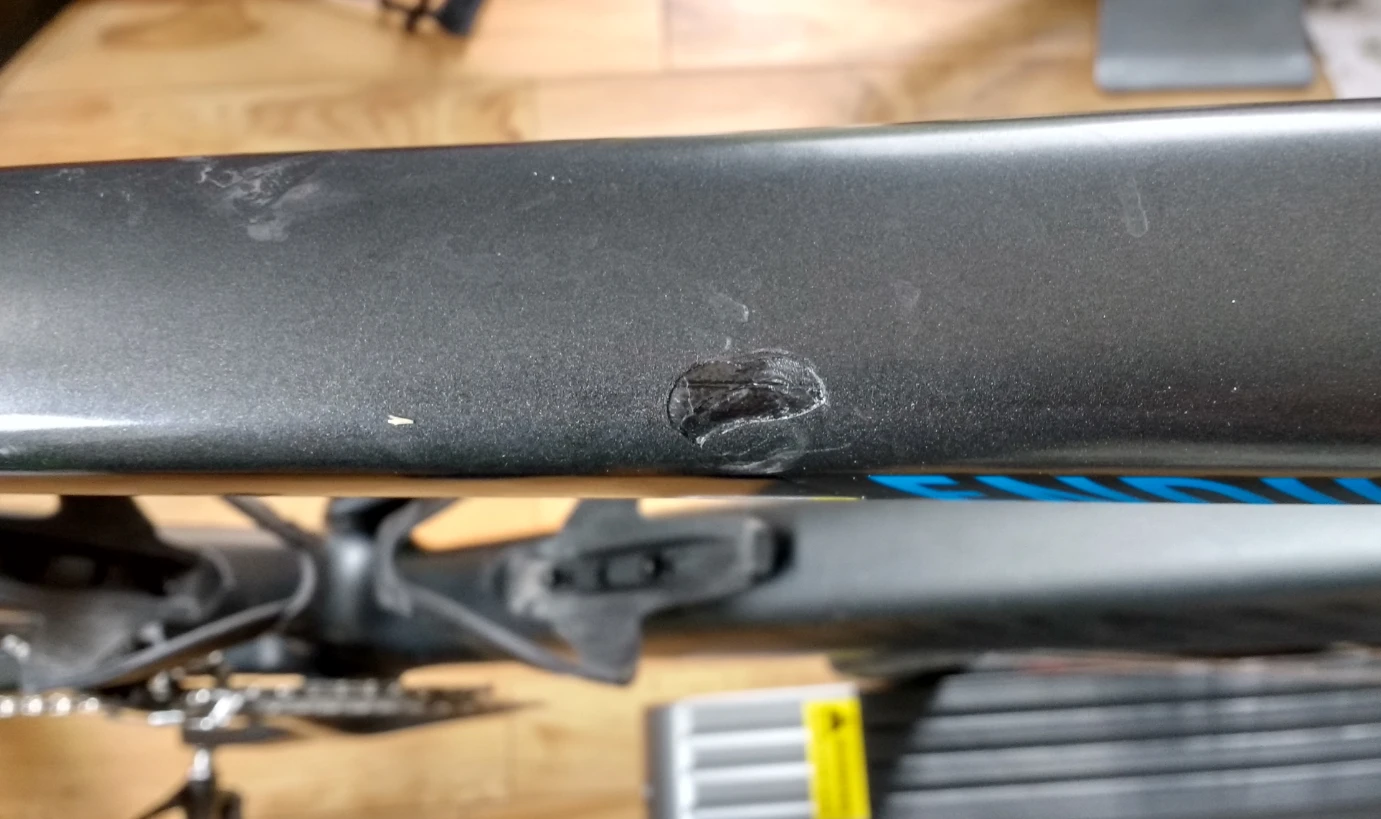
Prolonged bumps and impacts can cause microcracks or carbon fiber fatigue in critical areas of the frame. Even if the surface appears new, internal rigidity may decrease. For full suspension or hardtail enduro frames, this “silent killer” reduces downhill stability and climbing efficiency, increases “frame flex,” and impacts riding confidence.
2: Outdated Geometry: Your Frame Geometry No Longer Suitable for Modern Riding Styles
The head tube angle, seat tube angle, or chainstay length of your older MTB enduro frame may no longer align with modern enduro mountain bike design trends. Outdated frame geometry forces you to frequently adjust your posture on technical sections, impacting handling precision and hindering the full potential of the fork and suspension.
3: Excessive Weight: When a hardtail is heavier than a full-suspension bike, it loses efficiency.
Older frames, especially hardtail enduro frames, are often heavy due to thick tubing or conservative design. When climbing, you might feel a noticeable “dead weight,” expending more energy. Modern carbon fiber enduro MTB frames, through optimized layering and tubing design, achieve lightweighting while maintaining rigidity.
4: Incompatible: Incompatible with modern suspension, cable routing, and Boost specifications.
Many older enduro mountain bike frames are incompatible with modern suspension interfaces, internal cable routing, Boost fork standards, or larger diameter wheels, limiting upgrade options. Upgrading to a compliant MTB enduro frame allows you to fully utilize modern components, improving riding performance and adjustability.
5: Sluggish Riding Feedback: You Can’t Feel the Bike’s “Vitality” on Mountain Roads
If you feel your bike is sluggish, lacks grip on downhill sections, or has stiff handling when cornering, it means your old enduro MTB frame is limiting your handling performance. European and American riders often refer to this “lost responsiveness” as a “bottleneck,” meaning the frame is slowing you down and hindering your feel. Modern carbon fiber full suspension enduro frames, through optimized stiffness distribution and rear shock design, allow riders to more easily control every mountain road.
Choosing the Right Type: Hardtail vs Full Suspension Enduro Frame
When upgrading to an enduro MTB frame, the frame type is crucial in determining the riding feel and performance. Hardtail enduro frames and full suspension enduro frames each have their own characteristics in terms of weight, handling, climbing, and descent performance. Understanding these differences helps in choosing the MTB enduro frame best suited to your riding style and routes.
| Feature | Hardtail Enduro Frame | Full Suspension Enduro Frame |
|---|---|---|
| Weight | Lightweight | Heavier |
| Climbing Efficiency | High | Medium |
| Downhill Stability | Medium-Low | High |
| Comfort | Lower, can cause fatigue | High, absorbs impacts |
| Suitable Terrain | Smooth singletrack, endurance climbs | Technical trails |
2.1: Advantages and Limitations of Hardtail Enduro Frames
Hardtail enduro frames are known for their lightweight design and high pedaling efficiency. When climbing, almost all pedaling energy is transferred to the rear wheel, conserving rider energy on long climbs and endurance routes. European and American riders often describe this riding feel as “snappy,” meaning quick and responsive.
The limitation is that vibrations on descents or technical sections are directly transmitted to the arms and back, leading to fatigue during long rides, especially on root, gravel, or rocky sections where a “buzz” can occur. Suitable for riders with limited budgets and a preference for climbing or single-track routes.
2.2: The Dominance of Full Suspension Enduro Frames on Modern Tracks
Full suspension enduro frames offer superior downhill stability and grip through the fork and rear suspension system. Modern enduro mountain bike frames typically feature a low bottom bracket (BB), high reach, and optimized head tube angle to balance climbing efficiency and high-speed downhill control. Riders often describe this riding feel as “plush yet controlled,” comfortable yet controllable, making it the preferred choice for technical tracks and rugged mountain terrain.
2.3: How to Choose the Right Enduro MTB Frame Based on Riding Style, Weight, and Terrain
When choosing an MTB enduro frame, consider:
- Riding Style: Hardtail is suitable for climbing or endurance routes; full suspension is preferred for intense downhill or technical tracks.
- Weight: For heavier riders or those who frequently wear protective gear, full suspension frames absorb shocks better.
- Terrain: Hardtail is recommended for flat off-road or smooth single-rail terrain; full suspension is recommended for rugged routes with lots of rootstock and gravel.
Furthermore, modern carbon fiber enduro MTB frames support customized geometry and suspension travel, maximizing riding efficiency and handling by matching body type, riding style, and terrain.
What’s New in Modern Carbon Enduro MTB Frames
The development of modern enduro MTB frames is no longer just about lightweighting; it’s a comprehensive upgrade in geometry optimization, suspension compatibility, and customization. With advancements in materials, technology, and design concepts, carbon fiber enduro mountain bike frames achieve a more precise balance between lightweight and rigidity, while simultaneously improving downhill stability and climbing efficiency.
3.1: Optimized Carbon Fiber Layup Design: Finding a Balance Between Lightweight and Strong
Modern enduro MTB frames achieve weight reduction while maintaining torsional stiffness through refined carbon fiber layup and optimized tubing. The tubing thickness is increased locally at key stress points, rather than increasing overall weight; European and American riders call this “strategic layup” “smart stiffness,” which maintains frame stability during technical descents and high-speed cornering.
3.2: Internal Cable Routing and Integrated Suspension Design
The latest MTB enduro frames typically feature a fully internal cable routing design, integrating both front and rear suspension systems. This not only improves aesthetics but also reduces interference from dirt and gravel on the cables and suspension. This design optimizes the reliability and long-term durability of the enduro mountain bike frame.
3.3: The Evolution of Boost Forks, U-DH Geometry, and Long Reach
Modern full-suspension enduro frame trends include Boost forks, low bottom bracket (BB), long reach, and optimized U-DH geometry. These all improve downhill stability, grip, and handling response. Riders often describe the handling feel resulting from these improvements as “plush yet nimble,” which is particularly noticeable on rough terrain.
3.4: Customize Your Enduro Mountain Bike Frame with OEM Support for Personalized Geometry
Carbon fiber enduro MTB frames support OEM customization, allowing riders to adjust geometry (stack & reach), tube shape, and suspension travel to suit their height, weight, and riding style, achieving a truly personalized experience. Custom frames not only enhance handling and comfort but also meet the needs of European and American riders seeking exclusive equipment, balancing climbing efficiency with downhill performance.
Upgrade Smart: When and How to Replace Your Frame
Upgrading your enduro MTB frame isn’t just about pursuing lightweight or a cool look; it’s also about riding safety and performance unleashing. Determining when to replace your frame requires considering multiple factors, including frame fatigue, outdated geometry, and compatibility limitations, while also taking into account budget and configuration optimization to ensure the new MTB enduro frame maximizes handling and riding experience.
4.1: How to Evaluate Whether Your Old Frame Is Worth Repairing or Replacing
- For an old enduro mountain bike frame, you can evaluate it from the following aspects:
Structural Health: Check for microcracks, carbon fiber fatigue, and thread wear, confirming if necessary with professional testing equipment. - Geometry Compatibility: Does the old frame support modern suspension interfaces, Boost forks, or wheelset specifications?
- Riding Experience: If you feel sluggish handling or decreased downhill stability while riding, the frame may have become a performance bottleneck.
- When repair costs are close to the price of a new frame, or upgrade potential is limited, replacing it with modern enduro MTB frames is usually the wiser choice.
4.2: Budget Recommendations and Configuration Balancing for Frame Upgrades
When upgrading to an MTB enduro frame, a balance should be struck between frame cost and component upgrades. Recommendation:
- Focus your budget on the frame itself (frame + shock) to ensure a good match between stiffness and suspension.
- Use the remaining budget for wheels, forks, and drivetrain to improve overall riding efficiency.
- Even with its lightweight design, a modern carbon fiber full suspension enduro frame can still meet both climbing and descent needs with proper configuration.
4.3: The Importance of Choosing a Reputable Manufacturer
Choosing a reliable enduro MTB frame manufacturer is crucial:
- Reputable manufacturers possess mature carbon fiber laminate technology, rigorous QC processes, and durability testing.
- They support OEM/custom geometry, optimizing the enduro mountain bike frame to suit individual rider sizes and styles.
- They offer comprehensive warranty systems to reduce riding risks and ensure the long-term effectiveness of your upgrade investment.
- In the parlance of European and American riders, this choice is often referred to as “buy smart, ride fast,” meaning that choosing the right manufacturer allows you to truly unlock the potential of your new frame.
Final Thoughts – Your Frame, Your Confidence
A high-quality enduro MTB frame is more than just an equipment upgrade; it’s a comprehensive enhancement of the riding experience. From geometry and material selection to suspension compatibility, every detail impacts handling, descent stability, and climbing efficiency. By identifying microcracks, fatigue damage, and outdated geometry in older frames, riders can determine when to upgrade. Choosing the right MTB enduro frame type (hardtail or full suspension) and modern carbon fiber frame technology ensures greater confidence in every mountain challenge.
5.1: A High-Quality Enduro MTB Frame is More Than Just an Equipment Upgrade; It’s a Reshaping of the Riding Experience
Modern enduro mountain bike frames achieve the optimal balance of lightweight, stiffness, and handling through optimized carbon fiber laminates, internal cable routing, Boost forks, and long Reach geometry. Whether it’s the climbing efficiency of a hardtail enduro frame or the descent stability of a full suspension enduro frame, these are key to unlocking a rider’s potential. Choosing a high-quality manufacturer and custom frame ensures a better match between geometry and suspension, resulting in precise and responsive pedaling.
5.2: Prepare a frame that truly “keeps you” for your next mountain bike challenge.
Upgrading to enduro MTB frames eliminates the frame bottleneck, allowing riders to focus on technical routes and speed performance. Whether on rugged rootways, gravel trails, or long climbs, high-performance carbon fiber MTB enduro frames provide confidence and control. European and American riders often say, “buy smart, ride fast,” meaning that choosing the right frame is crucial to unlocking your riding potential and enjoying the passion and freedom of mountain biking.